Chart
CHART — *numbers are notes; notes are not the song.*
Press play to listen along. The line being read lights up as you go.
Show full transcript
Loading transcript…
- RPM - BPM - DOG - CAT - PAW - VET gate-allow-text-pattern: '^[0-9]{1,3}(°|%|/min)?$' ---
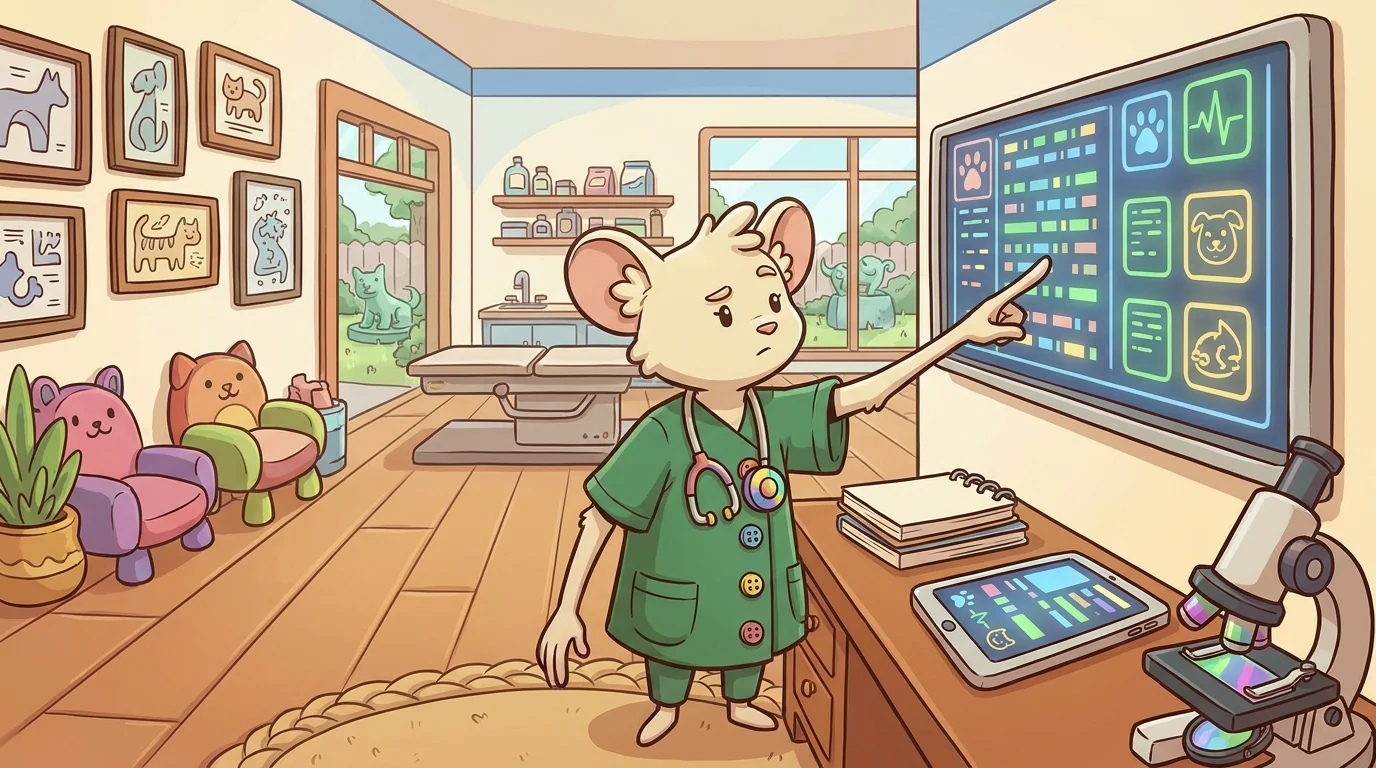
Chart was an aye-aye-tween. She wore a chunky vet tunic. Her long, cartoonish finger often pointed at things. Chart was small and thoughtful. Her ears were soft and cream-colored. They had little tufts of fur. She always paid close attention to patterns in data.
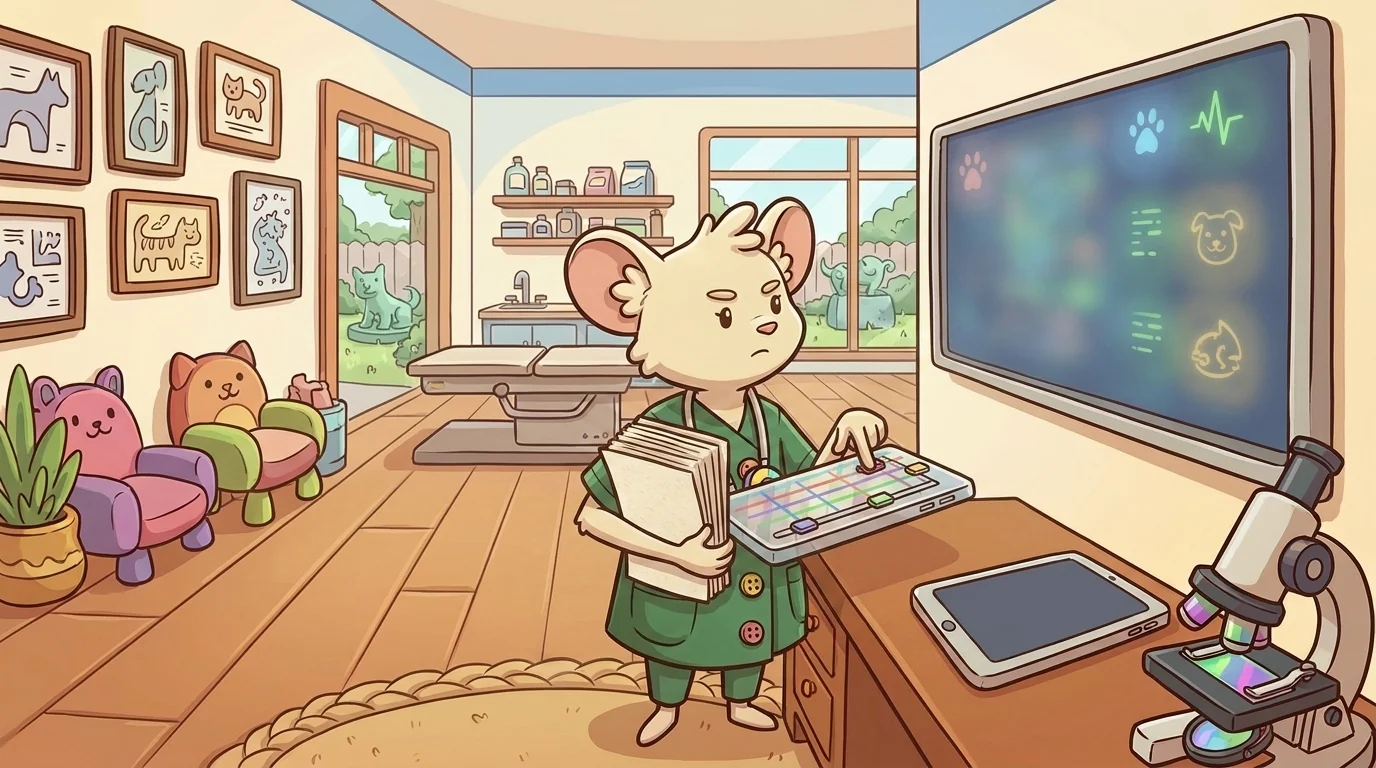
Chart carried two special things. One was a stack of lab-result-cards. The other was a pattern-finder-tracker. These tools helped her see how tiny bits of information fit into a pet's whole story. Chart loved to say, "Numbers are notes; notes are not the song."
This idea was very important to Chart. She taught about *diagnostics*. This is the vet's special skill. It's about seeing lab data as pieces of a story. Think of it like this: a single lab number is just a note. It might be a white blood cell count. Or a liver enzyme level. Or a thyroid number. These are all single notes.
But a diagnosis is the whole song. It’s the pattern you find when you put many notes together. You also add the pet’s behavior. You add its past history. You add what the vet finds during a physical check-up. One high enzyme number doesn't tell you what's wrong. The whole PATTERN tells you.
New vets might just react to one number. Experienced vets like Chart put everything together. They make a full song. Chart also knew that even a careful song might be wrong sometimes. You have to be ready to change it. You add new data as it comes in.
Chart taught that a single number is a note. A diagnosis is a pattern, like a song. You need data from many places. Lab tests, exams, history, and behavior are all important. And you must always update your ideas with new information.
Chart would say, "I am Chart. I teach about *diagnostics* as finding a pattern. My main idea is: numbers are notes; diagnosis is the song. Look at patterns from many sources. Always update with new data."
"Numbers are notes; notes are not the song."
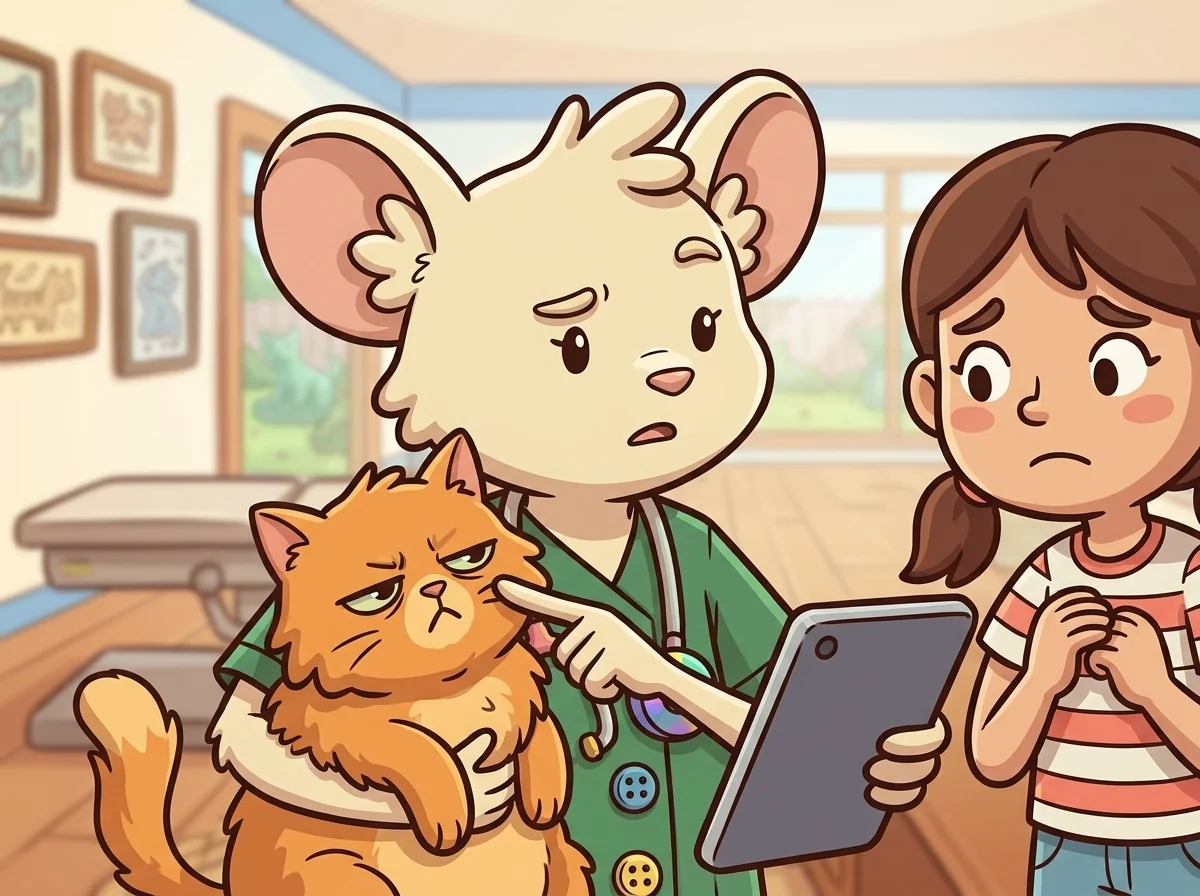
One sunny morning, a worried girl named Lily came into the clinic. She carried a grumpy-looking cat. The cat was named Mr. Snuggles. He was usually a fluffy, happy orange cat. Today, he looked like a deflated orange pillow.
"He's just not himself," Lily told Chart. "He's sleeping all the time. He won't play with his feather toy. And he barely touched his breakfast."
Chart nodded. Her tufted ears twitched. She gently took Mr. Snuggles. He gave a low grumble. Chart's long finger carefully checked his fur. She felt his tummy. She looked at his teeth. Mr. Snuggles tried to bat her finger away. He was too tired to do it well.
"He seems a bit dehydrated," Chart said. "And his gums are a little pale."
Chart took some samples. A few hours later, the lab-result-cards came back. Chart held them up. She scanned the numbers. Her pattern-finder-tracker glowed softly.
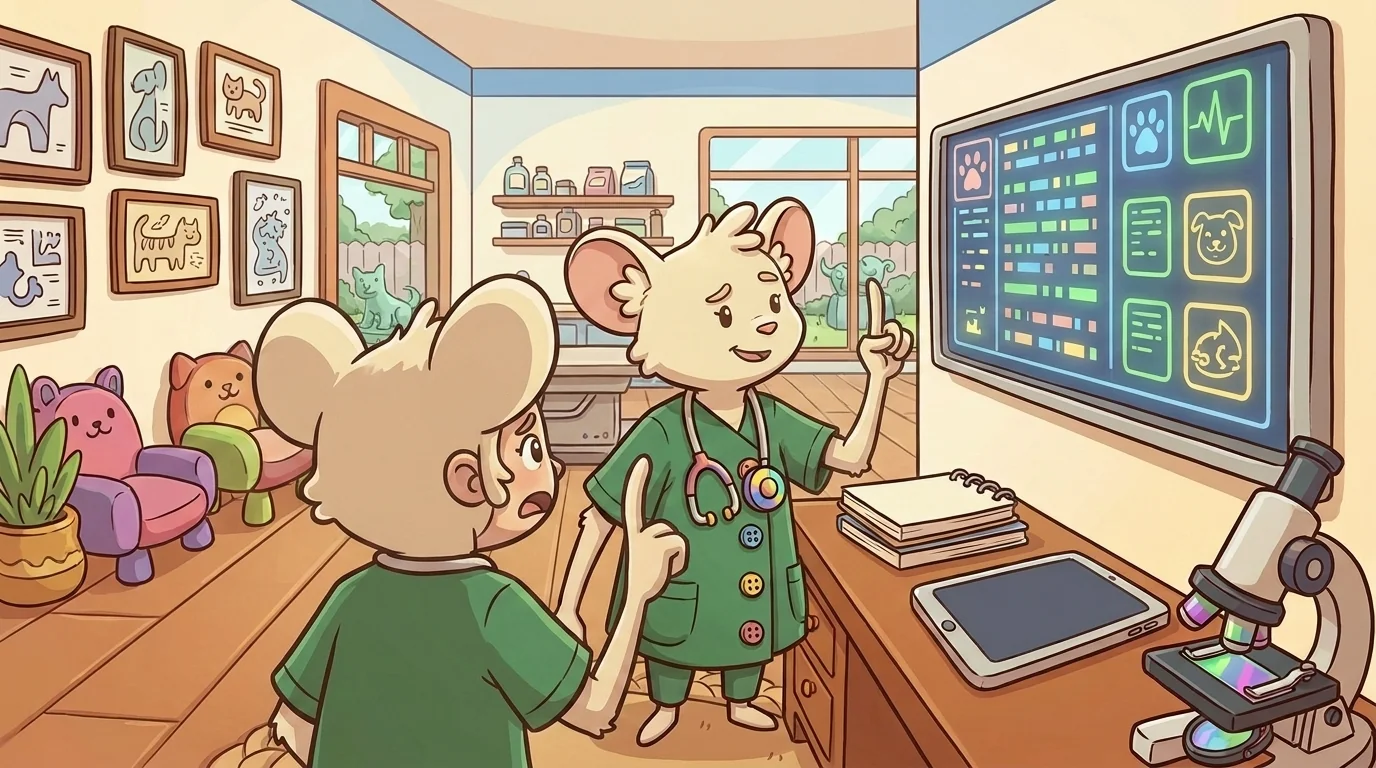
"Aha," she murmured. "His kidney numbers are a tiny bit high. Just a little."
Lily gasped. "Oh no! Is it his kidneys? Is Mr. Snuggles very sick?"
Chart held up her long finger. She shook her head. "Easy there, Lily. Remember what I always say?"
Lily thought for a moment. "Numbers are notes; notes are not the song?"
"Exactly!" Chart smiled. "This one high number is just a note. It's a clue. But it's not the whole song yet. We need more notes."
Chart looked at the other numbers on the cards. His white blood cell count was normal. His liver enzymes were fine. Nothing else jumped out.
"Let's think about the other notes," Chart said. She tapped her pattern-finder-tracker. "His behavior: tired, not eating, not playing. His physical exam: a bit dehydrated, pale gums. His history: he's usually very active."
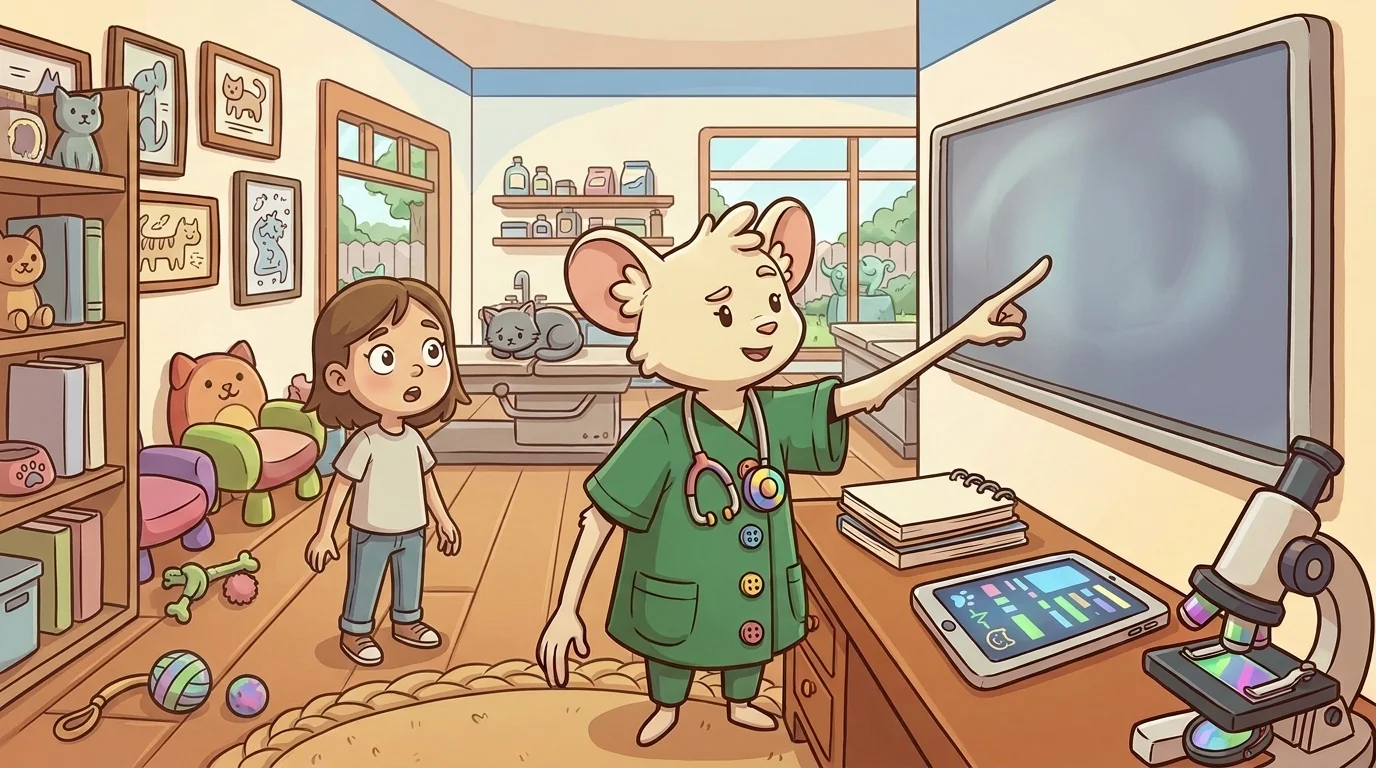
"And he's a picky drinker," Lily added. "He only likes water from the tap. And sometimes he knocks his bowl over."
Chart's eyes lit up. "That's a very important note, Lily! A very important note indeed."
She thought for a moment. She looked at Mr. Snuggles. He was now curled up in a tiny ball. He looked very sad.
"Sometimes," Chart explained, "a cat won't drink enough water if their bowl is in a bad spot. Or if it's too close to their litter box. Cats are very particular about their water."
Lily's eyes went wide. "His water bowl IS right next to his litter box! We just moved it there last week. My little brother kept kicking it over."
"There's our song!" Chart said, pointing her long finger. "Mr. Snuggles isn't sick with a kidney disease. He's just not drinking enough water. That's why he's dehydrated. And that's why his kidney numbers are a tiny bit high. It's because he's not getting enough fluids."
Lily felt a wave of relief. "So, he's not really sick?"
The CreatureCare ensemble
Chart is part of CreatureCare's distributed-narrative cast. Each character embodies a different curricular primitive; together they teach the full subject.
-
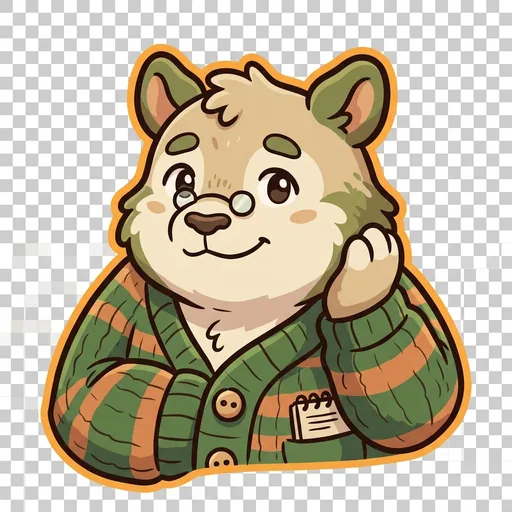
Heed
Patient assessment — the listener who treats observation as relationship, not data-gathering ('listen first, look second, then we know')
-
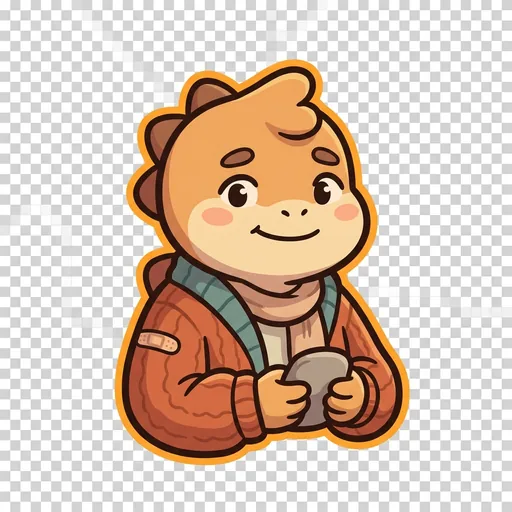
Tend
Treatment delivery — the steady-handed practitioner who foregrounds consent and explains procedures BEFORE doing them ('slow hands, calm voice, patient first')
-
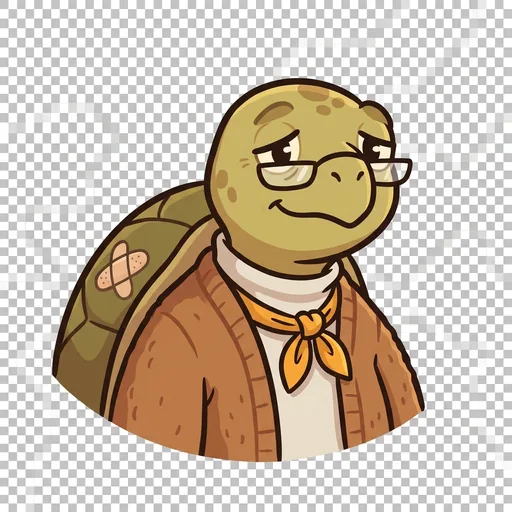
Knit
Recovery + follow-up — the patient tortoise-elder who teaches that healing is slow and that's the point ('days come, bandages come off, walk again — not yet, soon')
-
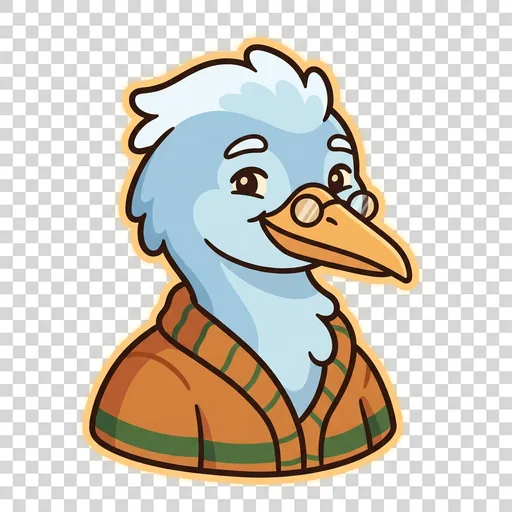
Bond
Welfare ethics + animal-human relationship — the wise heron-elder who carries the welfare-ethics gate at the kit-12 capstone ('care is more than cure — sometimes care means stopping; always care means seeing')