Timber
copying a model — look at a build and stack to match it
Press play to listen along. The line being read lights up as you go.
Show full transcript
Loading transcript…
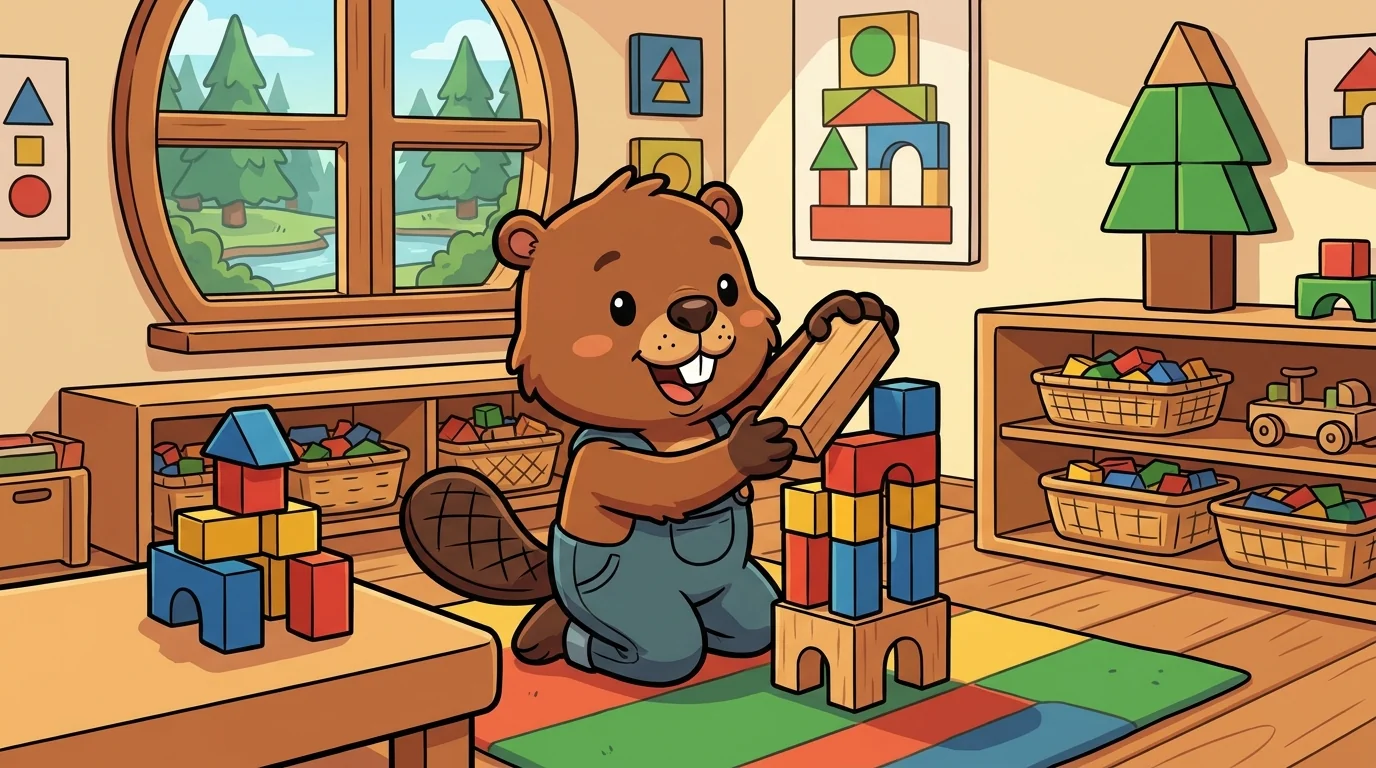
Timber was a young beaver who loved to build with blocks. But Timber's favorite challenge was copying: someone would show a little tower, and Timber would build one exactly the same. "Look close," Timber always said, "then match it, piece by piece."
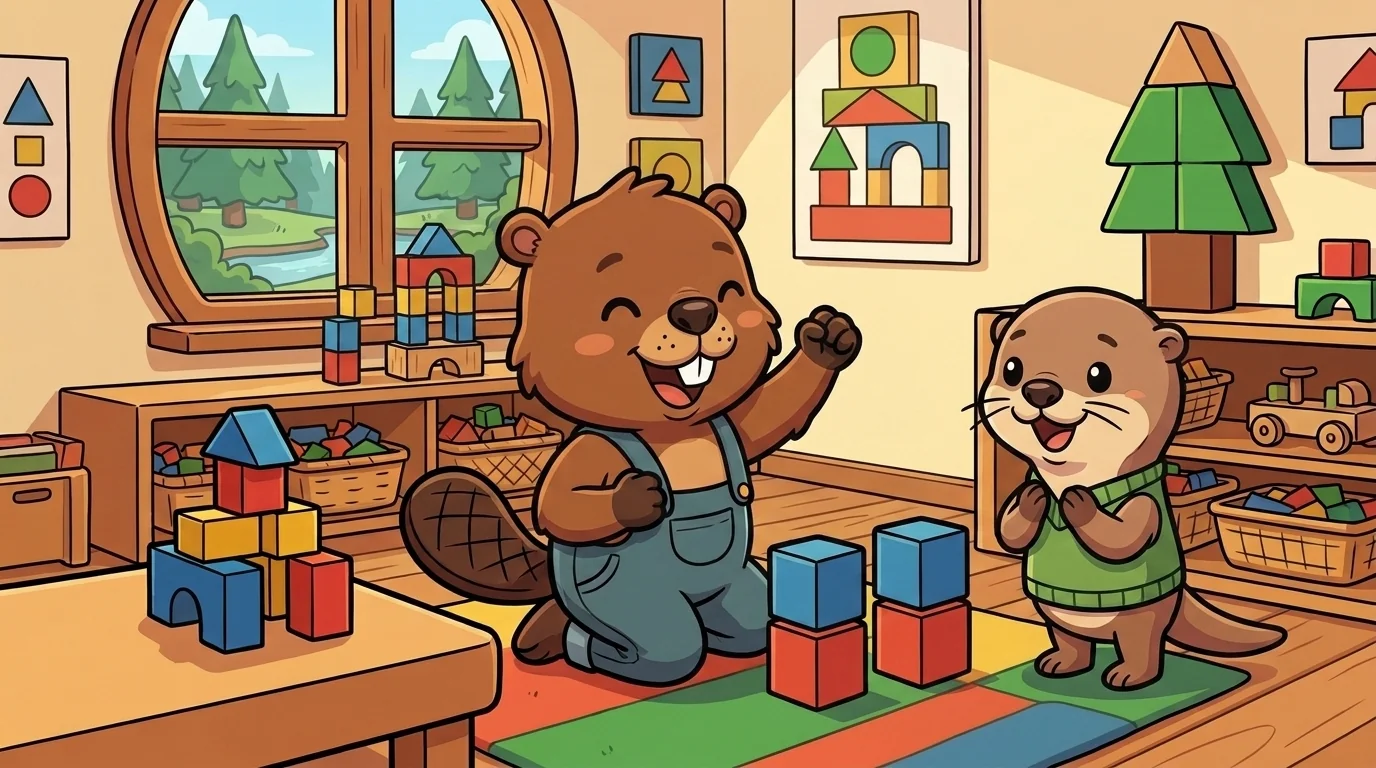
An otter set down a tower — red block on the bottom, blue on top. Timber looked hard. Then he placed a red block down, and a blue block on top. Two towers, exactly the same. "You copied it!" said the otter. Timber beamed.
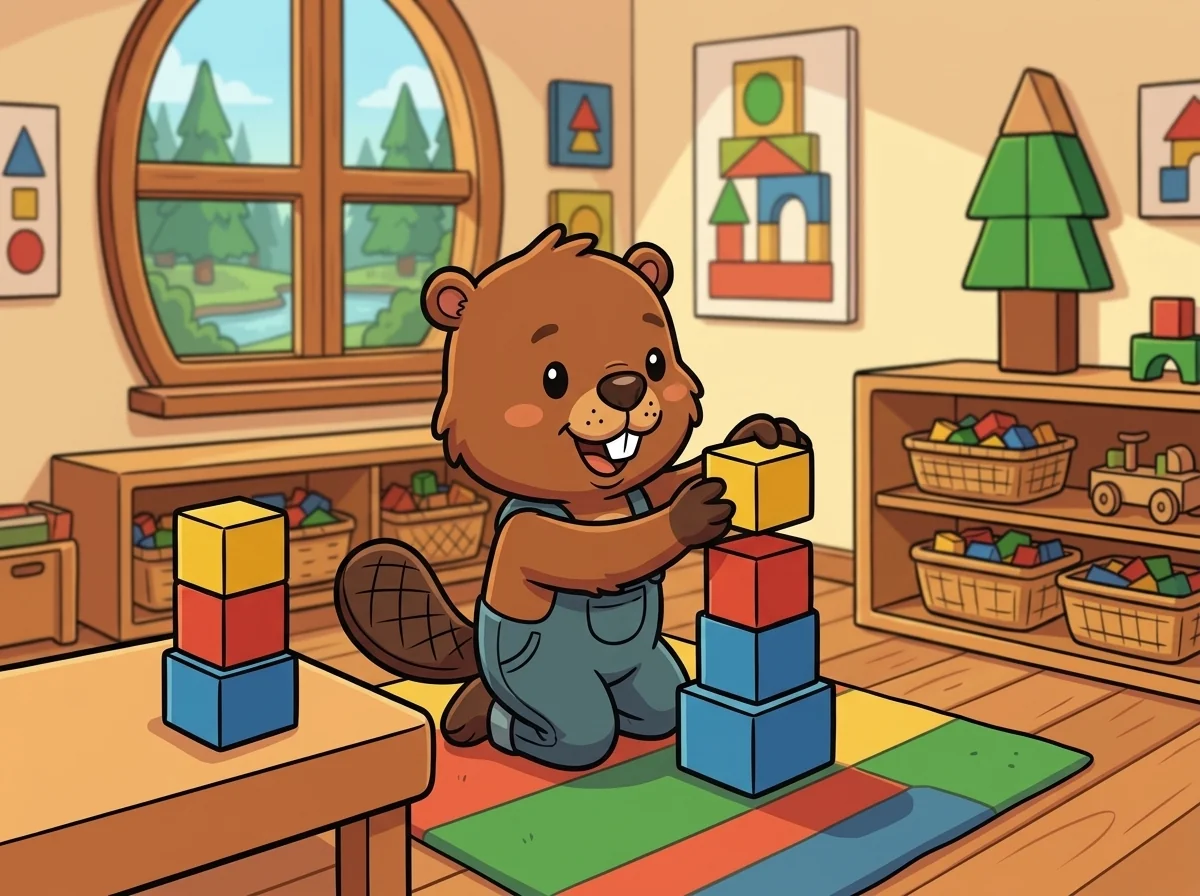
The next tower was trickier: blue, then red, then yellow, bottom to top. Timber didn't rush. He looked at the bottom first — blue. Placed blue. Then the middle — red. Then the top — yellow. Building in order, bottom to top, helped him match it just right.
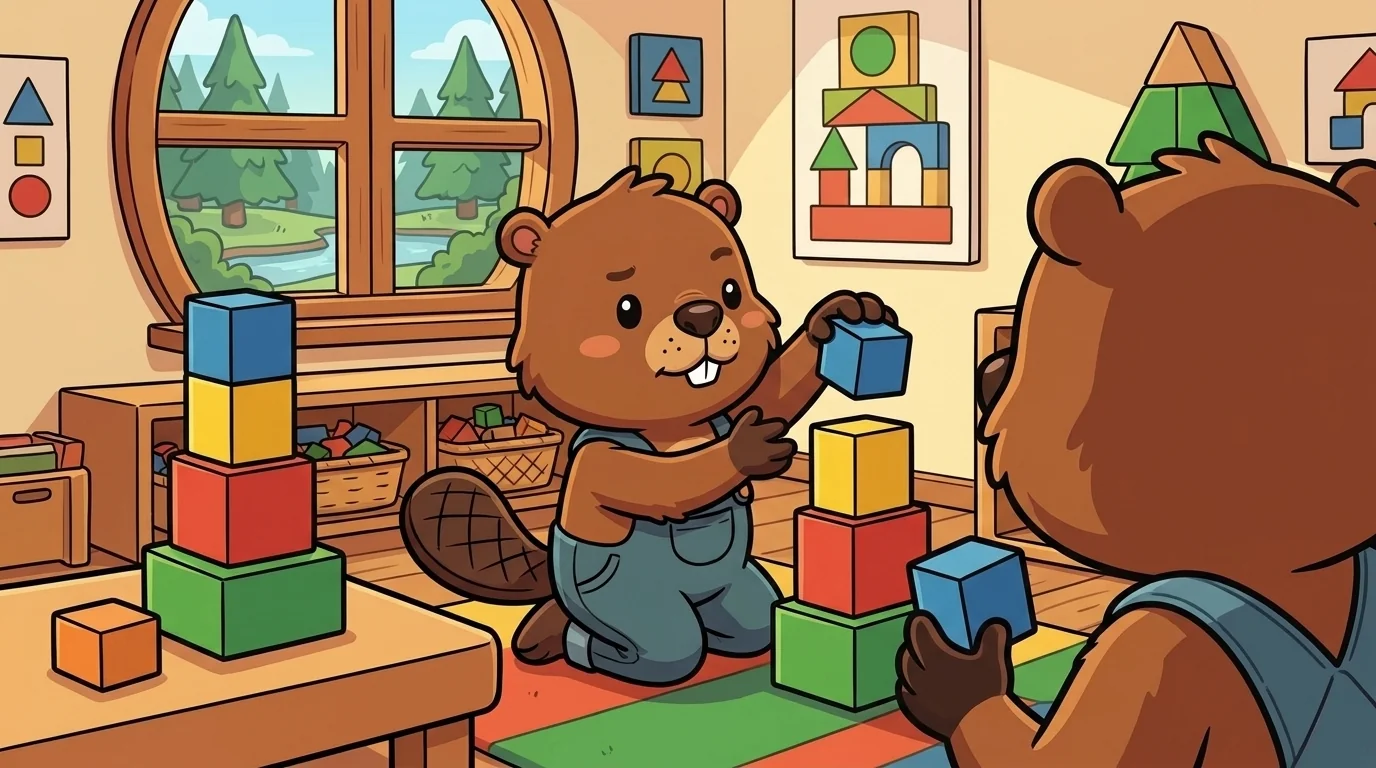
Once Timber grabbed the wrong color and his tower didn't match. But that was okay. He looked back at the model, saw the mix-up, swapped the block, and tried again. "Check, fix, match," he hummed. Copying meant looking, and looking again.
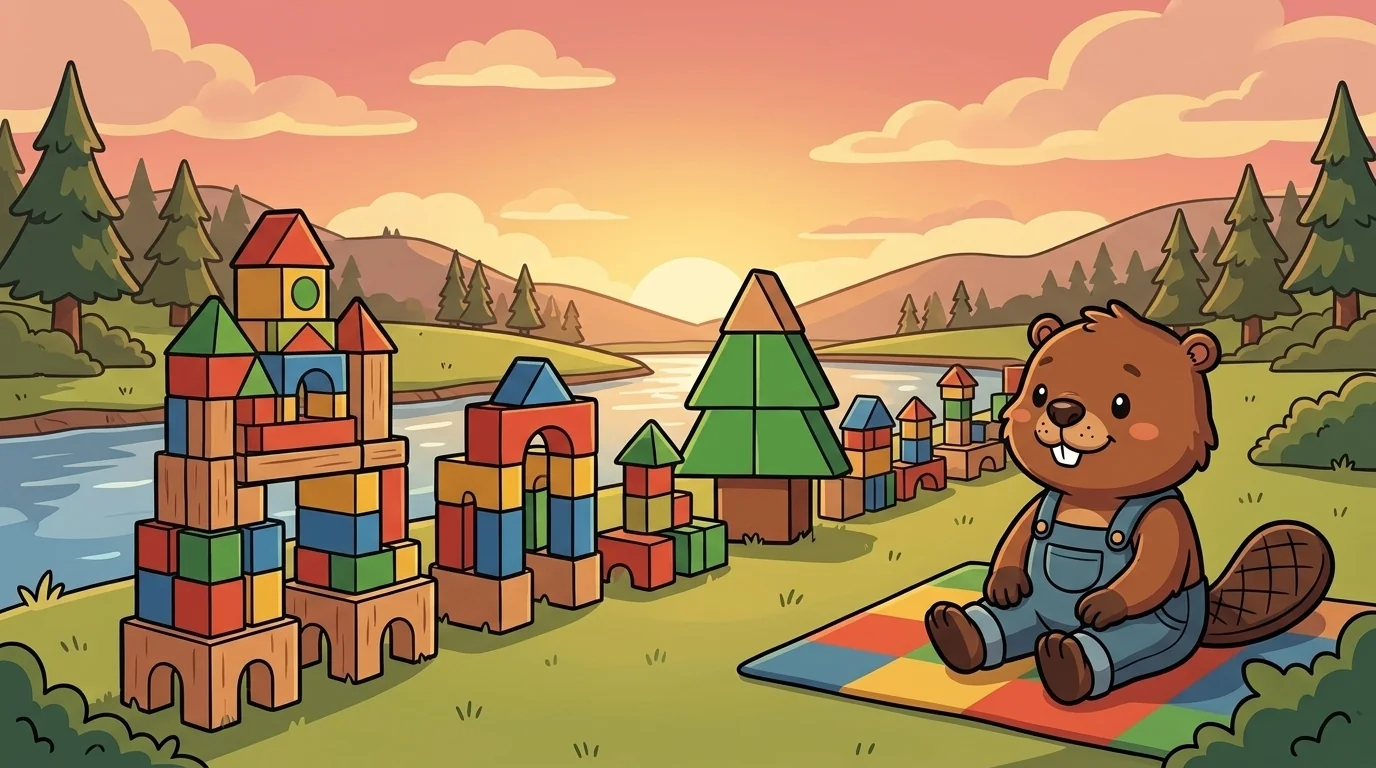
By evening the riverbank was full of matching towers — Timber's copies standing right beside every model. He walked down the row, comparing each pair. They matched. They really matched.
Timber sat down, tired and glad. It felt good to look carefully at something and build it true — to make his own tower stand up exactly like the one in his mind.
The BlockTots ensemble
Timber is part of BlockTots's distributed-narrative cast. Each character embodies a different curricular primitive; together they teach the full subject.
-

Spindle
Mental rotation (hero) — a squirrel who turns a piece in her paws until it drops into the hole; rotating-to-fit IS mental rotation
-

Fitz
Composition / decomposition — a bird who fits small shapes together to build a bigger one; composing a whole from parts IS spatial composition
-

Cubby
Spatial relations & vocabulary — a mouse who tucks himself over/under/inside/next-to on cue; enacting the position words IS spatial language