
Hammer and Lull
SOUND AND SILENCE — rhythm is made of what you play AND what you don't: Hammer puts emphasis on specific beats so the pattern has shape, and Lull is the rest — the beat left silent on purpose — and the two define each other, because a hit only lands hard against the quiet around it
A story read by Hammer and Lull
Loading audio…
Press play to listen along. The line being read lights up as you go.
Show full transcript
Loading transcript…
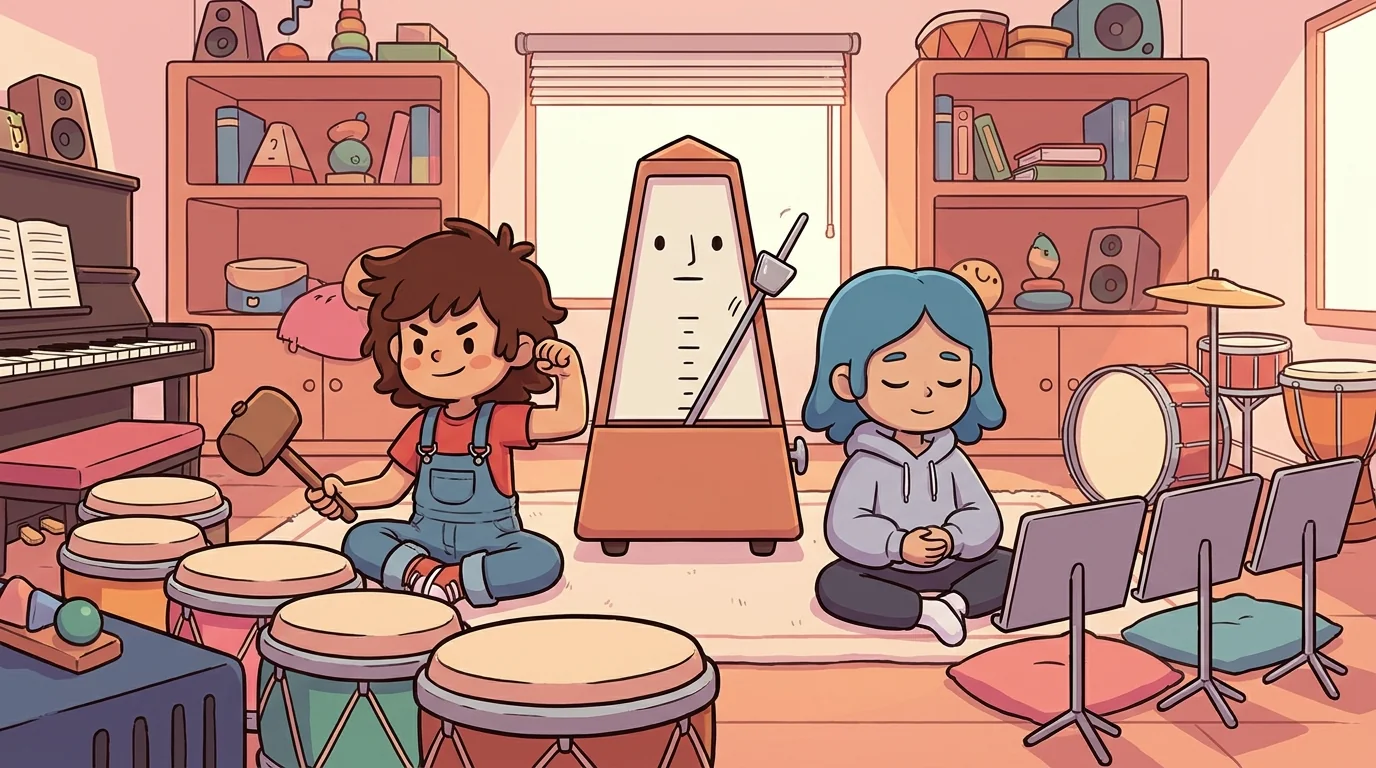
Two friends sat with a plain steady pulse ticking between them, and they were about to prove something that surprises almost everyone: that a great rhythm is made just as much of the beats you don't play as the ones you do.
Hammer flexed, ready to land hard hits on the beats that mattered.
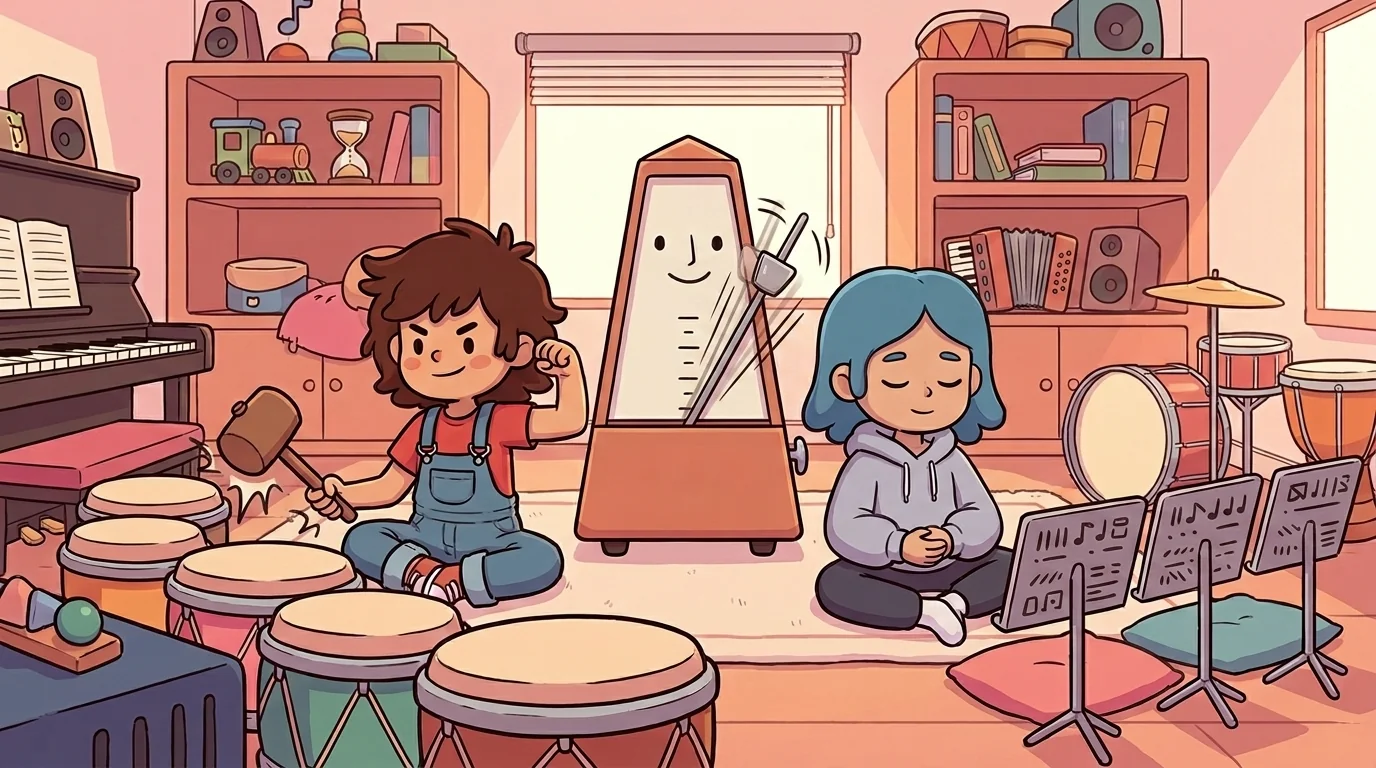
Lull sat still and quiet, guarding the silences.
"Everybody thinks rhythm is about the hits," said Hammer. "Louder, more, fuller. And hits matter — that's my whole job. But watch what happens when Lull and I work together. You'll hear it."
Hammer went first, landing emphasis on the beats that carried the shape — because accent is what turns an even row of beats into a pattern with a face.

"A flat line of identical beats is boring," said Hammer. "Boom boom boom boom — all the same, nothing to grab. So I lean on the ones that matter." And Hammer hit harder on certain beats and lighter on others — BOOM boom boom BOOM boom — and instantly the flat line had a shape, a lean, an identity you could clap along to. "That's emphasis. The downbeat, the backbeat, the ones I choose to punch. Same beats underneath, but now some of them stand up taller than the others, and that pattern of tall-and-small is what your ear latches onto." Hammer landed a satisfying accent. "I give the rhythm its bones — the strong beats you feel in your body, the ones that make you nod. Without me, it's just an even tick. With me, it's got a spine."
But then Lull did the thing that seems like nothing and turns out to be everything — leaving a beat silent, on purpose.
"Now watch," said Lull, and where a beat was expected — where Hammer might have landed a hit — Lull put nothing. A gap. A held breath. Silence, exactly where a sound was due. And strangely, the groove got better — tighter, punchier, more alive. "That's the rest," said Lull, softly. "The beat I don't play. And beginners are afraid of it — they think silence is a mistake, a hole, something to fill. So they cram every slot with a hit, and the groove turns to mud." Lull left another perfect gap. "But the silence isn't empty. It's loaded. When you leave a beat out, the listener's ear leans into the gap — waiting, holding its breath — and then the next hit lands twice as hard for the quiet that came before it. The rest is what gives the hit room to hit. Silence isn't the absence of the music. It's part of the music."
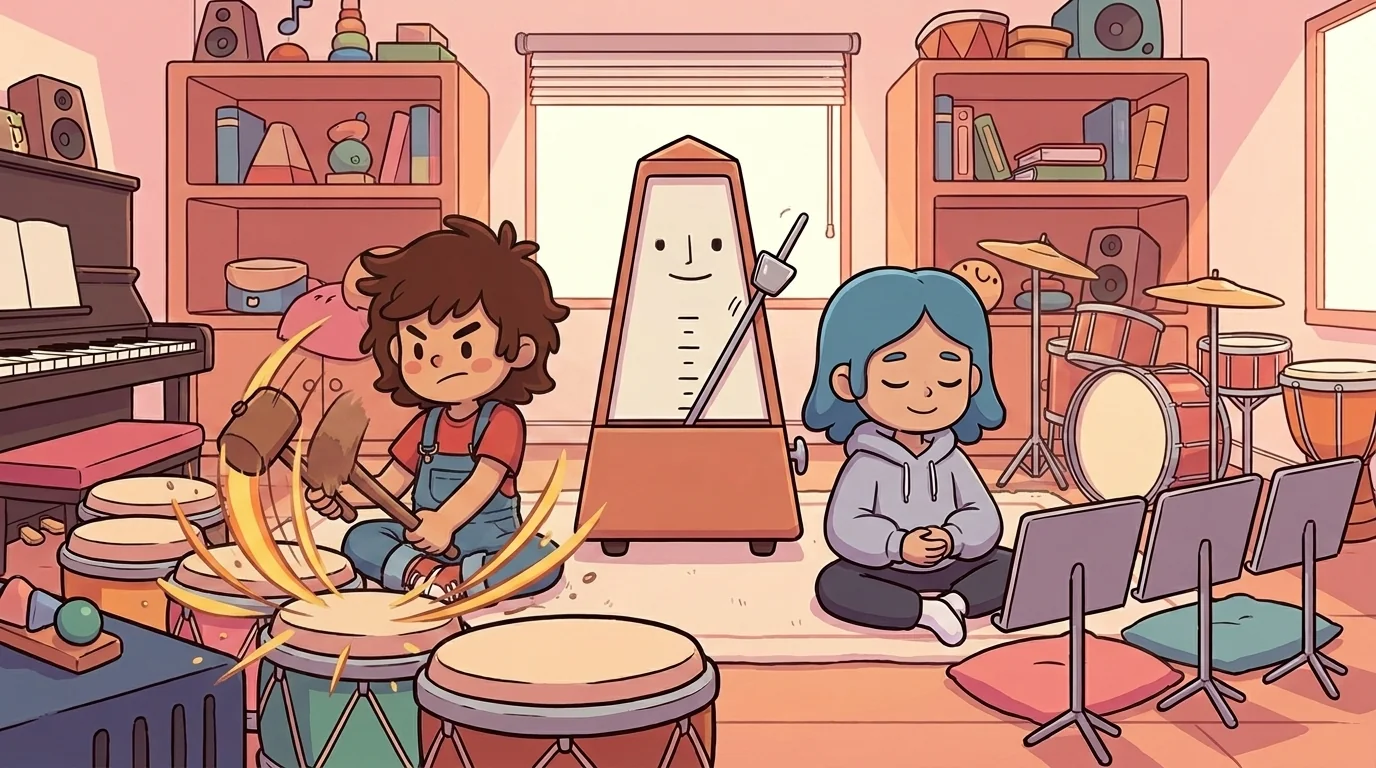
And then they played it together, and the truth of it rang out plain: Hammer's hits landed like they mattered because of Lull's silences, and Lull's silences hummed with meaning because of Hammer's hits. BOOM — [rest] — boom-BOOM — [rest] — The gaps made the hits punch; the hits made the gaps sing. Neither meant a thing alone. Together, they grooved.
"You need my silence," said Lull, "to make your hits land."
"And you need my hits," said Hammer, "to make your silence mean something."
"Good accent," said Lull.
"Good rest," said Hammer.
There is a clean, satisfying feeling in discovering that leaving things out can make something better than cramming it full — that a rest can hit harder than a note, that the space between the sounds is where a groove breathes. It's true of more than rhythm, if you think about it: the pause before the important word, the empty space around a single picture, the quiet that lets one clear thing shine. But you feel it first, and most physically, in a beat — that little held-breath silence, and the way the next hit lands like a heartbeat because of it. Sound and silence, leaning on each other. Neither one the music alone. Both of them, together, the whole thing.
The BeatForge ensemble
Hammer and Lull is part of BeatForge's distributed-narrative cast. Each character embodies a different curricular primitive; together they teach the full subject.
-

Throb
The steady pulse — the underlying clock every other rhythm hangs from
-

Snap
Subdivision — splitting a beat into equal smaller parts (eighths, sixteenths, triplets)
-

Hammer
Accent — emphasis on specific beats (the downbeat, the backbeat, polyrhythmic emphasis)
-

Tilt
Syncopation — placing weight off the expected beat to create pull and forward motion
-

Spin
Groove — the looping pattern that emerges when pulse + subdivision + accent + syncopation cohere; the thing that makes a beat feel like a particular genre
-
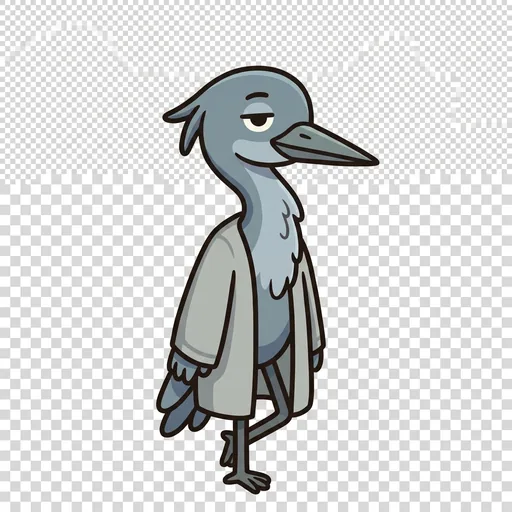
Lull
The rest — the beat you leave empty on purpose; silence counted as part of the music, so the next sound lands bigger
-

Crest
Dynamics — how loud or soft the music is, swelling louder and easing softer to give a song its waves
-

Rush
Tempo — how fast the pulse runs, and speeding up or slowing down to steer the whole mood of a song
-

Volley
Call-and-response — one player calls a phrase and the others answer it back; music as a conversation traded around a circle
-

Flurry
The fill — the quick burst of drum notes that carries a song across the turn from one section into the next
-
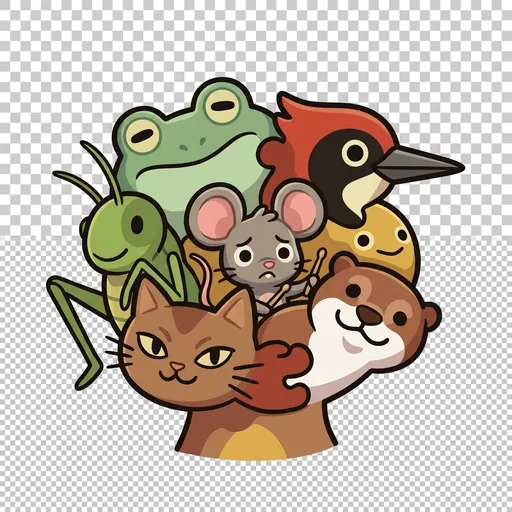
The Jam
The whole rhythm section playing together — how pulse, subdivision, accent, and syncopation lock into one groove that lifts everybody up at once
