
Model Milo and Fade Faye
worked-example-to-faded-practice — you learn a hard method fastest by first studying a complete worked example (every step shown), then practicing problems where the support is removed a little at a time (some steps filled in, then fewer, then none) until you can do the whole thing alone. The full model teaches the shape; the fading hands you independence.
A story read by Model Milo and Fade Faye
Press play to listen along. The line being read lights up as you go.
Show full transcript
Loading transcript…
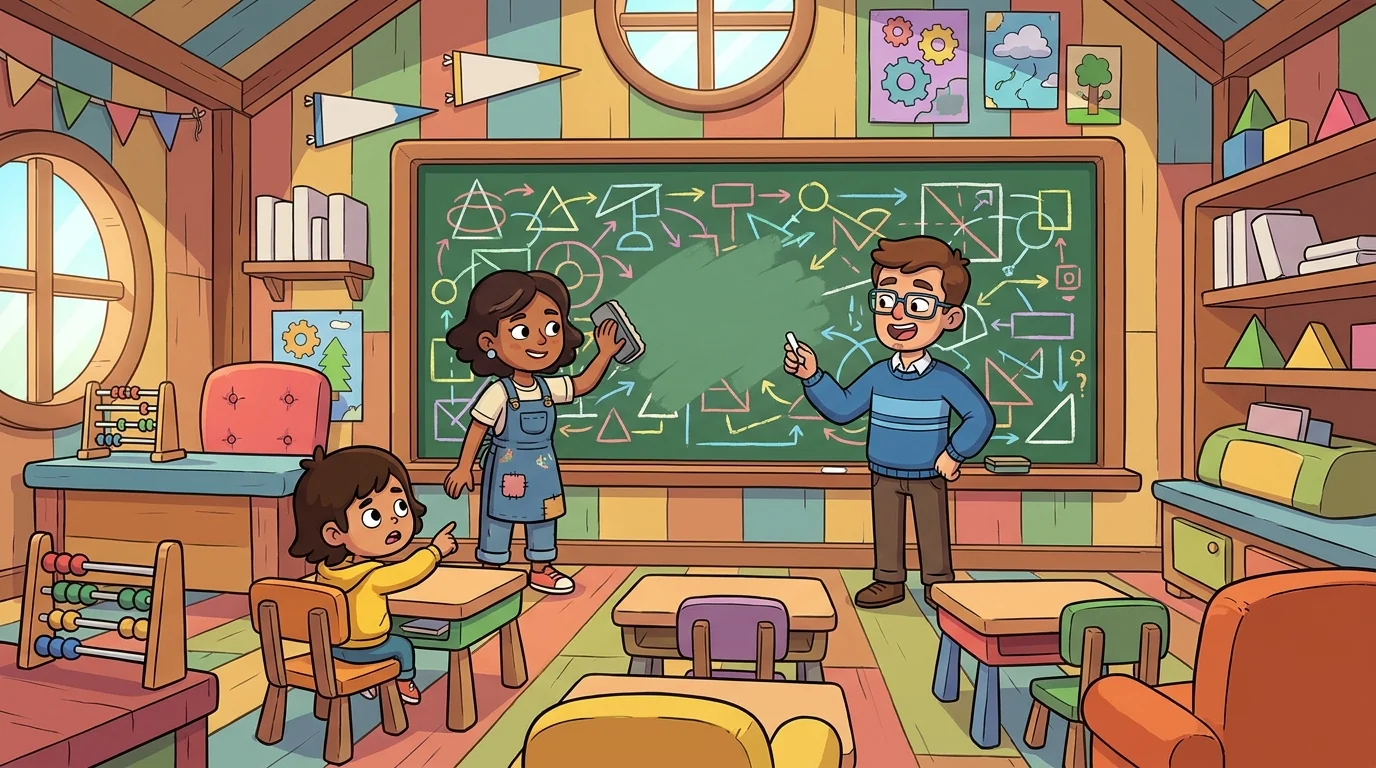
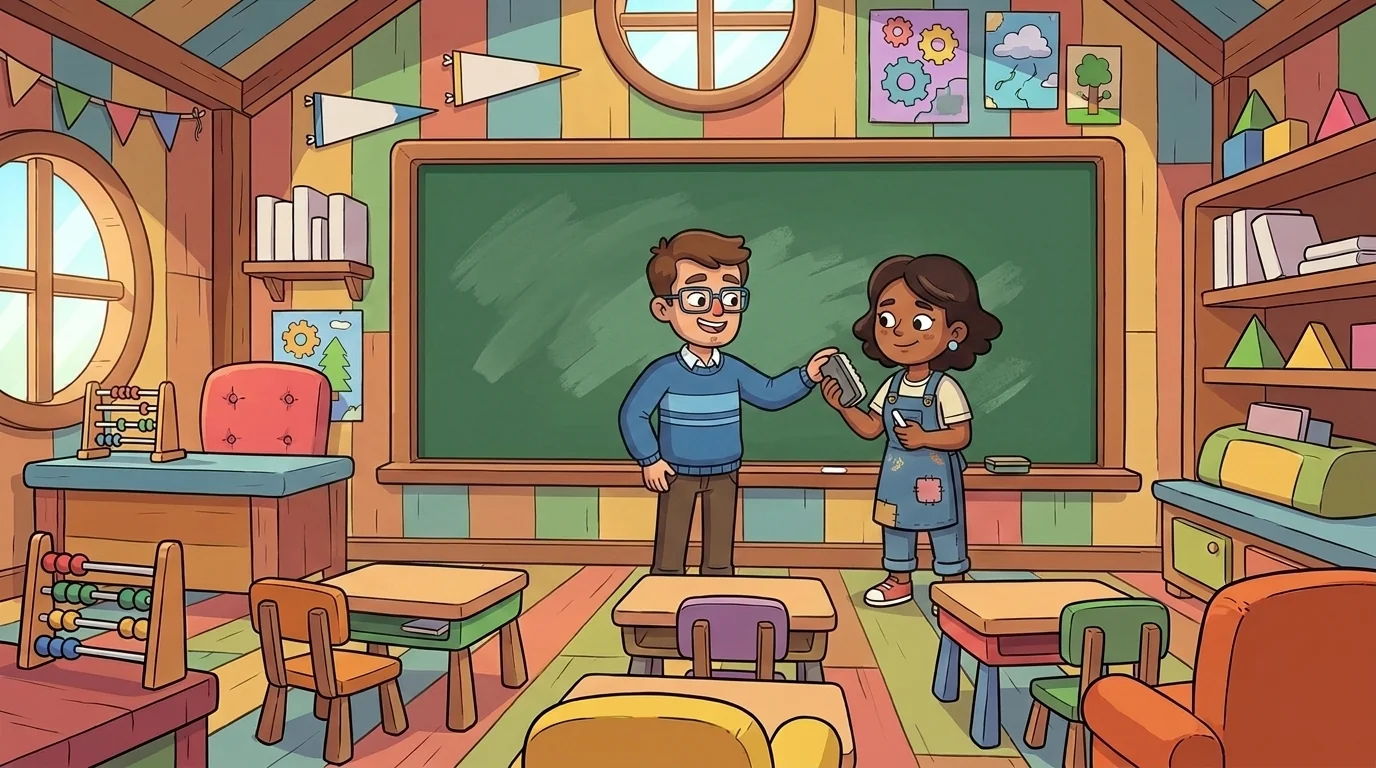
The workshop smelled of dry slate, cedar shavings, and the sharp tang of vinegar used to clean the blackboards. Model Milo stood before the largest slate, his sleeves rolled up to his elbows and his chalk poised. In his right hand, he held a fresh piece of chalk that had never been chipped or dropped. He tapped the stone twice to get the apprentice's attention, smiling warmly at her.
"Watch the board closely," Milo said, his voice echoing in the high-ceilinged room. "I will show you the entire process, and I won't skip a single line."
He began to draw, his chalk squeaking a high, rhythmic tune that made the apprentice wince. Milo wrote out a complex formula for calculating the tension in a double-pulley system. He did not just write the final answer; instead, he wrote down every single intermediate step.
"This is a *worked example*," Milo explained, wiping a smudge of white dust from his thumb. "It is a complete map of the journey, showing you the path before you walk it."
The apprentice copied every stroke into her ledger, her knuckles tight around her pencil.
Beside him, Fade Faye stood in the shadow of the heavy wooden easel, holding an eraser. Her fingers were permanently stained a soft, chalky grey from years of rubbing out lines.
"Milo shows you the whole path," Faye said softly, her voice a contrast to his. "But if you only walk on paved roads, your feet will forget how to climb."
She stepped up to the board and, with one swift motion, wiped away the final steps. A cloud of white dust drifted through the autumn sunlight, settling on the wooden floor.
"Hey!" the apprentice said, her pencil hovering over her half-filled page. "I wasn't finished copying."
"Good," Faye said, handing her the chalk. "Now you have to think about where they went."
This process of slowly removing the support was called *fading*, and it required great care.
"Wait," the apprentice said, looking at the empty space. "You are undoing his help?"
"On purpose," Faye said, offering a small nod. "We take it away, a little at a time."
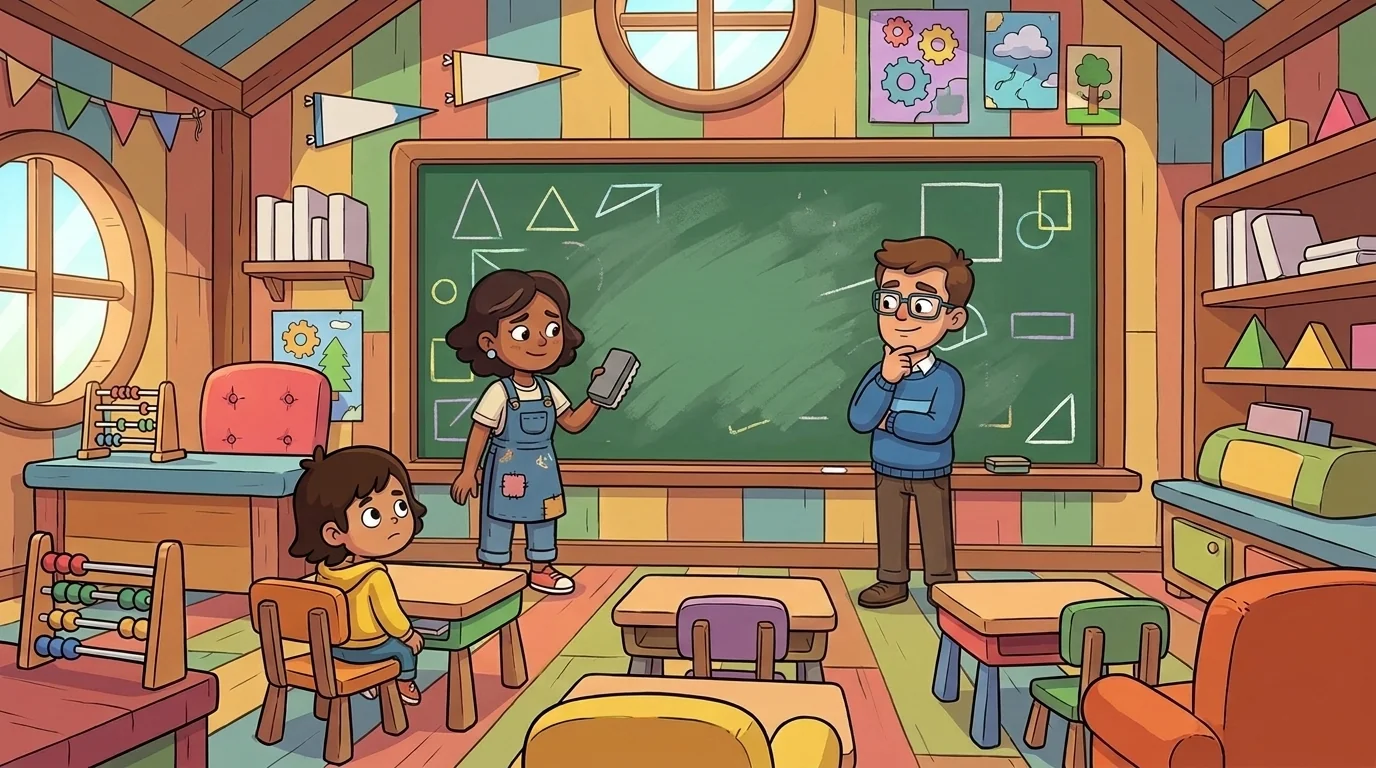
Later, when the apprentice was staring at the floorboards in deep thought, Faye looked at her palms. She did not like admitting this part, but she knew the apprentice needed to hear it.
"For a long time, I believed I was the mean one in this workshop," Faye said.
Milo sat on the edge of his desk, swinging his legs and listening quietly to her.
"Milo is the hero here because he gives you the answers," Faye continued, looking outside. "He makes the hard things look beautiful and simple, and everyone loves him for it."
She turned the felt eraser over in her hands, feeling its rough, worn-out texture.
"I felt like a thief who took the handrail away while people were still shaking."
She remembered an apprentice from the previous spring who could recite Milo's proofs by heart.
"But the moment Milo walked out of the room, that boy froze completely," Faye said. "He had seen a hundred perfect solutions, but he could not start a single one alone."
She looked at the apprentice, whose pencil was now moving slowly across the paper.
"That was when I realized that too much help is just another kind of cage."
"My blanks are not me abandoning you; they are my way of saying you can do it."
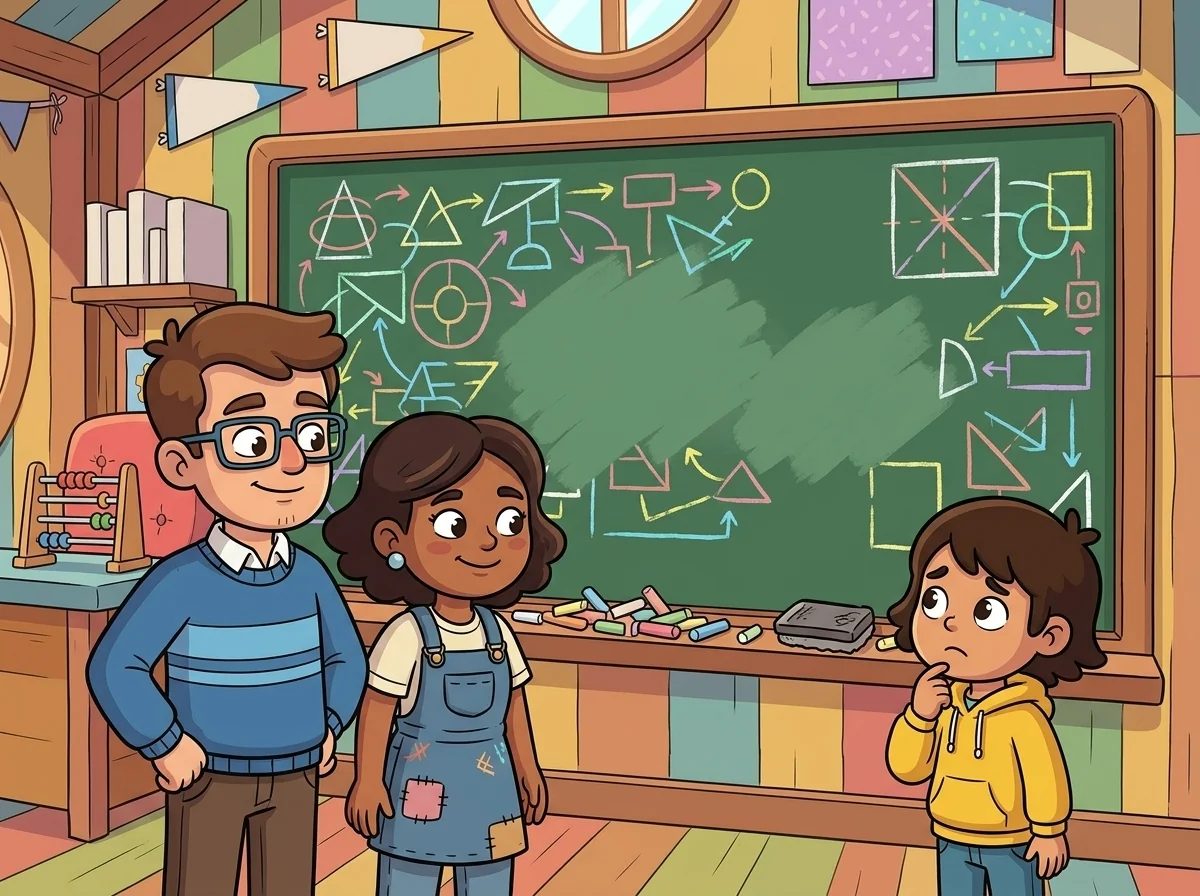
The apprentice looked up, her brow furrowed with frustration as she tapped her blunt pencil.
"I understand it when Milo does it, but the blank page makes me panic."
"I can follow your steps, Milo, but I cannot start them on my own."
Milo and Faye exchanged a knowing look, having seen this exact struggle many times before.
"That is because you tried to jump from his full board to nothing," Faye said. "You skipped the middle, trying to go from all the help to none in one leap."
"The fix is not more of my worked examples," Milo admitted, pointing to her ledger. "The fix is the fading, where we take my full solution and poke holes in it."
"First, you fill in one missing step, then three, then the second half alone."
"Each time, there is a little less of me, and a little more of you."
The apprentice blinked, the tension leaving her shoulders as she understood his meaning.
"So the blanks get bigger on purpose until the whole board is empty," she said.
"By then, the empty board is not scary because you climbed up to it gradually."
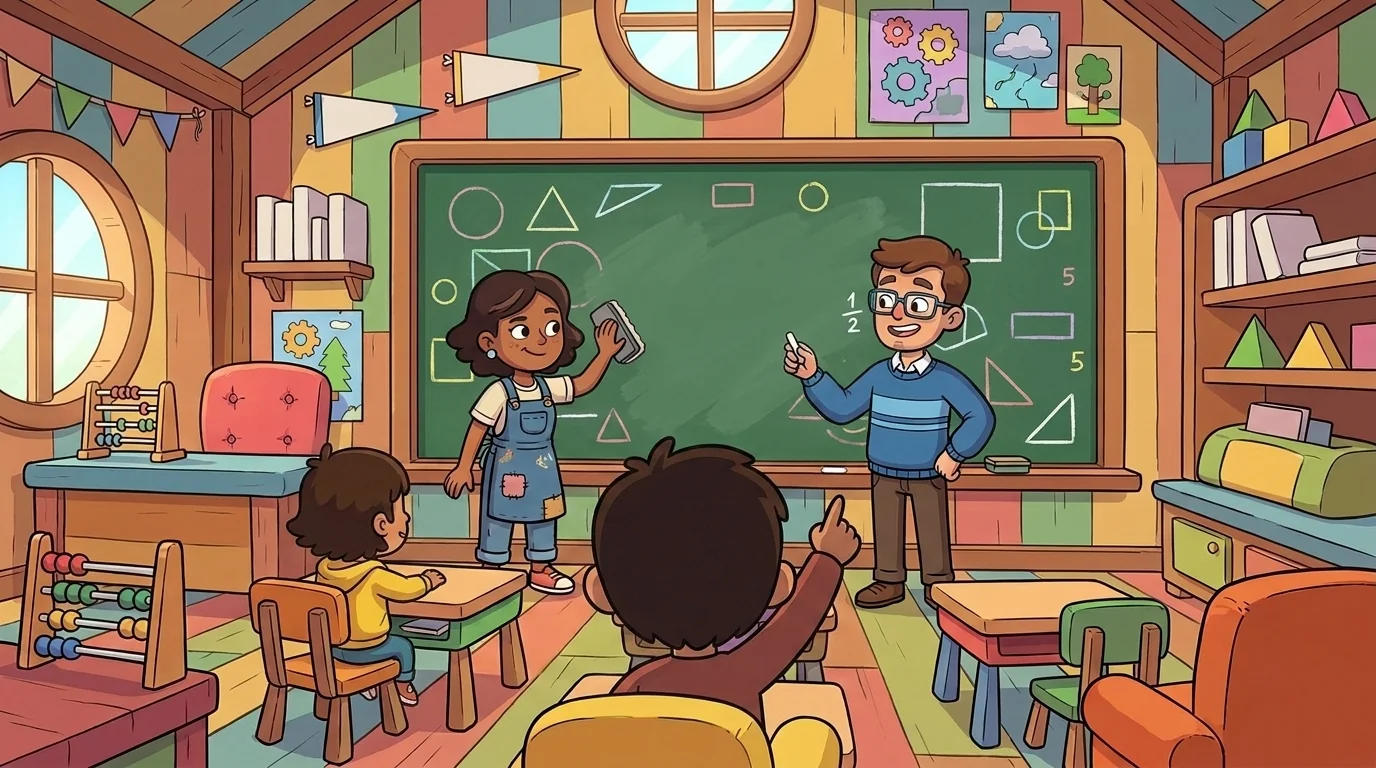
They tried it right then, using a new problem about water flowing through different pipes. Milo solved it completely, explaining every transition while the apprentice watched his hand closely.
Then Faye stepped up and erased only the very last calculation on the slate.
"Your turn," Faye said, handing the chalk to the apprentice with a warm smile.
The apprentice hesitated, then wrote the final number, which was surprisingly easy to do.
Next, Faye wrote a similar problem but erased the last three steps of the solution. The apprentice frowned, tapped her chin, and wrote them in with a steadier hand.
Finally, Faye gave her a problem with only the first line written at the top. The apprentice did not freeze; she began to write, her chalk making confident sounds. She filled the board all the way to the final answer without any help.
She stared at her own work as if it belonged to some other student.
"I just did that, but an hour ago I could not even start," she said.
"An hour ago, you had all of Milo," Faye said, patting her shoulder gently. "Just now, you had all of yourself, and the fading was your bridge."
Milo nodded in agreement. "Model first, fade second, and independent work at the very end."
When the apprentice had gone, walking quickly down the path, the room grew very quiet. The late afternoon sun cast long, amber shadows across the dusty wooden floorboards of the workshop.
Milo took a damp cloth and began to wash the slate, slowly erasing his work.
"I used to feel like the mean half of our team," Faye said quietly. "I was the taker who rubbed out the help right when it was working best."
"They should thank you," Milo said, turning to look at her with a warm smile. "Everything I show them is completely useless if it stays on my board forever."
"I can model a solution a thousand times, but it never becomes theirs without you."
He nudged her shoulder. "I show them it is possible, but you make it theirs."
Faye was quiet, looking at the clean board where their tools rested side by side. The old worry in her chest finally loosened and warmed into something much better. She understood now that stepping back was not abandonment; it was a trusting gift.
"I take the help away," Faye said softly, holding her clean felt eraser.
"Because you trust them to stand," Milo said. "That was always the kindest part."
The AlcumusForge ensemble
Model Milo and Fade Faye is part of AlcumusForge's distributed-narrative cast. Each character embodies a different curricular primitive; together they teach the full subject.
-

Alcuin
Librarian-detective of the practice graph; knows what to try next
-
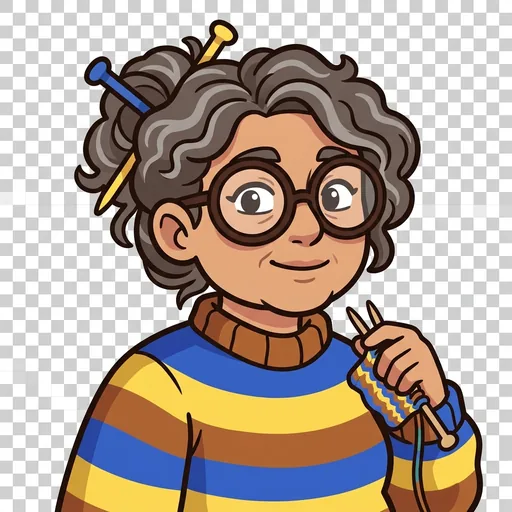
Hint Hertha
Hint author and gentle redirector; never gives the answer
-

Practice Patience
Slow-tortoise back-room keeper; long-game adviser
-

Streak Bear
Warm anti-anxiety presence; the soft-streak character
-
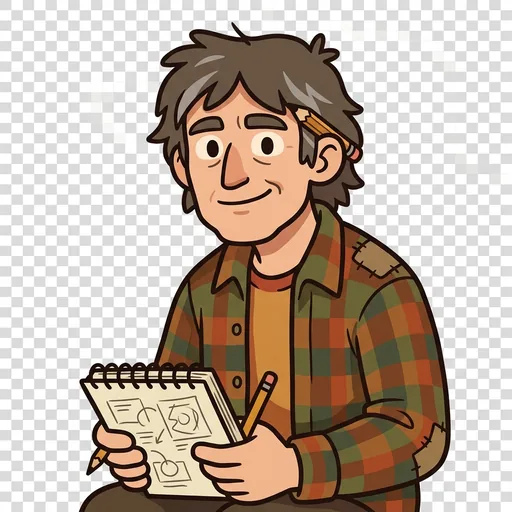
Stretch Sage
The wider-than-you-think reframer; surfaces transfer connections
-

Spacing Wren
Spaced review — bringing a topic back just before you'd forget it, so it sticks
-

Edge Goldi
Edge of competence — practicing at the just-right level where you grow fastest
-

Mistake Mabel
Mistakes as information — every error is a map to what to practice next
-

Mix Margo
Interleaving — mixing problem types so you learn to tell them apart and remember
-

Recall Remy
Retrieval practice — closing the book and recalling beats rereading