
Model Milo and Fade Faye
worked-example-to-faded-practice — you learn a hard method fastest by first studying a complete worked example (every step shown), then practicing problems where the support is removed a little at a time (some steps filled in, then fewer, then none) until you can do the whole thing alone. The full model teaches the shape; the fading hands you independence.
A story read by Model Milo and Fade Faye
Press play to listen along. The line being read lights up as you go.
Show full transcript
Loading transcript…
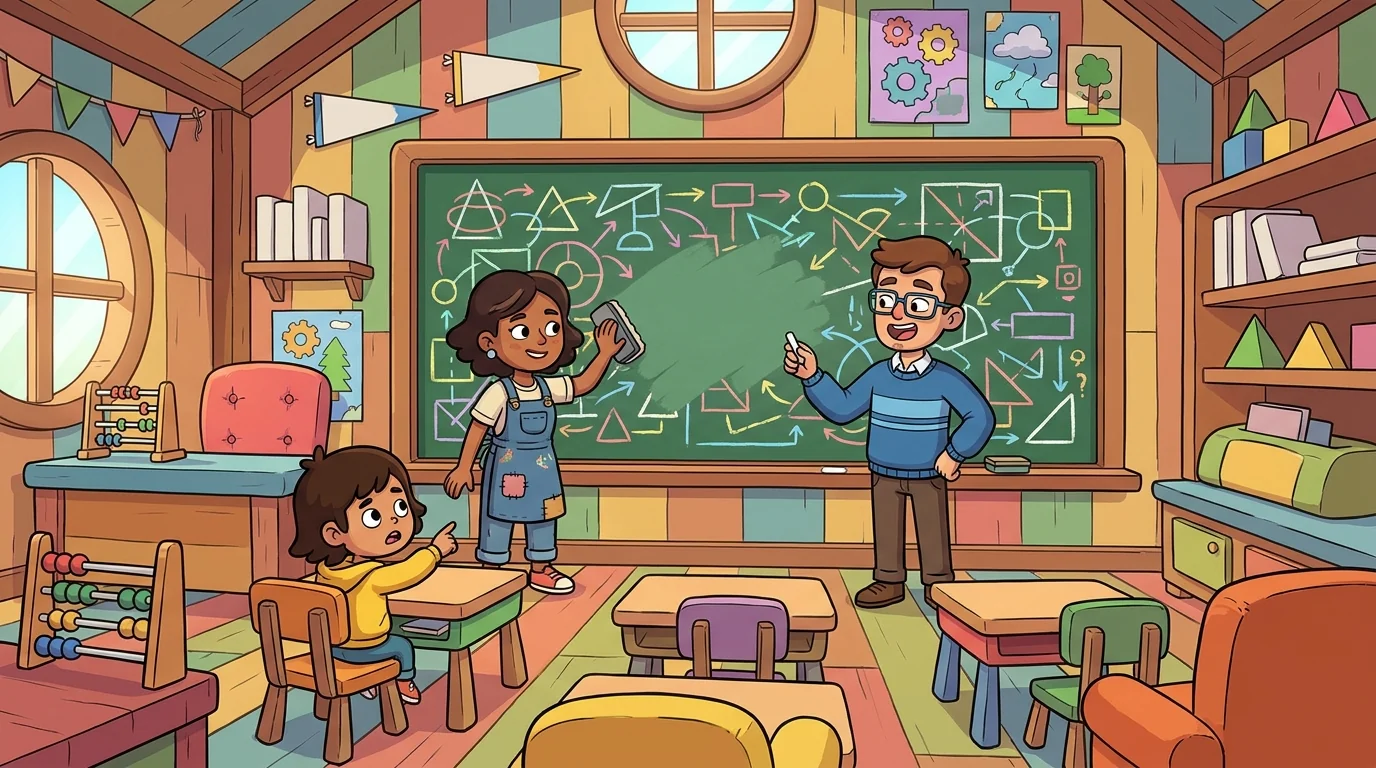
Model Milo loved to show his work. All of it. Every single step.
"Here's a hard one," he said, chalk squeaking, filling the whole board. "Watch me do the entire thing. I won't skip a line. I won't say 'and obviously.' You'll see every move, start to finish."
The apprentice watched Milo solve the whole problem, top to bottom, nothing hidden.
"There," said Milo, stepping back. "That's a worked example. Before you try a hard method yourself, it helps enormously to see it done once, completely, by somebody who isn't hiding the tricky parts."
Beside him, Faye was quietly erasing. Not the answer — the support. She rubbed out one of Milo's middle steps and left a blank. "And that's where I come in," she said. "Milo shows you everything. Then I start taking pieces away. One step, then a few more, then most of them — until there's nothing left on the board but you, doing it alone."
The apprentice looked at the half-erased board. "Wait — you undo his help?"
"On purpose," said Faye. "A little at a time."
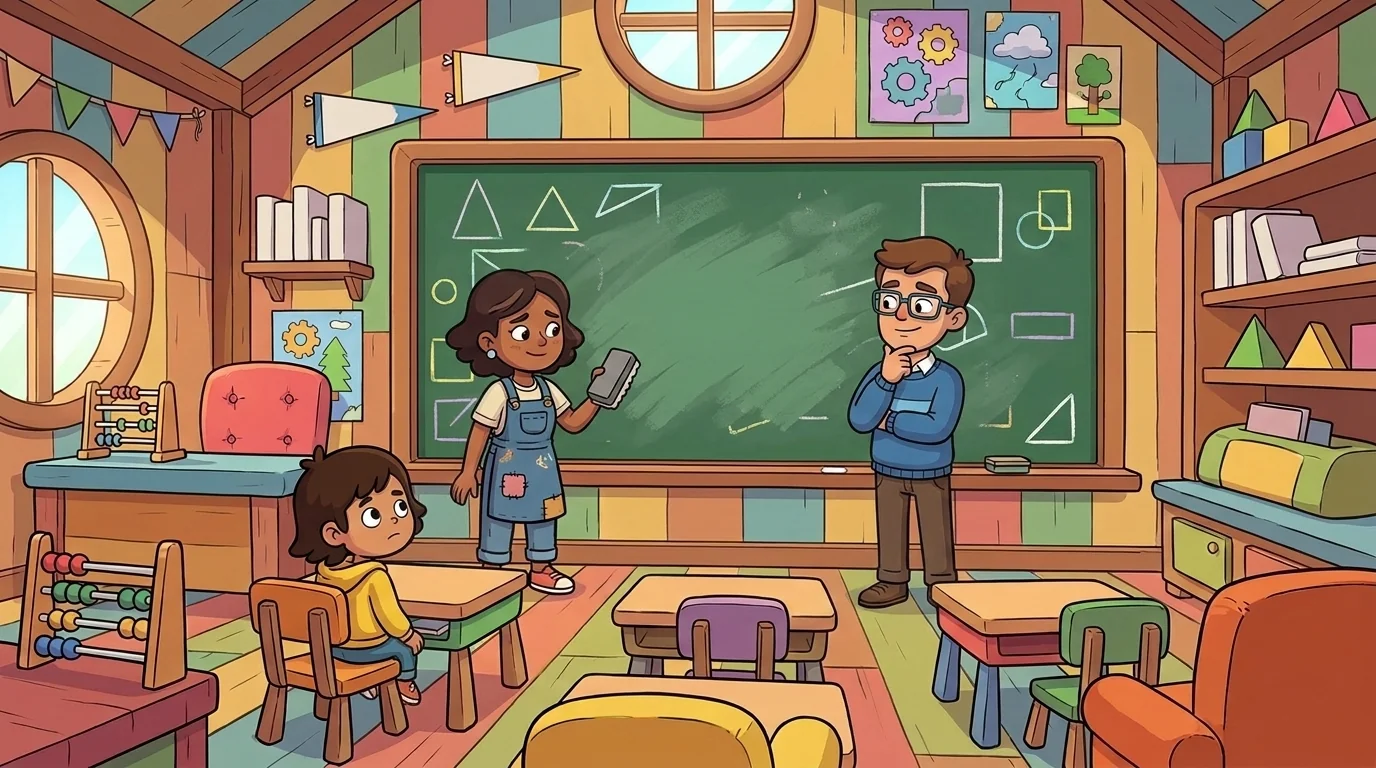
Faye didn't love telling this part, but she told the apprentice anyway.
"For a long time," Faye said, "I thought I was the mean one. Milo gives — he shows every step, he fills the whole board, everyone loves Milo. And me? I take away. I rub out the help. I leave people with blanks and gaps and problems they have to finish alone." She frowned at her eraser. "It felt cruel. Like walking someone halfway across a river and then stepping back onto the bank."
Milo set down his chalk, listening.
"And then," Faye went on, "I watched an apprentice who'd only ever had Milo. Every problem, fully worked, always shown. And when a brand-new problem came — with nobody to show it — she froze. She'd seen a hundred solutions and couldn't start a single one on her own." Faye's voice softened. "That's when I understood. Milo teaching forever isn't kindness. It's a river you never learn to cross. My blanks aren't me abandoning anyone. My blanks are me saying: your turn, and I believe you can."
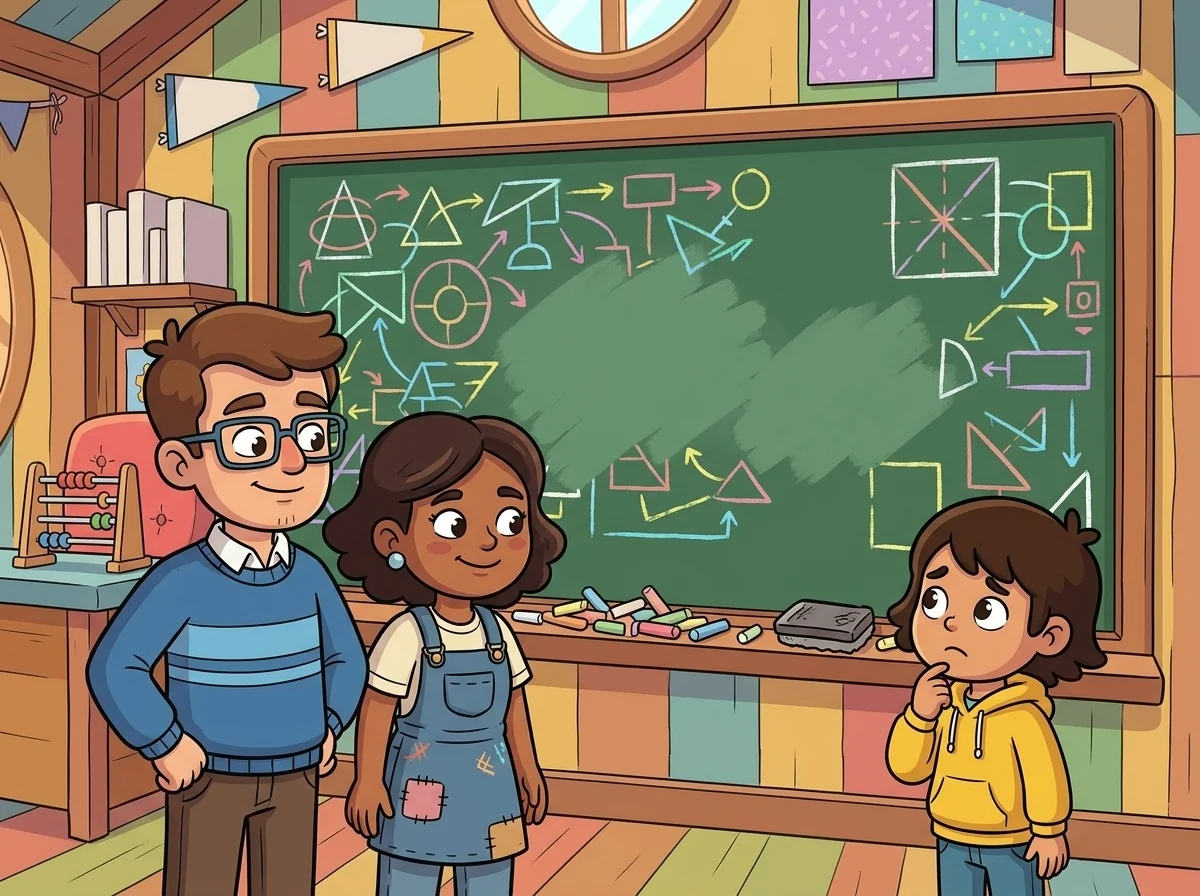
A worried apprentice came with exactly that problem. "I've studied so many worked examples. I understand every step when Milo shows me. But the second the board is blank, I panic. I can follow, but I can't start."
Milo and Faye looked at each other.
"That's because you skipped the middle," said Faye gently. "You went straight from watching Milo do everything to doing everything yourself — from all the help to none of it, in one jump. No wonder you froze."
"The fix isn't more of my worked examples," Milo admitted. "You've got plenty of those. The fix is fading — Faye's part. We take my full solution and we poke holes in it. First you fill in one missing step. Then three. Then you do the second half alone with the first half shown. Then the whole thing." He grinned. "Each time, a little less of me, a little more of you."
The apprentice blinked. "So the blanks get bigger on purpose. Until the whole thing is a blank — and by then I can fill it."
"By then it's not scary," said Faye, "because you climbed up to it one step at a time instead of jumping off the top."
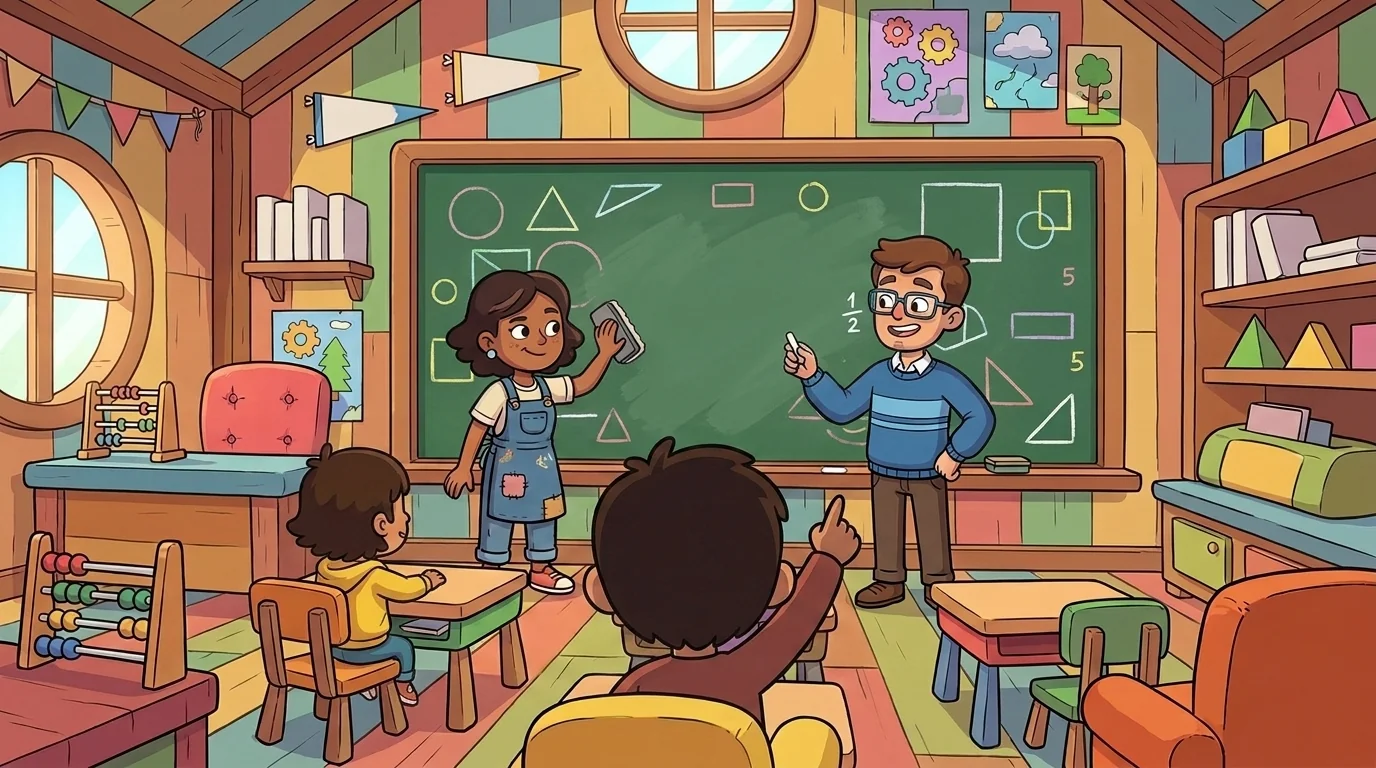
They tried it. Milo worked a fresh problem completely — the full model. Then Faye handed the apprentice the same kind of problem with just the last step blanked. Easy. Then one with the last three blanked. Then one with only the first line given. Then a bare, empty board.
The apprentice solved the bare board.
They stared at their own work like it belonged to someone else. "I just... did that. Alone. But an hour ago I couldn't start."
"An hour ago you had all of Milo," said Faye. "Just now you had all of you. The stuff in between — the fading — is the bridge. It's the part that actually moves the doing from him to you."
"Milo shows you it can be done," said Milo, nodding at Faye. "Faye makes sure you can do it. You need us in that order. Model first. Fade second. Independent last."
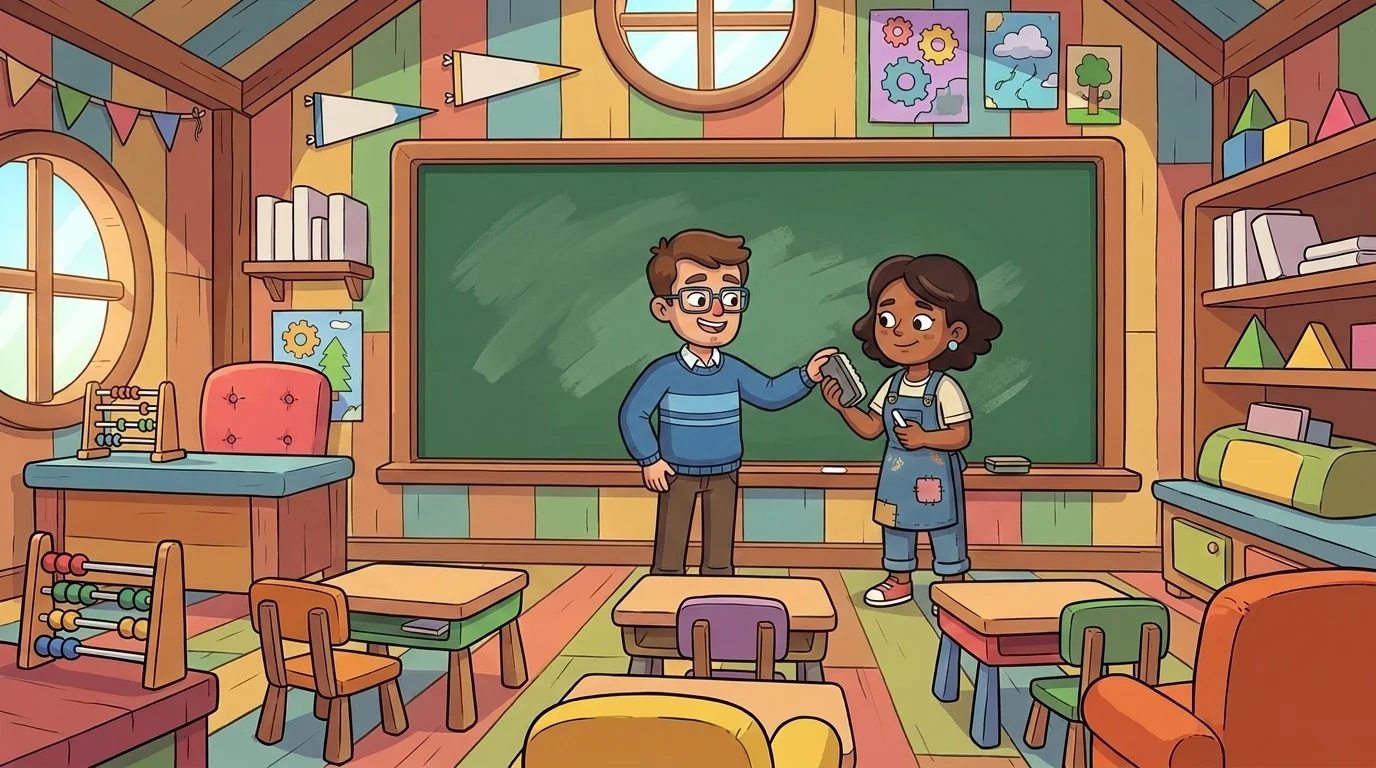
When the apprentice had gone — solving on her own now, not looking back — Milo and Faye cleaned the board together.
"I used to feel like the mean half," Faye said quietly. "The taker. The one who rubs out the help right when it's working." She turned the eraser over. "Everybody's grateful to you, Milo. Nobody thanks the person who makes the help disappear."
"They should," said Milo. "Because everything I show is useless if it stays on my board forever. I can model a solution a thousand times and it never becomes theirs until you fade me out of it. You're not the taker. You're the one who actually hands it over." He nudged her. "I show them it's possible. You make it theirs."
Faye was quiet, looking at the clean board — Milo's chalk and her eraser resting side by side — and thinking of the apprentice out there solving problems on her own two feet, needing neither of them now. And the old worry that she was the unkind one, the one who left people stranded, finally loosened and warmed into something better: the quiet, steadying gladness of understanding that stepping back, at the right moment, is not abandonment at all — it is the most trusting gift there is.
"I take the help away," Faye said softly.
"Because you trust them to stand," said Milo. "That was always the kindest part."
The AlcumusForge ensemble
Model Milo and Fade Faye is part of AlcumusForge's distributed-narrative cast. Each character embodies a different curricular primitive; together they teach the full subject.
-

Alcuin
Librarian-detective of the practice graph; knows what to try next
-
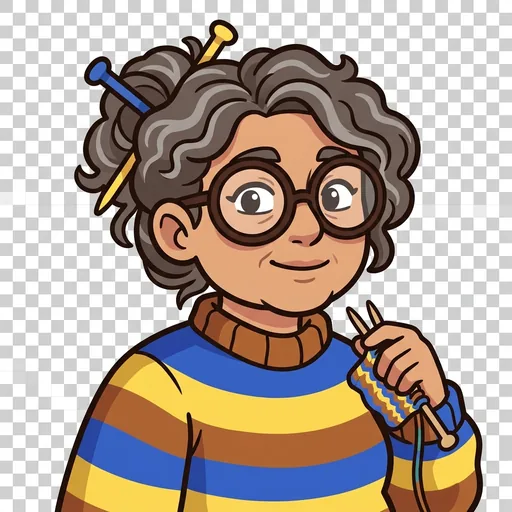
Hint Hertha
Hint author and gentle redirector; never gives the answer
-

Practice Patience
Slow-tortoise back-room keeper; long-game adviser
-

Streak Bear
Warm anti-anxiety presence; the soft-streak character
-
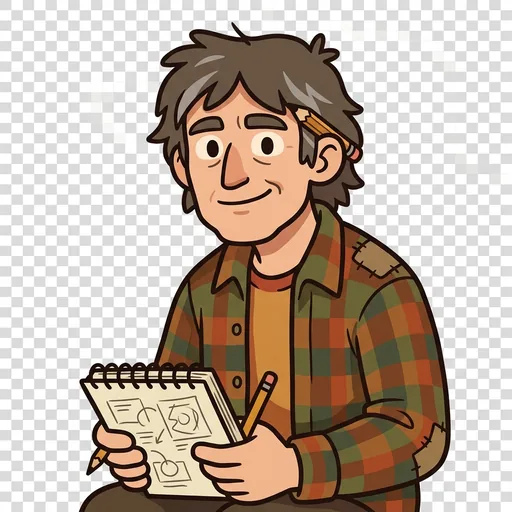
Stretch Sage
The wider-than-you-think reframer; surfaces transfer connections
-

Spacing Wren
Spaced review — bringing a topic back just before you'd forget it, so it sticks
-

Edge Goldi
Edge of competence — practicing at the just-right level where you grow fastest
-

Mistake Mabel
Mistakes as information — every error is a map to what to practice next
-

Mix Margo
Interleaving — mixing problem types so you learn to tell them apart and remember
-

Recall Remy
Retrieval practice — closing the book and recalling beats rereading