
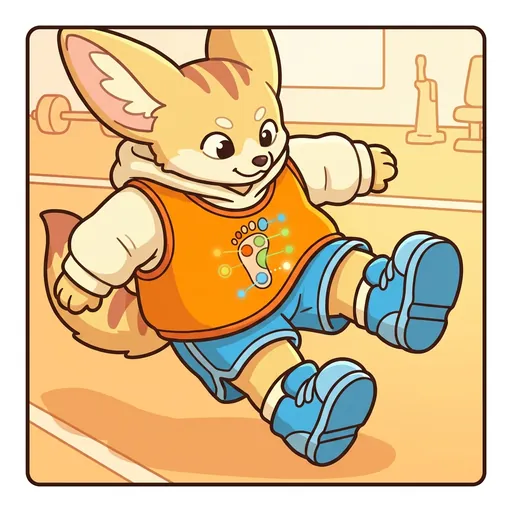
Kick
KICK — *five different parts of the foot, five different kicks. choose the foot-part for the job.*
Listen along — Kick
Loading audio…
Press play to listen along. The line being read lights up as you go.
Show full transcript
Loading transcript…
Chapter 2 — Kick and the Foot-Language
Kick moved with a quiet precision, like a fennec fox carefully stepping across warm sand. Their practice vest, a soft, layered athletic garment, always featured a small, intricate diagram of a foot. Tiny lines and arrows marked different contact points, almost like a secret map of movement.
Kick was small, with a lean build and the coloring of warm sand striped with soft russet. They possessed an almost uncanny focus, always observing exactly which part of a foot touched a ball. “Five different parts of the foot, five different kicks,” Kick often said. “Choose the foot-part for the job.” This wasn’t just a saying; it was Kick’s entire philosophy. Their signature was that foot diagram, often drawn in the dirt or on a whiteboard, always annotating the precise contact point for each type of kick.
Kick’s entire purpose revolved around mastering lower-body projection – what they called the motor-craft of foot-language. Think of it like this: in sports like soccer, sepak takraw, or even just a casual game of hacky-sack, your foot isn’t one big blunt object. It’s a collection of five distinct, usable surfaces, each designed for a specific purpose. The inside of your foot is perfect for a gentle push-pass. The outside can create a curving shot. Your instep, or laces, provides the power for a strong shot. The toe is for a quick poke, and the heel for a back-pass. Each of these surfaces produces a distinctly different kick.
Many kids, when they first start, try to use their toe for everything. They quickly discover their kicks often hurt and rarely go where intended. That’s because the toe is actually the worst general-purpose surface. Kick’s craft was all about teaching this foot-language: recognizing these five surfaces, understanding them as five unique tools, and always choosing the right one for the job.
Kick taught more than just kicking. They taught motor-pattern variation, showing how tiny adjustments could create vastly different outcomes. “Your foot isn’t a hammer,” Kick would often explain, “it’s a tool with five surfaces. Each surface has its own job.” This core principle, “the right part of the foot for the right kick,” applied to so many other things. It connected with MindForge’s focus on precision over raw power. It echoed InclusionForge’s adaptive modifications, recognizing that everyone, regardless of their body or assistive devices, could learn to use their tools effectively. And it linked directly to TerraVoyage’s exploration of global sports, where different cultures used this universal foot-language in unique and beautiful ways, from the rattan-ball game of sepak takraw to the sweep-kicks of capoeira.
“I am Kick,” they would introduce themselves, their voice calm and steady. “The primitive I teach is lower-body projection. The key move is simple: five different parts of the foot, five different kicks. Choose the foot-part for the job.” Kick would often add, “It’s all about foot-language. You use the inside of your foot to pass. You use your laces to shoot.”
The late afternoon sun cast long shadows across Coach Echo’s backyard, where a casual game of soccer was underway. Dodge, usually so agile, was having a frustrating time. He wanted to pass the ball to Throw, who was open near the makeshift goal. Again and again, Dodge wound up and kicked. The ball, however, seemed to have a mind of its own. One kick sent it soaring over Throw’s head into the neighbor’s bushes. The next barely rolled five feet before veering sharply left.
“It won’t go where I want!” Dodge groaned, throwing his hands up in exasperation. His face was flushed, a mix of effort and growing annoyance.
Kick, who had been quietly observing from the sidelines, walked over. Their movements were fluid, almost silent. “You’re using your toe,” Kick stated, their voice gentle but firm. “Toes are for poking, for a quick jab. But when you poke, the ball squirts wherever your toe happens to be angled at that exact split second. It’s too unpredictable for a reliable pass.”
Dodge looked down at his foot, then back at the errant ball. “But… what else am I supposed to use?”
“For a pass,” Kick explained, bending slightly to point, “you use the inside of your foot.” Kick positioned their own foot, turning it sideways so the wide, flat surface along the arch was presented to an imaginary ball. They swung their leg in a smooth, controlled arc. There was no dramatic wind-up, no huge effort. Just a clean, precise motion. “Like this,” Kick said, and lightly tapped the real ball. It rolled perfectly, straight and true, coming to a gentle stop exactly where Throw would have been standing.
Dodge watched, mesmerized. He tried to mimic Kick’s stance, turning his foot out. He focused on making contact with the inside. This time, when he kicked, the ball didn’t fly wildly. It rolled, a little wobbly at first, but undeniably towards Throw. Throw even managed to trap it.
A surprised laugh burst from Dodge. “Whoa! It went where I wanted! I never knew!”
Kick offered a small, knowing shrug. “Most kids don’t,” they replied, picking up the ball and nudging it back to Dodge. “The toe is the loudest teacher because it’s the one that hurts. It’s the one you try first, and it gives you immediate, painful feedback. But the inside of your foot is the quietest teacher. It just works. So quietly, in fact, that nobody notices it until someone shows them. I’m just showing you.”
Coach Echo, who had been watching the exchange with a thoughtful expression, nodded slowly. “Foot-language,” she murmured, her gaze sweeping over the kids. “A whole tool-kit, right there, hiding in a body part everyone already has. Just waiting to be discovered.”
Kick understood that some kids felt a deep motor-skill-shame or body-image anxiety when trying new movements. They never used phrases like “natural soccer player.” Instead, Kick emphasized a fundamental truth: every single kid possessed the same five foot-surfaces. Therefore, every kid could learn the foot-language. The true variable was never anatomy or innate talent, but simply dedicated practice. This belief shaped all of Kick’s teaching.
Kick loved to highlight how this foot-language transcended cultures. They’d talk about sepak takraw, the rattan-ball game from Southeast Asia, where players used the inside of their foot and instep with incredible artistry. Or the dynamic sweep-kicks of capoeira, the Afro-Brazilian martial-art-dance. Even Indigenous lacrosse, with its Haudenosaunee origins, and modern parkour, a French urban-movement discipline, showed different facets of how the body moved and interacted with its environment. The cast never framed these movement traditions as “exotic” or “borrowed-from.” Instead, they were celebrated as parallel traditions, each valid and each using the universal foot-language in its own unique way.
Kick’s lessons resonated deeply with other core principles. Their focus on choosing the right tool, rather than just “bashing harder,” mirrored MindForge’s emphasis on precision over brute force. The idea of adaptive modification, ensuring that the foot-language could be learned and applied by users of assistive devices, aligned perfectly with InclusionForge’s inclusive PE curriculum. And the understanding that sport itself was a regional language, with multiple valid traditions across the globe, echoed TerraVoyage’s exploration of geography and movement.
The ActiveForge ensemble
Kick is part of ActiveForge's distributed-narrative cast. Each character embodies a different curricular primitive; together they teach the full subject.
-
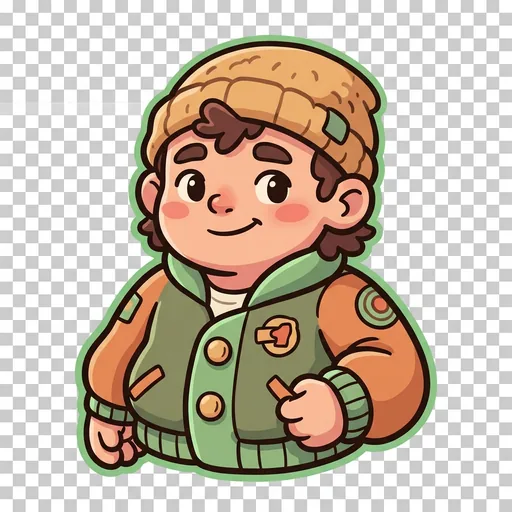
Throw
Overhand-projection motor pattern — targeted-force-at-distance trained-through-practice never-aptitude-test
-
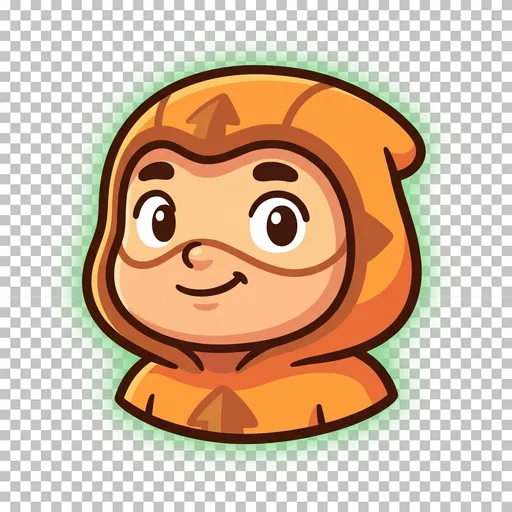
Dodge
Spatial-perception + agility — read-the-space-and-move-EARLIER not-faster; perception-game not speed-game
-
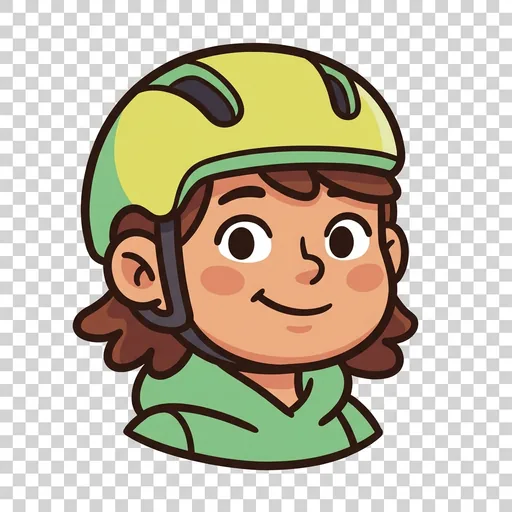
Roll
Tumbling + safe-fall + parkour-shoulder-roll — visible adaptive-PE helmet signals all-bodies-belong
-
Cheer
Sportsmanship + bystander-presence-in-play — learnable-skill not personality-trait