Pose, Pitch and Easel
STAND, THEN SPEAK — how you deliver carries as much as what you say: Pose steadies the body first so the voice has a foundation, Pitch varies the voice like a road that rises and falls instead of a flat wall, and Easel shows the idea with a picture or prop instead of only telling it
A story read by Pose, Pitch and Easel
Loading audio…
Press play to listen along. The line being read lights up as you go.
Show full transcript
Loading transcript…
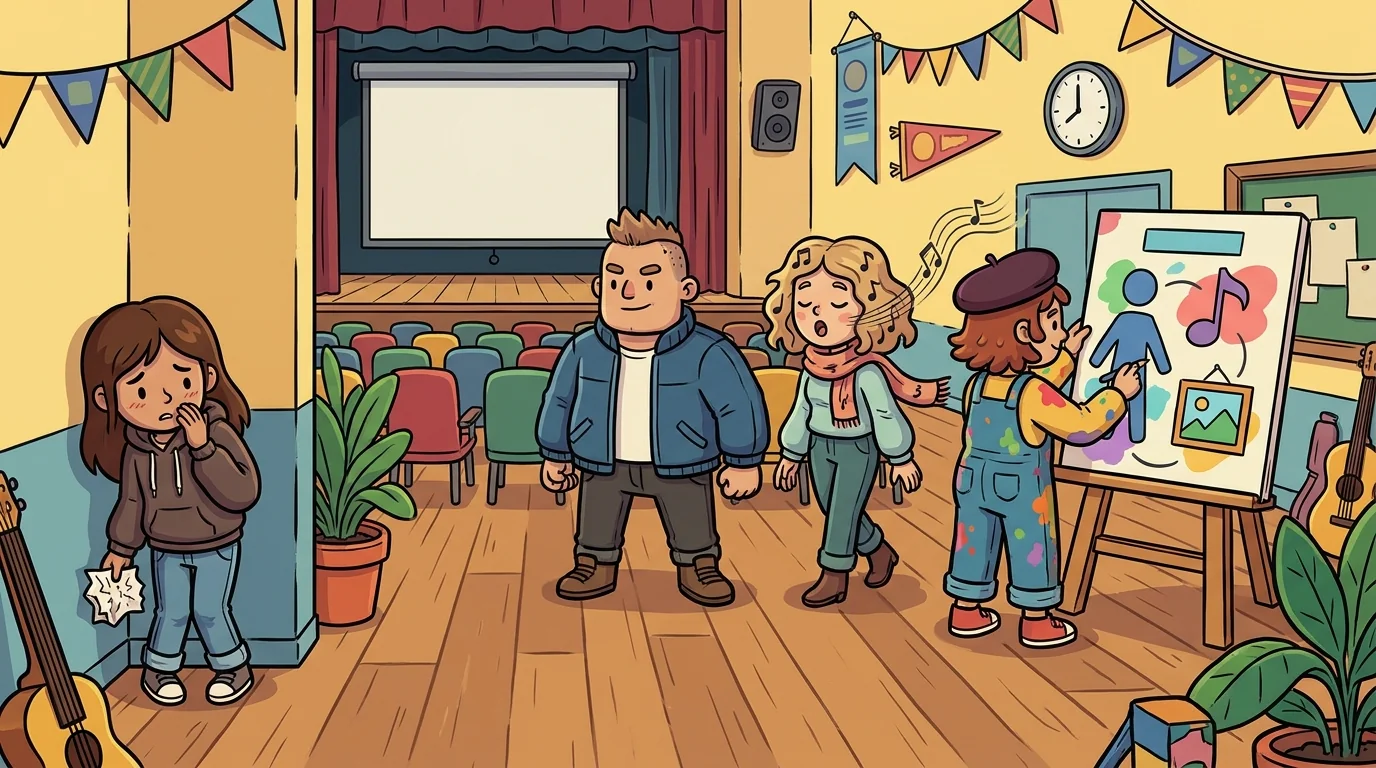
The girl had to give her talk in five minutes, and she was doing the thing nervous speakers do: standing hunched in the corner, whispering her notes to the floor, hoping to become invisible.
Three helpers found her there — and they were not going to fix her words. Her words were fine. They were going to fix everything around the words, the part most people forget is even part of speaking.
Pose planted two steady feet on the ground and stood tall.
Pitch hummed a little tune that rose and fell like a country road.
And Easel unrolled a big clear picture and set it on a stand.
"Before you say a single word," said Pose, "let's fix how you're standing. It matters more than you think."
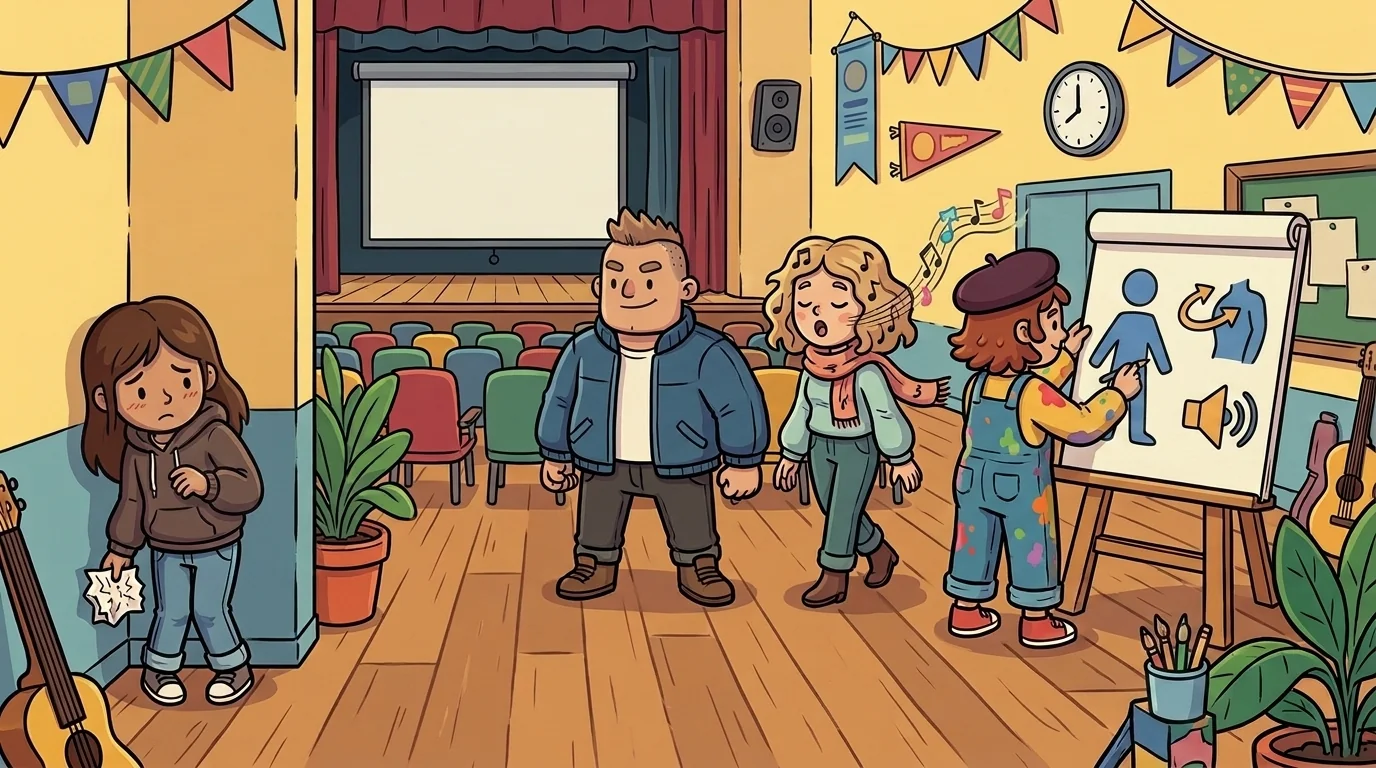
Pose went first — because, strangely, speaking well begins before you speak at all, with the body.
"Look at you — hunched, curled in, staring at the floor," said Pose, gently. "Your body's saying 'don't look at me,' and your voice is going to say the exact same thing." Pose showed her: feet planted a little apart, steady. Shoulders down and back. Chin up, eyes forward. "The body teaches the voice. When you stand small and scared, your voice comes out small and scared — squeezed, shaky, aimed at the floor. But when you stand — really stand, planted and open — something travels up from your feet into your voice, and it comes out steadier, before you've even practiced a word." Pose held the tall, easy posture. "You don't have to feel brave first. Stand brave, and the feeling follows the body up. Pose, then speak. Always in that order."
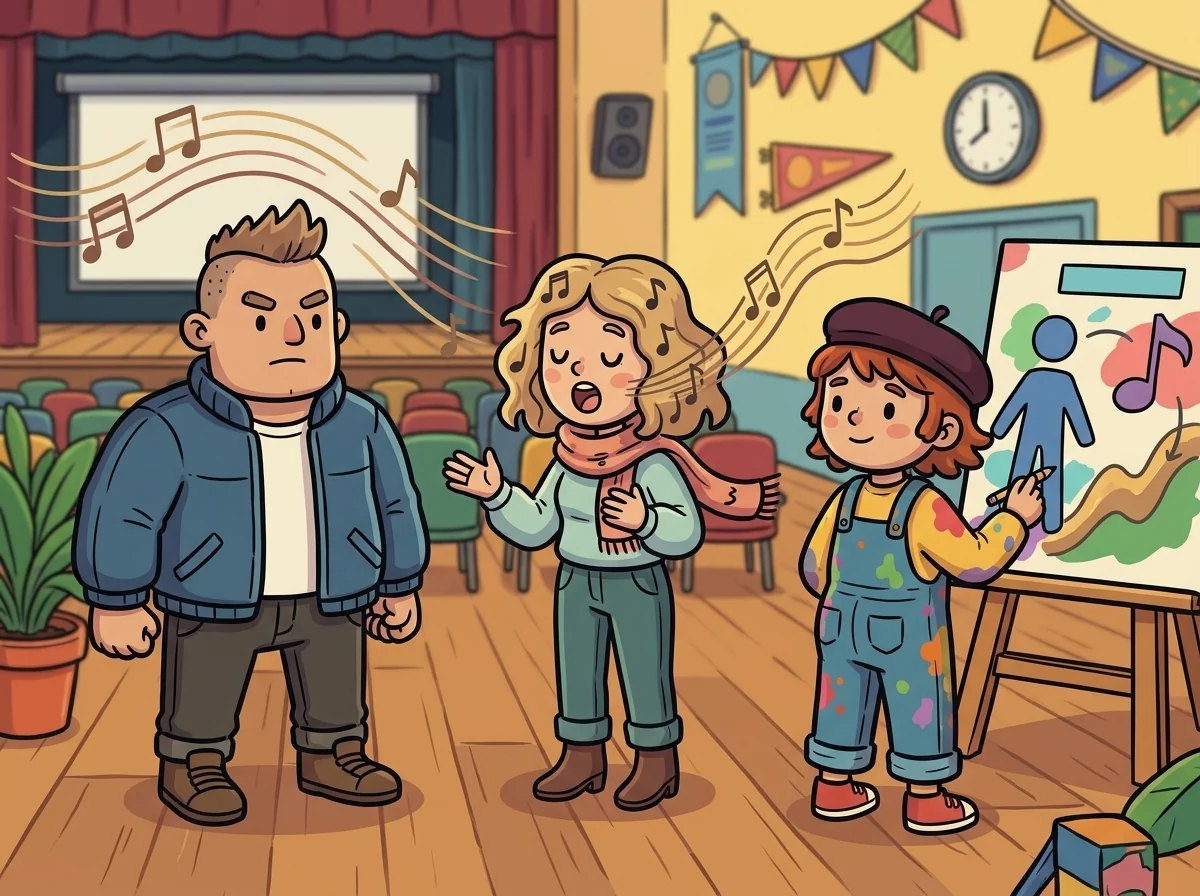
Then Pitch hummed that rising-and-falling tune, because a steady body still needs a voice that moves.
"Now the voice itself," said Pitch. "Listen to how you've been reading your notes — flat. All one note, wall to wall. 'And then the water cycle evaporates and condenses and precipitates.'" Pitch flattened it into a gray drone, and the girl winced to hear it. "A flat voice is a wall — people's ears just bounce off it and their minds wander away. But your voice can be a road instead." And Pitch showed her — lifting on the important word, slowing for the big idea, dropping low for the serious part, quickening with excitement. "And then — the water — rises — invisibly — into the sky." The very same words, but now they went somewhere. "Your voice rises and falls like a road with hills and valleys, and people's attention rides along it. Punch the key word. Pause before the big one. Let it move. A voice that moves is a voice people follow."
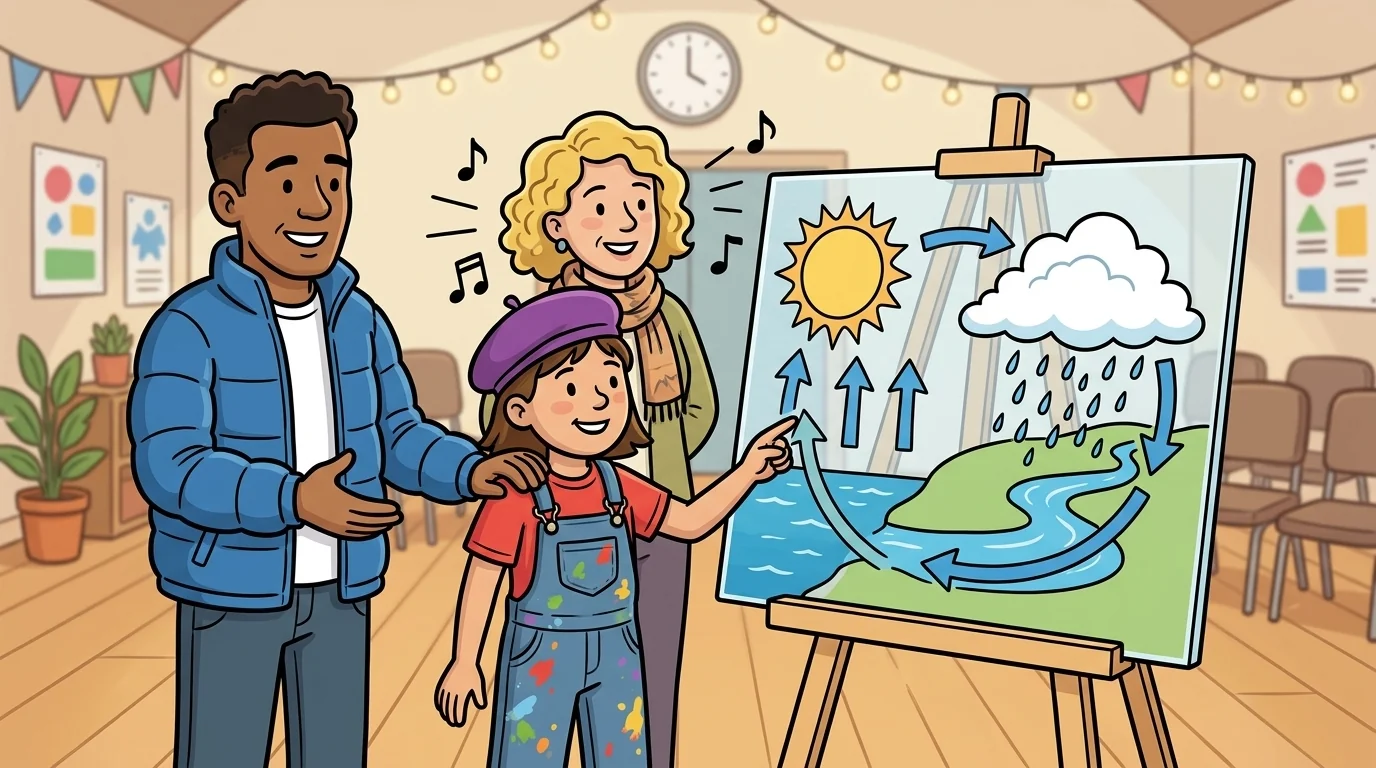
And then Easel set the big clear picture on its stand, because some things land far better shown than said.
"Here's the last one," said Easel. "You've been trying to describe the whole water cycle in words — the rising, the clouds, the rain, the rivers. And words are working hard. But watch what happens when I just—" Easel tapped the big clear diagram: sun, arrows up, cloud, arrows down, river, back to the sea. "There. Now they can see it while you talk. Show, don't just tell." Easel smiled. "A picture, a chart, a simple prop — it does half your work for you. Instead of everyone building the cycle in their imagination from your words alone, they see it right there, and your words just guide their eyes around it. One good visual can carry an idea that a hundred words would fumble. Don't only tell them. Show them."
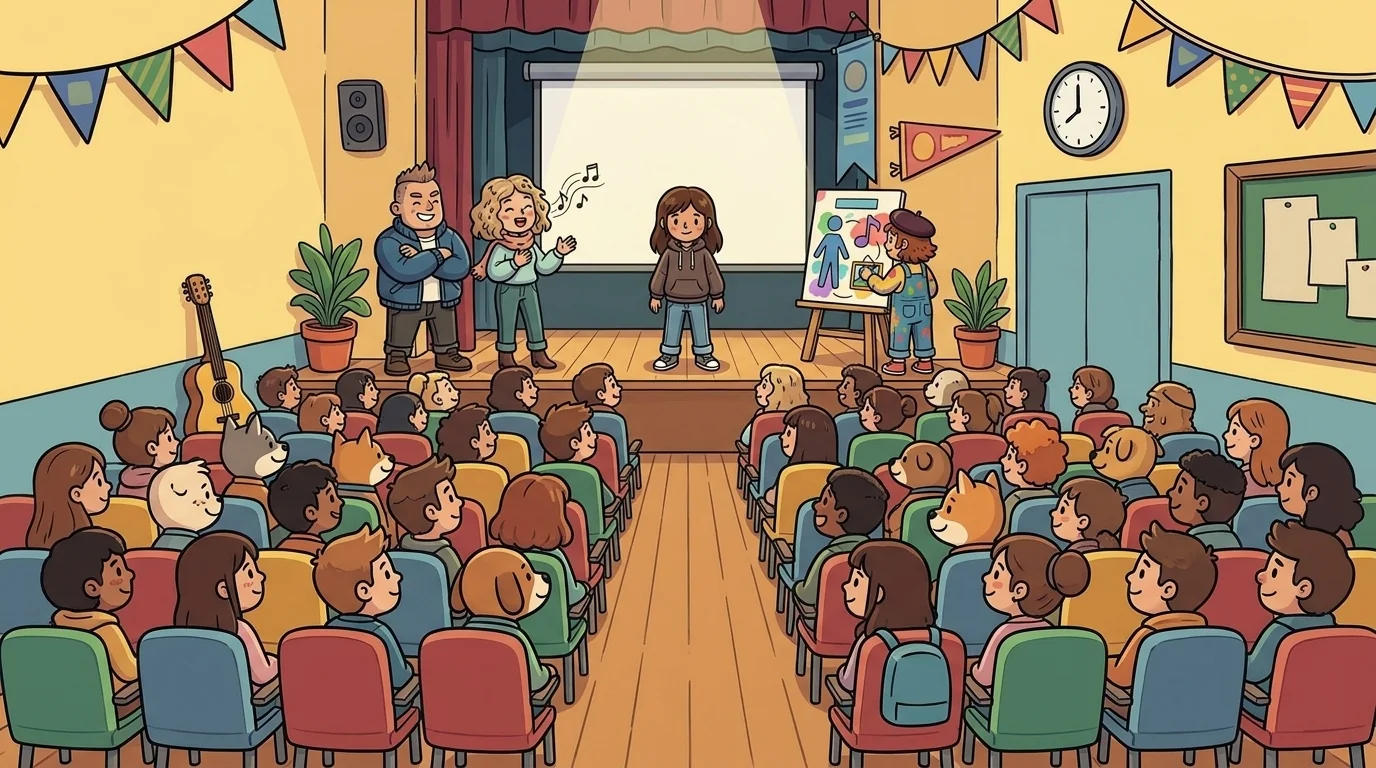
Five minutes later the girl gave her talk — planted and tall, voice rising and falling like a road, one clear picture doing half the work — and the room, for once, actually leaned in. Same words she'd been whispering to the floor. Completely different talk.
"Good stance," said Pitch.
"Good voice," said Easel.
"Good showing," said Pose.
There is a real, warming thrill in being heard — in feeling a room lean in instead of drift off — and the wonderful secret is that it isn't reserved for people who were simply born bold. It's craft. It's standing steady before you speak, letting your voice move like a road instead of a wall, and showing the idea instead of only telling it. None of that requires you to magically stop being nervous. It just requires you to stand, and move your voice, and show your picture — and let those carry you, until one day you look up and realize the room is listening, and it's because of things you learned to do.
The SpeakForge ensemble
Pose, Pitch and Easel is part of SpeakForge's distributed-narrative cast. Each character embodies a different curricular primitive; together they teach the full subject.
-

Pose
Posture / presence / stance — 'Stand. Then speak.'
-

Pitch
Voice projection + tone variation — 'Your voice is a road. Not a wall.'
-

Hark
Active listening — 'Listen all the way through.'
-

Truss
Argument structure (claim / evidence / reasoning) — 'Claim, then proof, then why.'
-

Echo
Audience awareness + tone calibration — 'Who's listening? Speak to THEM.'
-

Easel
Visual aids / multimedia displays — show, don't just tell; one clear picture beats a hundred words (SL.5)
-

Waypoint
Signposting — the verbal roadmap; 'first, next, finally' so listeners never get lost (SL.4)
-

Volley
Q&A — fielding and answering questions; catch it, breathe, send it back clean (SL.1)
-

Mosaic
Building on others' ideas — synthesizing a discussion; 'you said X, and building on that…' (SL.1c-d)
-

Usher
Turn-taking & discussion norms — everyone gets a seat at the talk; make room for the quiet voice (SL.1b)