Hop
SAME-SIZED HOPS — *every hop the same length; counting hops = counting equal jumps; seeds early addition.*
Loading audio…
Press play to listen along. The line being read lights up as you go.
Show full transcript
Loading transcript…
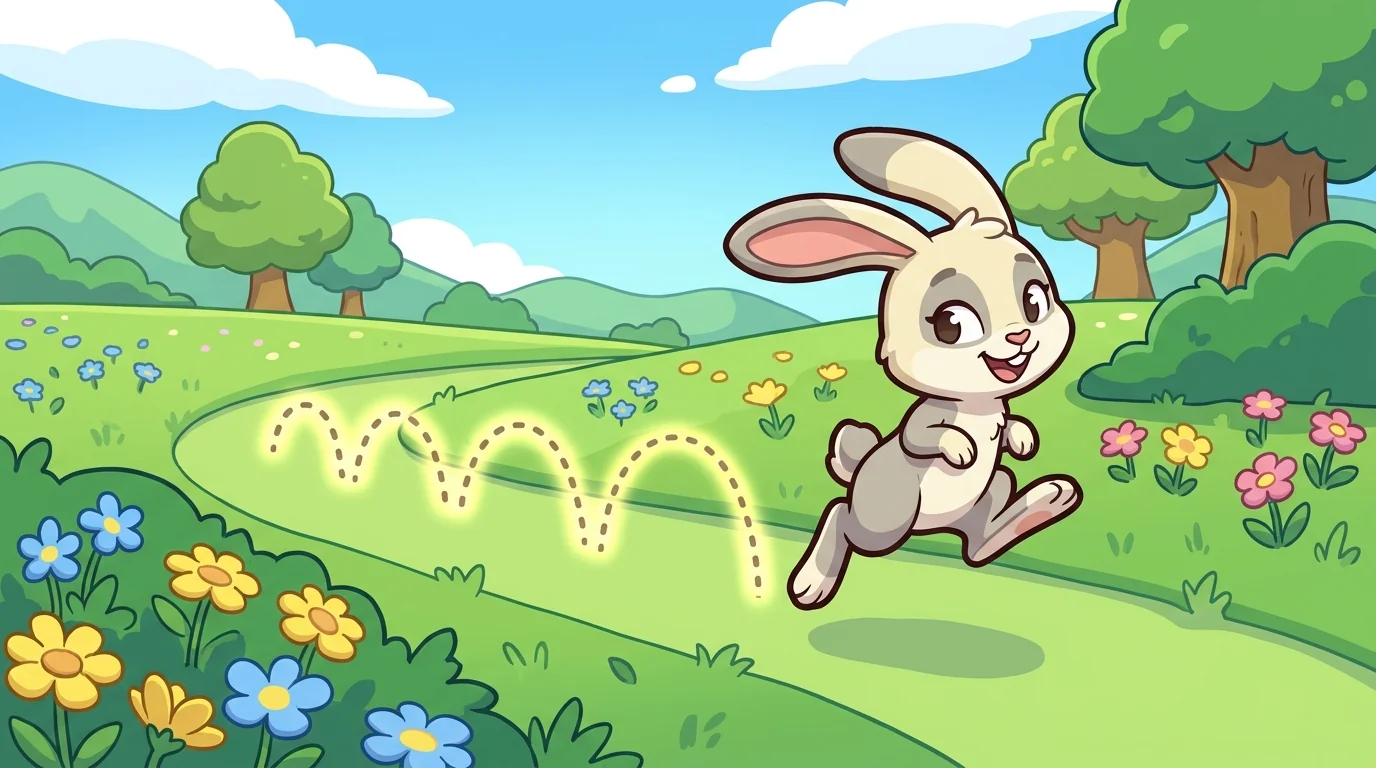
Hop is a cream-and-grey rabbit-kid with strong back legs and soft long ears. She lives in the math-garden's hopping-meadow — a long open meadow with a soft grass-path that has little dotted jump-arcs drawn along it.
Hop's hops are all exactly the same size. Every. Single. One. Hop. Hop. Hop. Hop. As she hops, the soft dotted arcs glow beneath her — each arc the same length as the last. And when she's done, she looks back at the neat row of glowing arcs and says her gentle little words: "Same hop. Every time."
Hop learned to keep her hops the same after a wobbly, jumbly day.
When she was small, she used to hop big-then-little-then-big — a giant leap, then a tiny bounce, then a huge one again. It was fun for playing! But when she tried to count those hops to see how far she'd gone, the answer never made sense, because every hop was a different size.
So she slowed down. She practiced making each hop match the one before — checking, careful, hop... hop... hop. And suddenly counting made sense: three same hops meant three same-sized-hops of distance. "When the hops all match," Hop says, "the counting comes out true." She has hopped the same, every time, ever since.
Today, Calc Jr brings the kid to the hopping-meadow to visit Hop. Calc Jr stays right there, ready to clap along.
"Watch Hop hop," Calc Jr says. "Then YOU hop. Count each hop. Same hop, every time. Count how many hops you took — that's the answer."
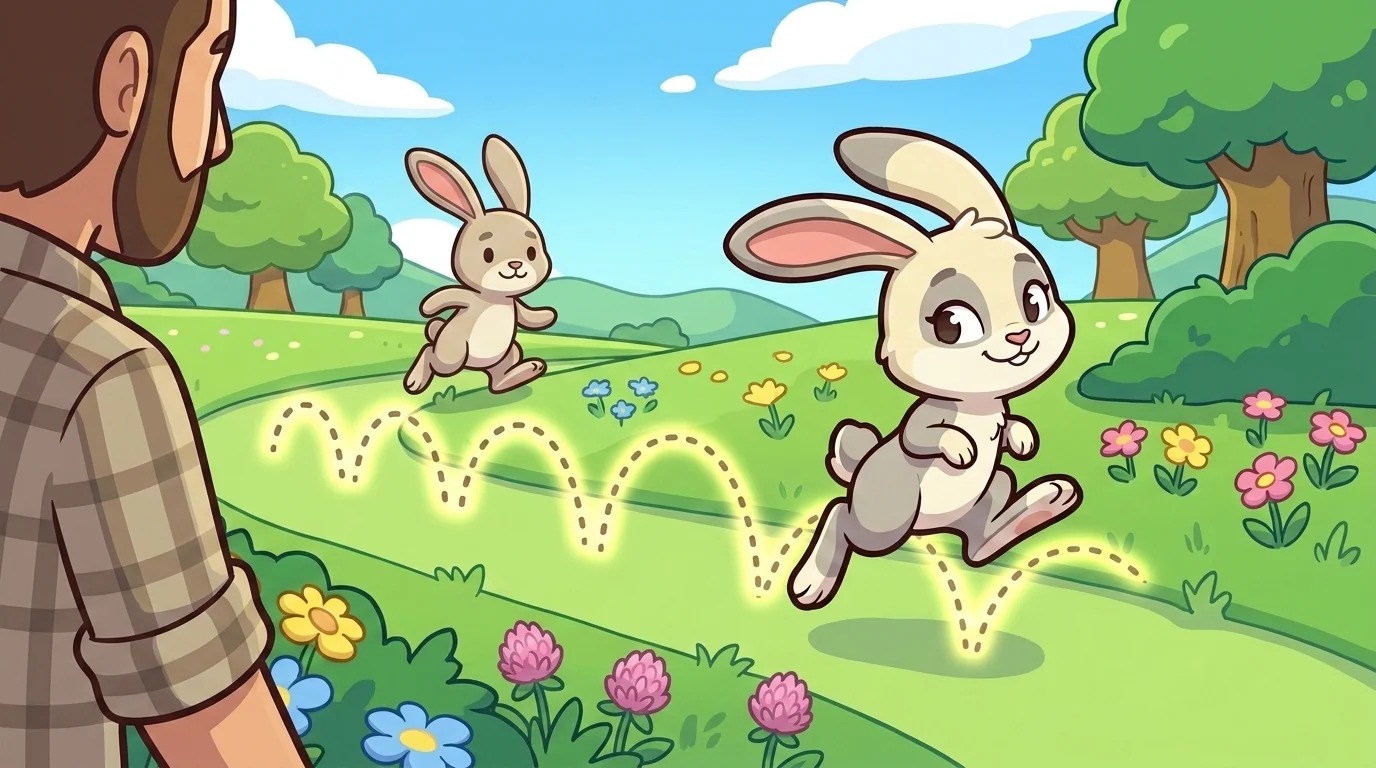
Hop hops slowly and carefully, checking each hop against the last: same size, same size, same size. A grown-up can hop along too — the grown-up claps, the kid hops, and you count the hops together, because hopping is for play and thinking together, never racing. And Hop never says too short or too big. If a hop comes out the wrong size, she just says, "Let's hop again. Same hop. Every time." There is no scolding in the hopping-meadow. And here's the wonderful part: when Hop hops 2 times, then 2 more times, she has hopped 2 and 2 more — four same-sized hops! That's the little seed of adding. She doesn't need to know the plus sign yet. She just knows: some hops, plus some more hops, makes more hops. Calc Jr is right there the whole time, and all three hop together — same hop, every time.
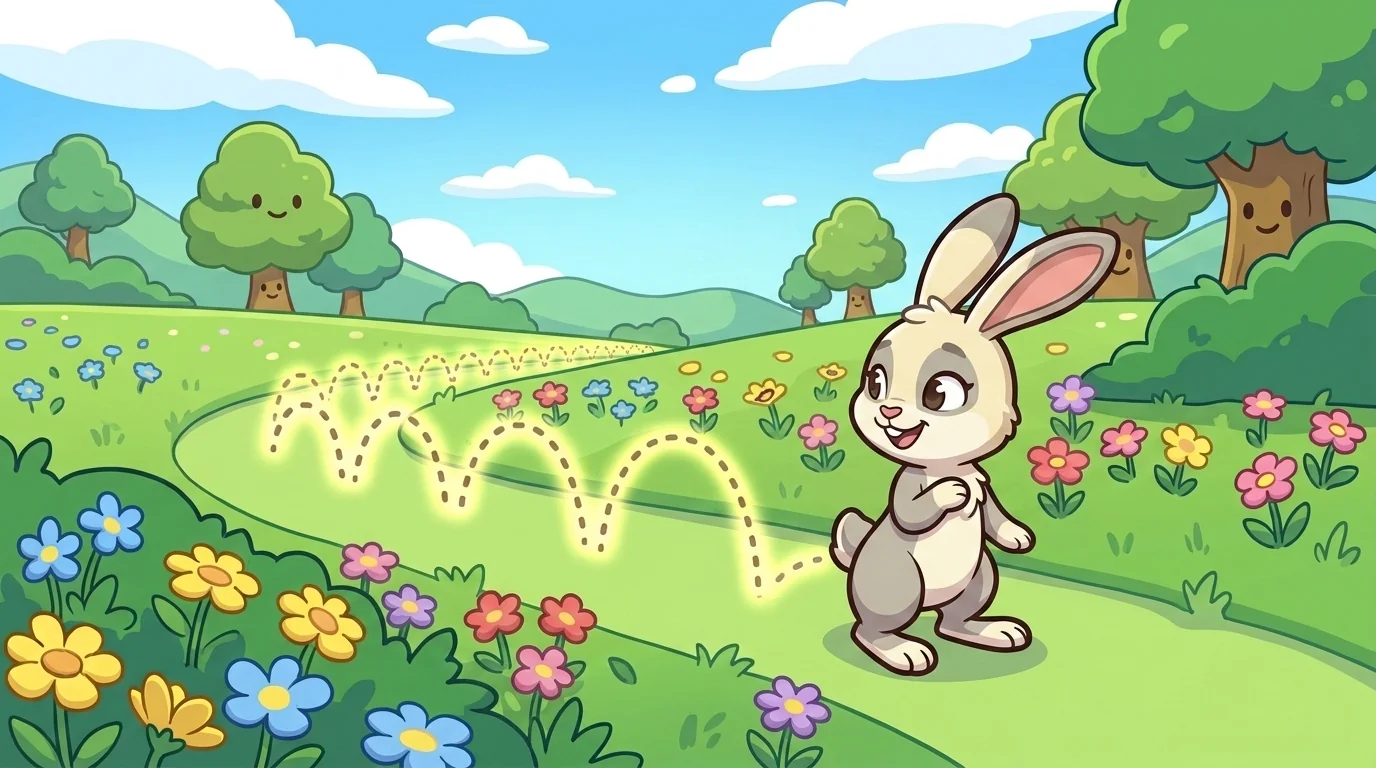
"Same hop. Every time." That's Hop.
And when the hops all come out matching and even, one after another, Hop feels warm and glad inside — that soft, cozy, proud feeling of hopping and counting alongside a friend and a grown-up, with everything coming out true. "Same hop. Every time," she says, calm and happy. That gentle, glad feeling is the very best part of hopping.
The CountingPals ensemble
Hop is part of CountingPals's distributed-narrative cast. Each character embodies a different curricular primitive; together they teach the full subject.
-

Tappa
One-to-one correspondence — soft russet squirrel-kid who taps each item as she counts; trail of glowing number-dots above each tapped item
-
Pile
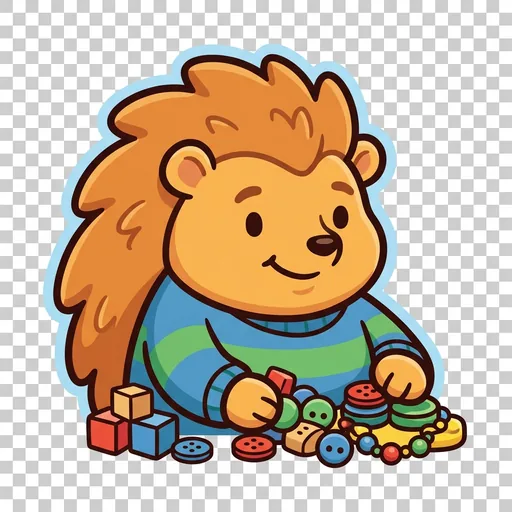
Grouping + same-vs-different — plump warm-amber hedgehog-kid who scoops + groups + piles things into matching bunches; tidy piles of 3s + 4s + 5s on color-coded sorting-mat