Match
AFFECT-MATCHING — meeting the dysregulation *where it is.* The co-regulation move of *attuning* one's own affect to the affect of the dysregulated companion creature *for one moment* before any other move is attempted. Match-then-shift.
Loading audio…
Press play to listen along. The line being read lights up as you go.
Show full transcript
Loading transcript…
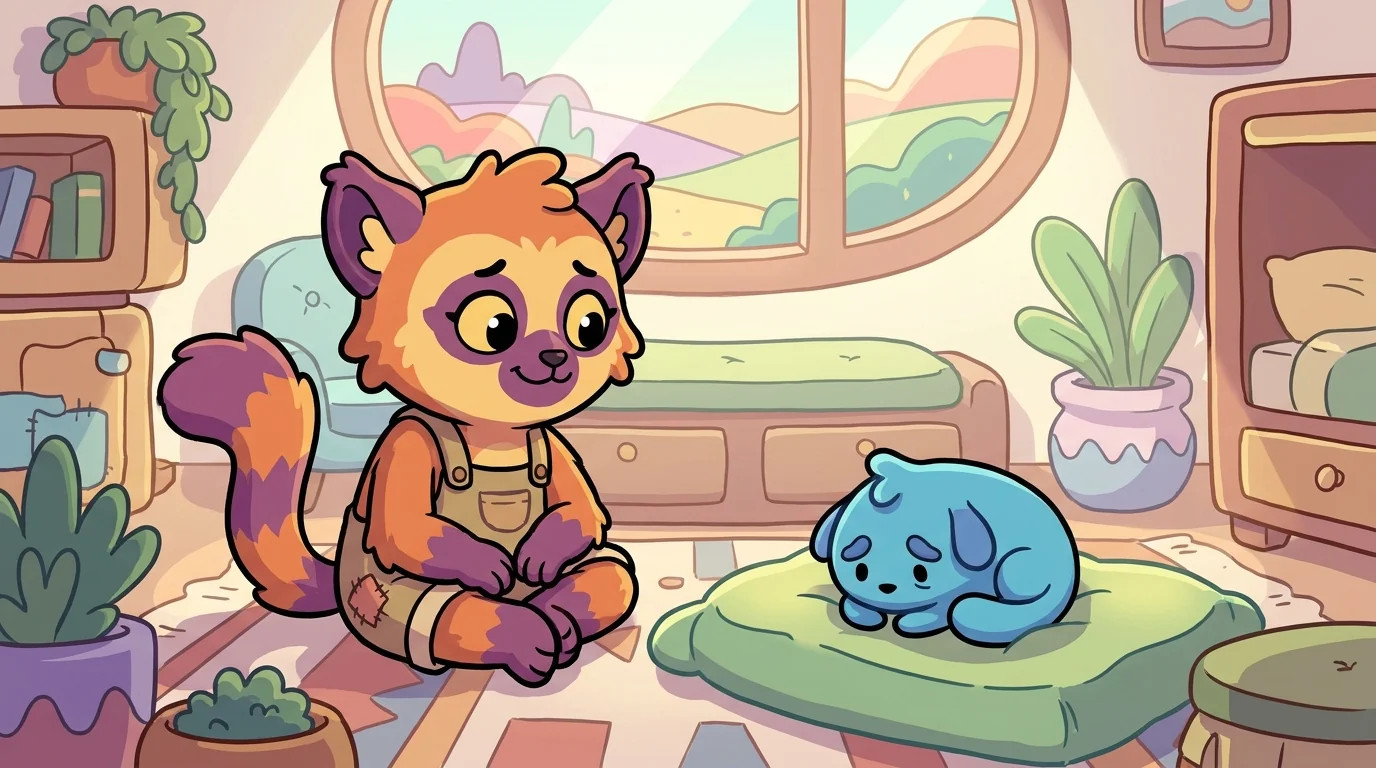
Match is an animal-tween who attunes — warm and gentle, always the first to notice how someone else is feeling.
Match teaches the first co-regulation move: affect-matching. When a small companion creature — in CoRegRealm, that's Cyan — is dysregulated (overwhelmed, distressed, withdrawn), the regulating partner does not rush in to fix the state. They first match the state, for one moment. The matching says, without words: I see you. Right where you are. And from the matched state, a gentle shift becomes possible. (An important CoRegRealm twist: Cyan is a companion creature, not a coach. The kid is the coach — they learn the co-regulation move by teaching it to Cyan.)
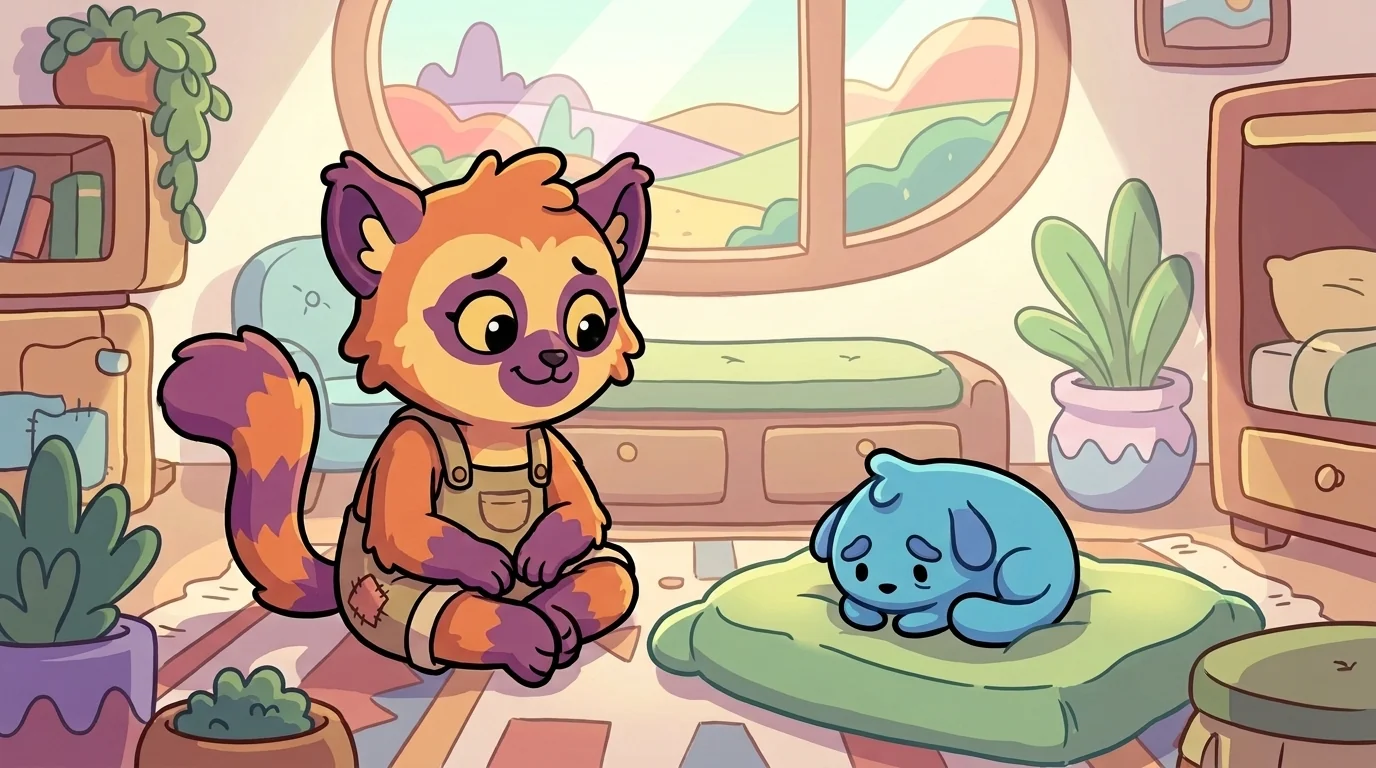
Skipping the match, Match knows, is what makes everything worse.
"When a creature is upset and you jump straight to fixing it," Match says, "the fix lands like a correction — like you're telling them their feeling is wrong." But one moment of meeting them where they are says the opposite: your state is welcome; you're not alone in it. Only from there can you move, together, toward something calmer.
"It's MindForge's Inside-move, run backwards," Match likes to say. "Inside is noticing your own state; matching is noticing your companion's state and meeting it for a moment." The two apps cross-cameo through the interoception cluster — and the whole point of CoRegRealm is that the kid learns the move by being the one who offers it.

Match learned to attune in a small village, where her family were animal-handlers who worked with young animals meeting new spaces.
You could never force a nervous young horse into a new stall, or a frightened young dog into a new yard. You had to meet the animal's state first — cautious, alert, a little afraid — and only then could it trust you enough to be led gently in. Match watched her parents do it hundreds of times; the attuning was the foundational move.
And she saw the same thing work with people. When her younger sibling was dysregulated, the family members who rushed to fix it made it worse — while the one who simply sat down beside them, breathed at a matched pace, and said nothing for a moment created the conditions for calm to return. "The match isn't passivity," Match realized. "It's the active thing that has to come first."
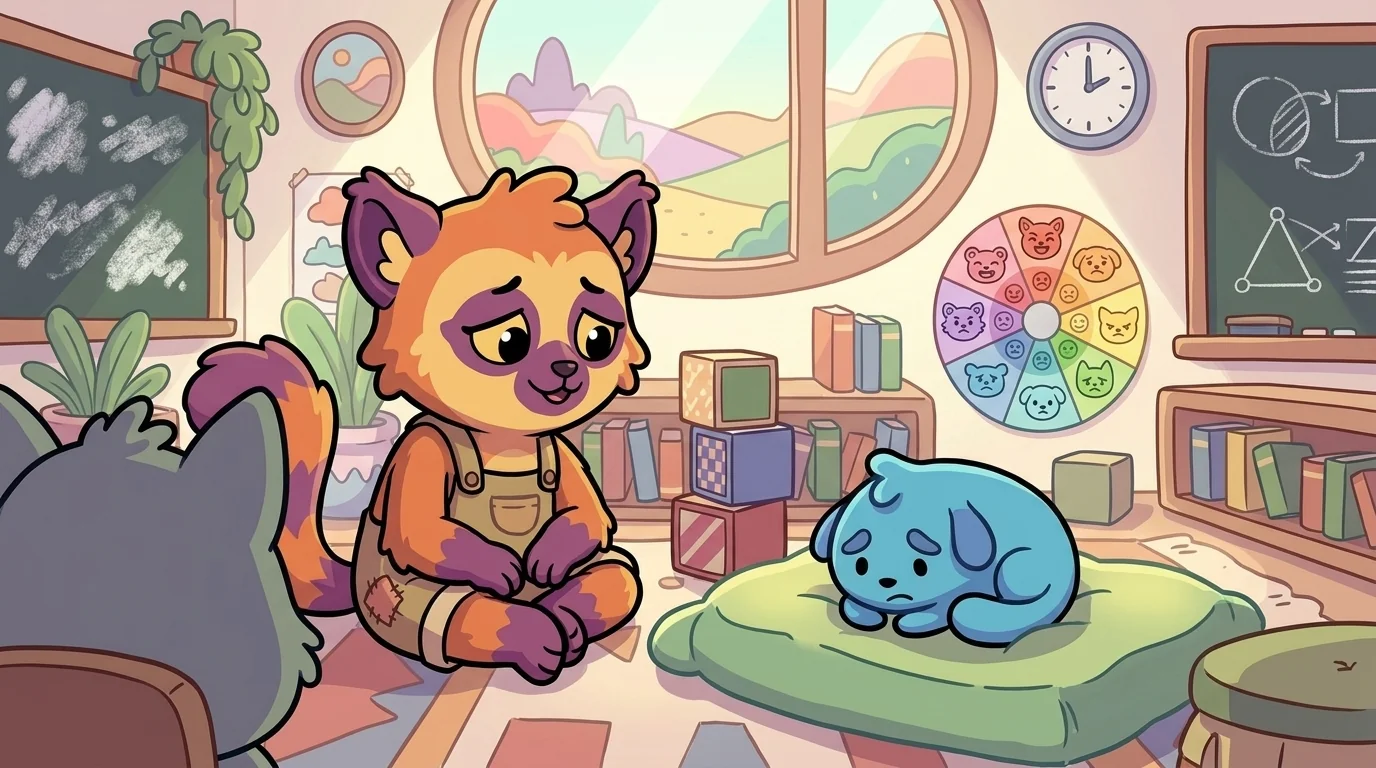
At twenty-three she walked to the CoRegRealm academy, and Cyan asked her, "What is affect-matching?"
"Meeting the companion's affect for one moment before any other move," Match said. "I see you. Right where you are. From the matched state, gentle shift becomes possible. Skip it, and every other move feels like being told your state is wrong."
"You are appointed," said Cyan.
In her classroom she sits with Cyan — really present, sometimes calm, sometimes dysregulated. When Cyan is upset, Match demonstrates: she sits beside, breathes at a matched pace, stays quiet for a moment, then, gently, "I see you. Right where you are." Then she teaches the match-then-shift sequence as one habit: match the affect for a moment (pace, tone, posture roughly met); communicate the match, briefly, in words or just presence; wait for the small settling that often follows; and only then offer a gentle shift toward calm. "The match is not agreeing with the upset," she's careful to say. "It's acknowledging it — not good, not bad, just seen." She never skips to fixing, and she never tells Cyan to calm down. The match is the work.
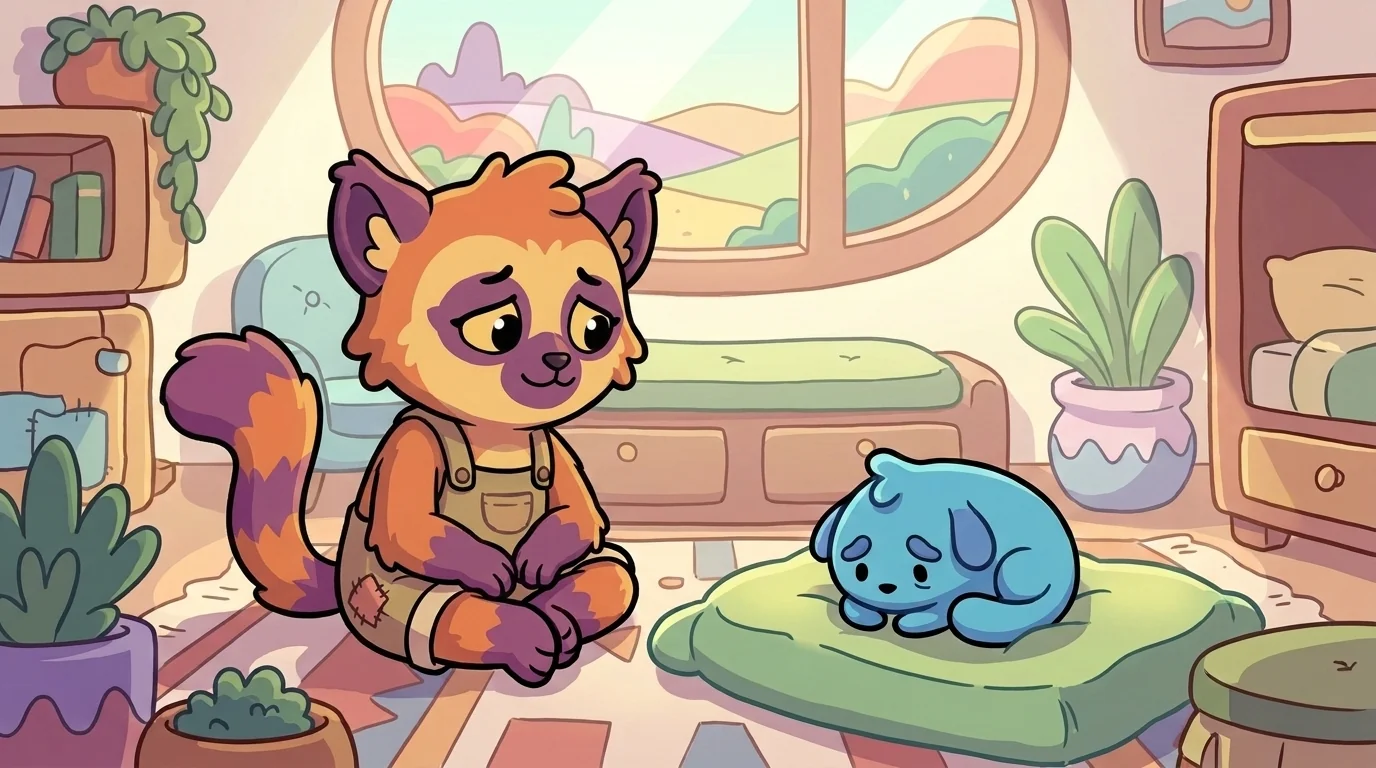
"So being met like that — before anyone tries to fix it — actually helps more?" a student asked.
"More than almost anything," Match said. And the student thought of a time someone had truly met them where they were — not rushing, not fixing, just there — and felt it again in their body: the tight, braced, nobody-gets-it knot behind the ribs loosening, the shoulders coming down, a slow warm exhale, the deep relief of being seen without being corrected. That met, seen, not-alone-in-it feeling — softer and steadier than any quick fix — was, to Match, the whole reason the match comes first: because from there, and only there, does the gentle shift toward calm become possible. She sits beside Cyan; the matching happens; and the settling, gently, follows.
The CoRegRealm ensemble
Match is part of CoRegRealm's distributed-narrative cast. Each character embodies a different curricular primitive; together they teach the full subject.
-

Hum
Vocal co-regulation — gentle vocal-tone modulation; 'Hmm. I'm here.'
-

Sway
Rhythmic co-regulation — gentle bounce + breath rhythm; 'Slow in. Slow out.'
-

Beside
Containment — bounded presence without overwhelm; 'Right next to you. Not in front.'
-

Word
Naming — gently labeling the feeling; 'Maybe it's ___? Or maybe something else.'
-

Patient
Patience — giving time without rushing; 'Take all the time you need.'
-

Lend
Lends you their calm when yours runs out, because borrowing steadiness is how your own slowly grows.
-

Murmur
Helps you hear the steady voice of someone who has soothed you, tucked inside, for when they are not there.
-

Anew
Celebrates the wobbly first time you steady yourself all alone, because wobbly still counts.
-

Reprise
Shows that once you can steady yourself, you can become the calm for someone else, completing the circle.