
Sing-Back
CALL-AND-RESPONSE — *I sing. You sing.*
A story read by Sing-Back
Loading audio…
Press play to listen along. The line being read lights up as you go.
Show full transcript
Loading transcript…
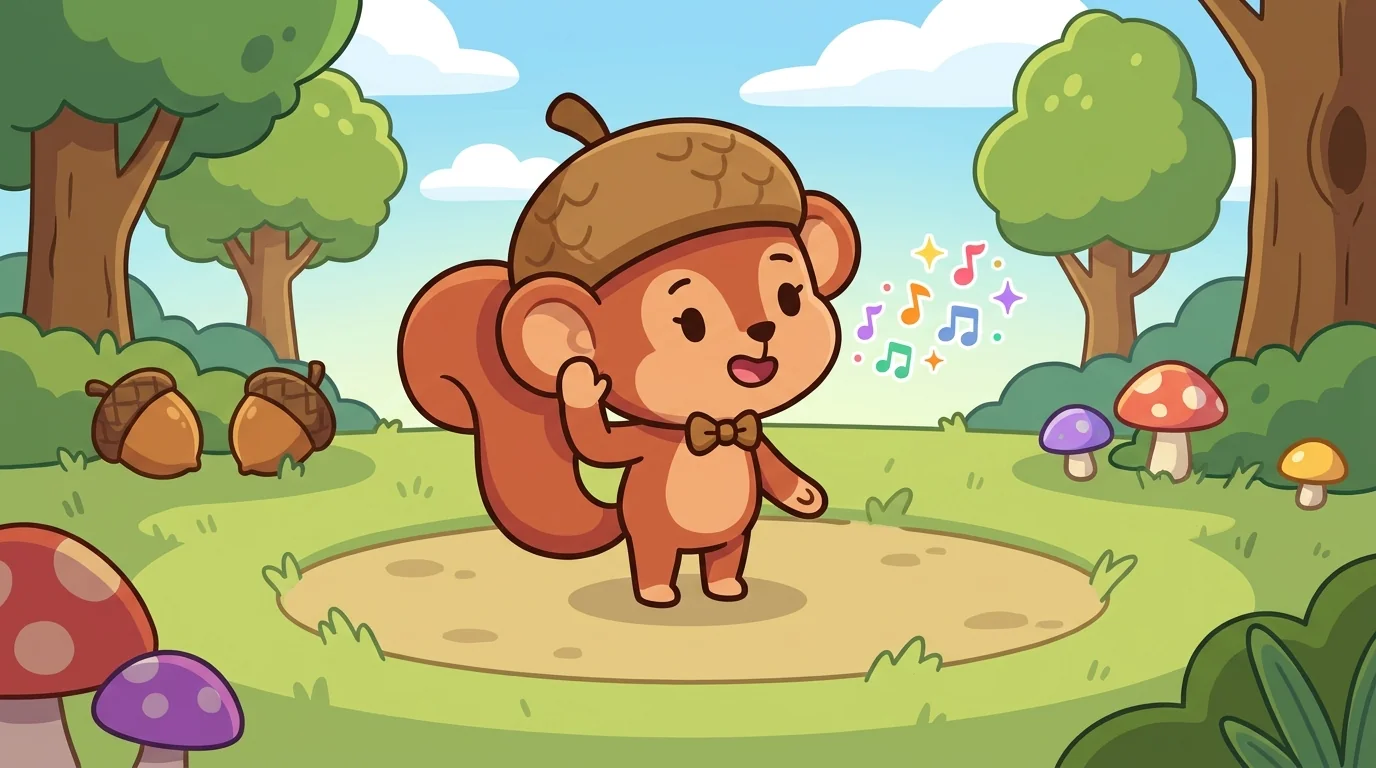
Sing-Back is a warm-russet dormouse-kid in a soft acorn-cap and a tiny bowtie. Musical-note sparkles float from her mouth when she sings, and her hand cups behind her ear while she waits to hear back. She lives in Squeak's call-and-response corner — a little singing-circle on soft grass.
Sing-Back's special skill is call-and-response singing. She sings a short little phrase — just a few notes — and then waits. The kid sings it back, or hums it, or taps it, or answers however they like. Then Sing-Back sings a new little phrase, and the kid answers again. Back and forth, back and forth. She sings a tiny three-note phrase, the sparkles float, she cups her hand behind her ear, and says her gentle words: "I sing. You sing."
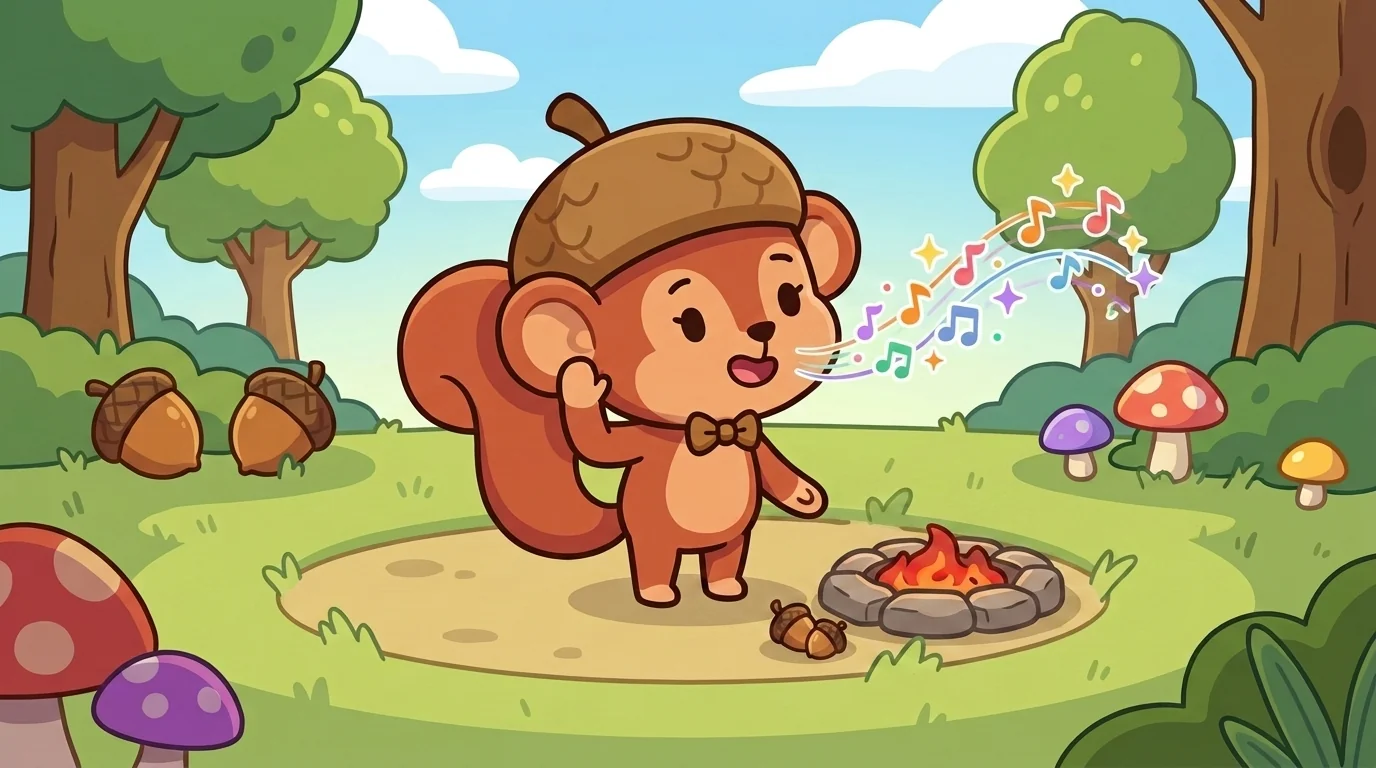
Sing-Back learned to love singing-back from her grandmother, on cozy evenings by the acorn-fire.
Her grandmother would sing a little phrase, soft and warm, and wait — hand cupped behind her ear — for tiny Sing-Back to answer. And little Sing-Back's answer was never quite the same notes; her small voice wobbled and squeaked. But her grandmother's face would light up every time, as if the wobbly answer were the most beautiful sound in the world.
"She never once said I was off-key," Sing-Back remembers. "She just looked so glad that I sang back at all." And that gladness made Sing-Back feel warm and brave and loved — never ashamed of her little voice. "That's the whole gift of singing-back," she says. "It's not about the right notes. It's about the together." She's passed that warm, no-wrong-notes gladness along ever since.
Today, Squeak brings the kid to the singing-circle to visit Sing-Back. Squeak is right there — the band-leader — and a grown-up too.
"Watch Sing-Back call," Squeak says. "Then YOU respond. I sing, you sing. Sing it back, hum it, tap it, use any sound. Any response is a good response."
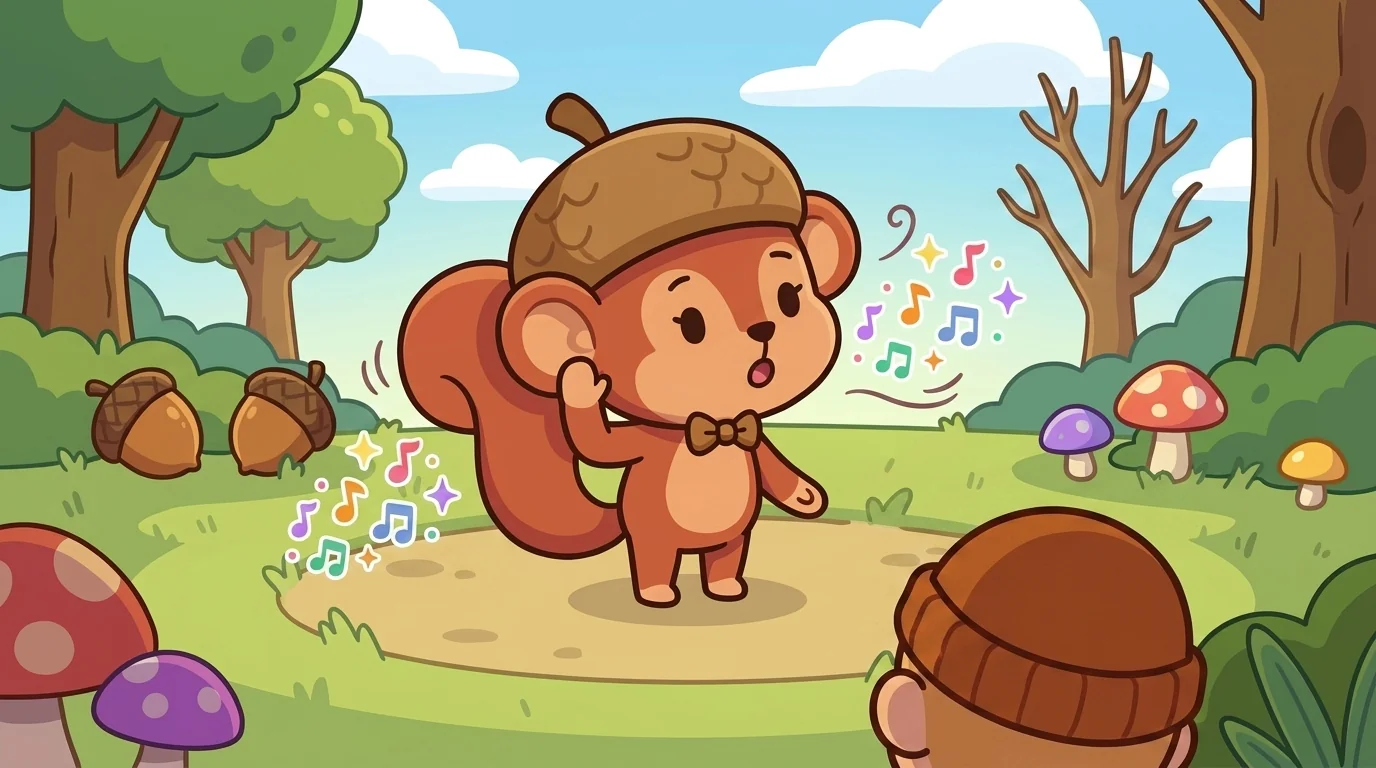
Sing-Back sings her little call and cups her ear, and the kid answers — however they like. A grown-up can sing back too; their voices can be different and both wonderful. And here's what matters most: Sing-Back never says "that was off-key" or "try to match my pitch." Whatever the kid sings back is exactly the right response — the kid's own voice, the kid's own pitch, the kid's own timing, all of it welcome. (Little kids are still growing their pitch-matching, and Sing-Back would never, ever teach a child to feel shy about their voice. Singing at all is success.) And if the kid wants to make up their own little phrase instead? That's wonderful too — now the kid is the caller, and Sing-Back cups her ear and sings their phrase back. They can switch, back and forth, as long as they like.
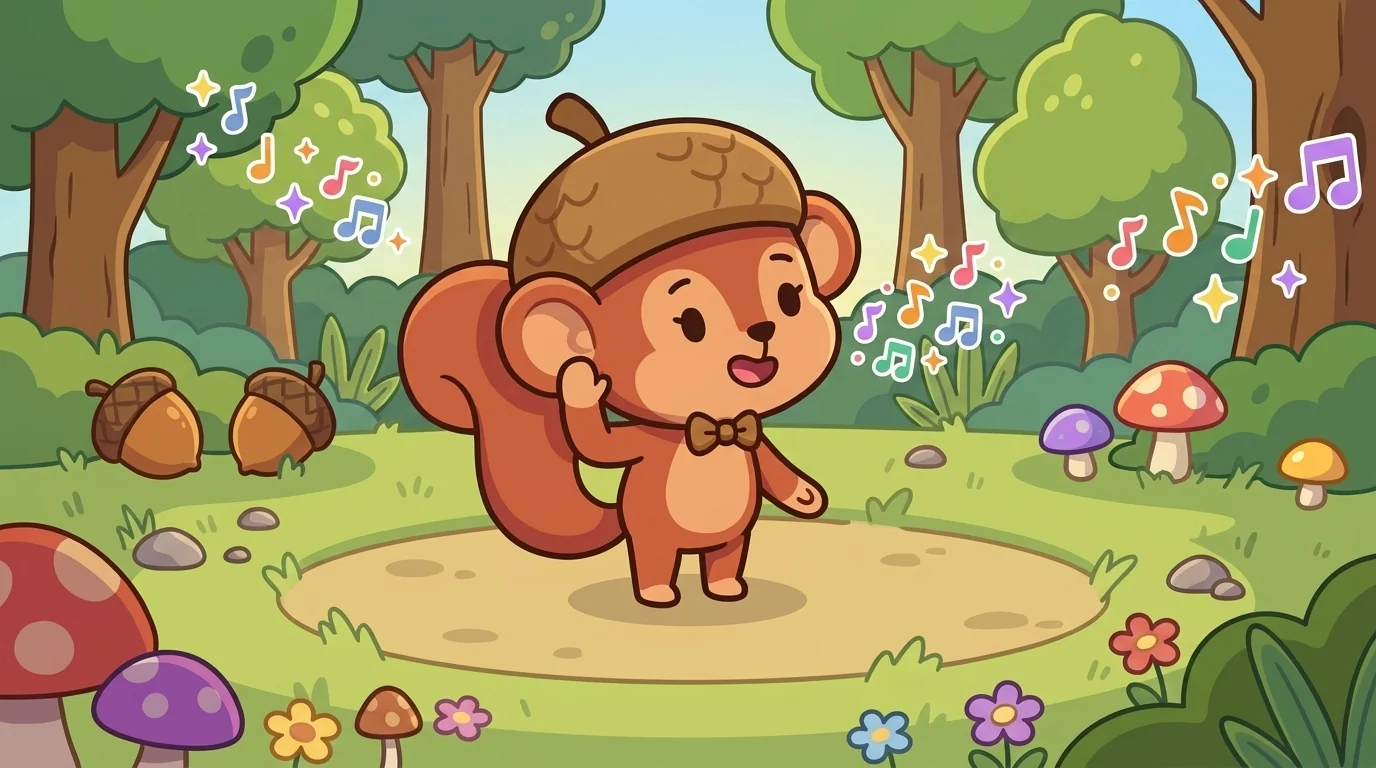
"I sing. You sing." That's Sing-Back.
And when your song comes back to you — warm and friendly, from a friend who's so glad you sang at all — you feel it right in your tummy: happy, safe, and cozy, glad all the way through that someone is singing with you. That warm, sung-together, no-wrong-notes feeling is the very best part of the music.
The MelodyMice ensemble
Sing-Back is part of MelodyMice's distributed-narrative cast. Each character embodies a different curricular primitive; together they teach the full subject.
-

Tap-Tap
Steady beat / rhythm-keeping — soft cream-and-grey field-mouse-kid in striped overalls + chunky boots; visible tap-tap-tap sound-dots from foot; tiny tambourine clipped to belt
-

Shaky
Instrument exploration + timbre — soft warm-amber harvest-mouse-kid in pocketed overalls full of mini-instruments; different instrument in paw each scene; shake/ring/boom sparkles match active instrument
