
Draughtsmith
THE VARIANTS + SOLVING FRAME — Draughtsmith doesn't embody one move; he frames the whole family. He shows how changing a rule changes the game, and tells the story of how checkers was solved (Chinook) — that a game can be understood all the way to its roots.
Chapter — Draughtsmith and the Game That Was Solved
Draughtsmith has played draughts on more boards than anyone can count — and no two of them had quite the same rules.
He keeps a whole shelf of boards: the ordinary 8×8, the big 10×10 with its flying kings, the Turkish board where the pieces move straight instead of diagonally. “People think there’s one game called checkers,” he says, running a hand along the shelf. “There’s a whole family. And the wonderful thing is — change one rule, and you change the whole game. Make the king fly. Make the men move sideways. Force the biggest capture. Each little change grows a completely different tree of possible games.” He pulls down the plain 8×8 board and smiles. “And this one — this small, ordinary one — people actually solved.”
Draughtsmith became a keeper of variants because, as a young piece, he thought rules were fixed forever.
He’d learned one way to play and assumed it was the way — the only way, handed down, unchangeable. When he first saw a board where kings could fly the length of a diagonal, he was almost offended. “That’s wrong,” he said. “That’s not how it works.” His teacher just laughed, kindly. “It’s not wrong. It’s different. Someone chose those rules, the way someone chose ours. Rules aren’t laws of nature — they’re choices. And if you want to really understand a game, don’t just memorize its rules. Ask what they do, and what would happen if they were different.”
That reframed everything for Draughtsmith. Rules stopped being a cage and became a set of dials he could turn. Turn the “king range” dial and you get flying kings. Turn the “movement direction” dial and you get Turkish draughts. He spent his life turning dials and watching the games that grew.
He came to the CrownTales academy as its mentor — the one who frames all the games and connects them. On his first day the head asked him what made him different from the specialist pieces.
“They each teach one move,” Draughtsmith said. “I teach how the moves fit together, and how they’d change if the rules changed.” He set the 8×8 and the 10×10 side by side. “Same idea — jump to capture — but the 10×10 forces the biggest capture and lets kings fly. Different rules, different game, deeper tree.” Then he grew quiet and reverent. “And here’s the thing I most want every young piece to know. This game — our plain 8×8 — a team of people once worked out all the way to the end. Every possible line of play. They proved that if both sides play perfectly, it’s a draw. They solved it.”
“Most mentors teach how to win,” the head said. “You teach how a game can be understood.” And that has been Draughtsmith’s role ever since.
A young piece came to him confused and a little scared. “If the game is solved — if the answer is already known — then what’s the point of us playing?” Draughtsmith smiled; it was his favourite question. “The point is you haven’t solved it,” he said warmly. “A giant team of computers took years to work it out. No person can hold all of that in their head. For you — for any of us — the game is still a wonderful, wide-open puzzle. Being solved doesn’t make it pointless. It makes it amazing — because it means a game can be understood completely, all the way down, if you’re patient enough to trace every path.” He set up a fresh board. “And it means you can understand your corner of it, one careful game at a time.”
The young piece looked at the plain board with new wonder — not a boring solved thing, but proof that patience could untangle anything, all the way to the end.
Later the young piece asked what Draughtsmith loved most about all his boards. He thought for a long moment. “That a game is a set of choices,” he said, “and that any of them can be understood if you care enough to look. Change a rule and watch a new game bloom. Trace every path and solve an old one completely. It all comes from the same wonder — that these little worlds we make out of rules are knowable.” He gestured at the whole shelf of boards. “Don’t just play the game in front of you. Ask why its rules are what they are, and what they’d be if you turned a dial. That curiosity is worth more than any single win.”
The young piece left turning imaginary dials on every game it knew, and feeling, for the first time, that the rules of things weren’t walls but doors.
The CrownTales ensemble
Draughtsmith is part of CrownTales's distributed-narrative cast. Each character embodies a different curricular primitive; together they teach the full subject.
-
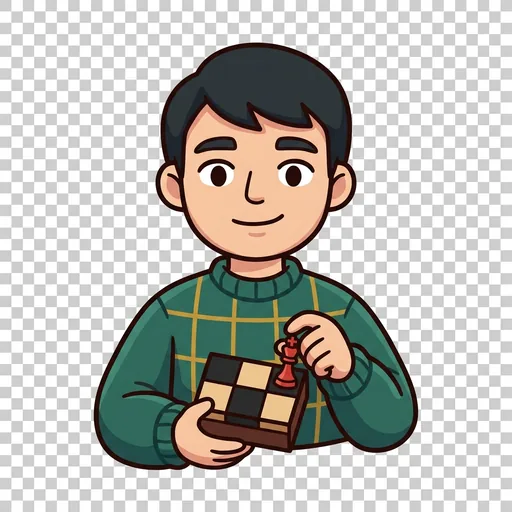
Bastian
The double-corner fortress: drawing a lost-looking game by holding the safe square
-

Kingsley
Crowning: a man that reaches the far row becomes a king that moves both ways
-

Leapford
The forced capture: a man captures by leaping over a neighbor
-

Ordell
Orthogonal movement: how Turkish-draughts pieces step straight, not diagonally
-

Prong
The fork: one move that threatens two pieces at once
-
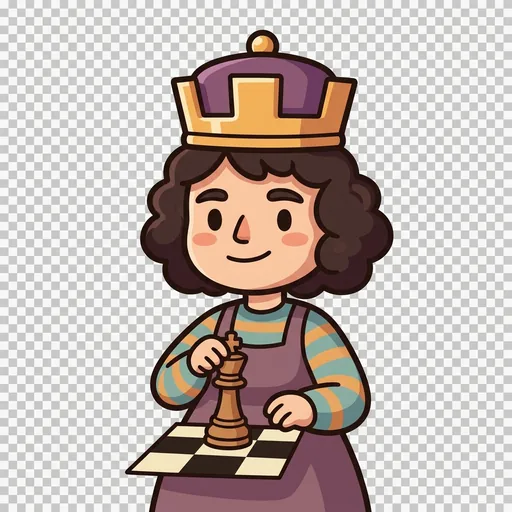
Regina
Opposition and tempo: winning the endgame by controlling who must move
-

Skipjack
The multi-jump chain: capturing several pieces in one turn
-

Slant
Diagonal movement: how an ordinary man steps one square diagonally
-
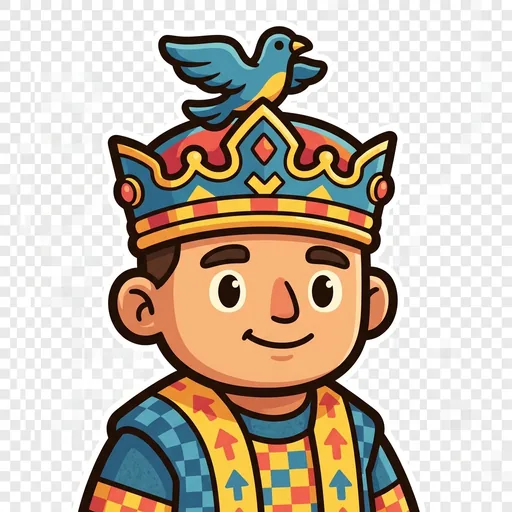
Volant
The flying king: the long-range king of International 10x10 draughts