Muster and Herald
THE YES AND THE NOTICE — a fair decision needs two things that seem small and aren't: everyone truly gathered and truly agreeing (Muster), and the decision posted where anyone can see it (Herald) — a real yes, made in the open
A story read by Muster and Herald
Loading audio…
Press play to listen along. The line being read lights up as you go.
Show full transcript
Loading transcript…
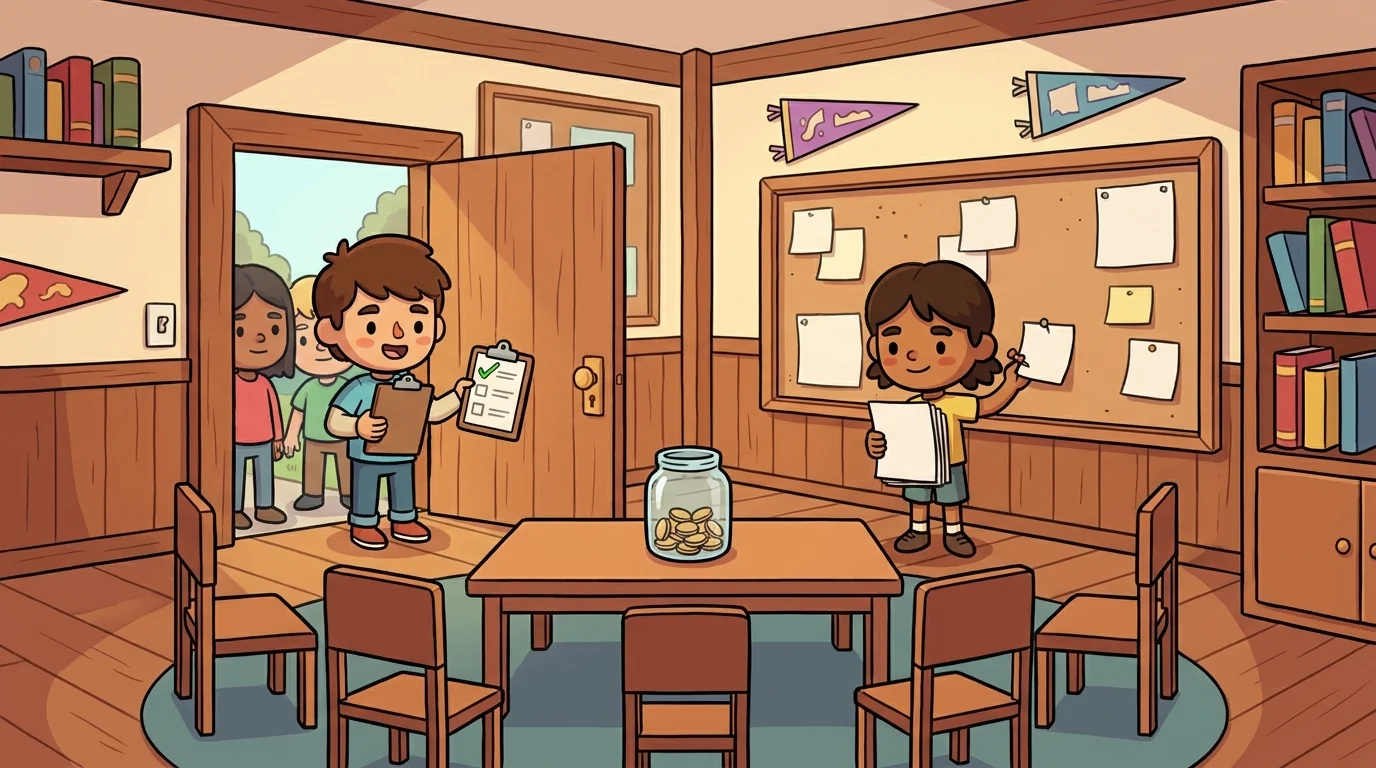
The club had a decision to make. A real one — where to spend the money everyone had chipped in for. And two of its most careful members stood ready, because between them they held the two halves of what makes a decision count.
Muster stood at the door with a checklist, counting who had come.
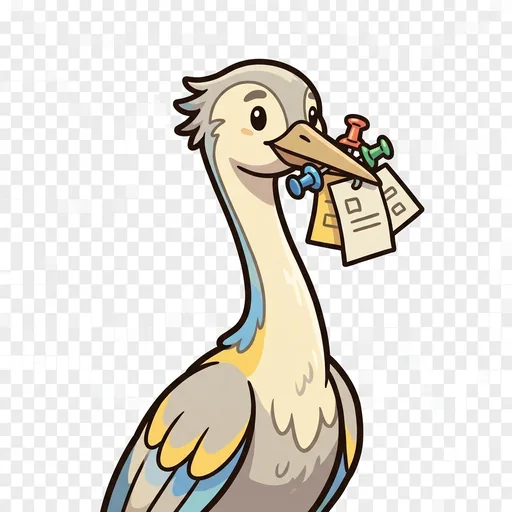
Herald stood by the big cork board with a stack of blank notices and a pin.
"You do the yes," said Herald. "I'll do the notice."
"Same as always," said Muster.
They had learned, the hard way that clubs always learn it, that a decision made wrong isn't really a decision at all — it's just something that comes apart later, loudly, when the people who were left out finally find out. So they did it right. They always did it right, even when right was slower.
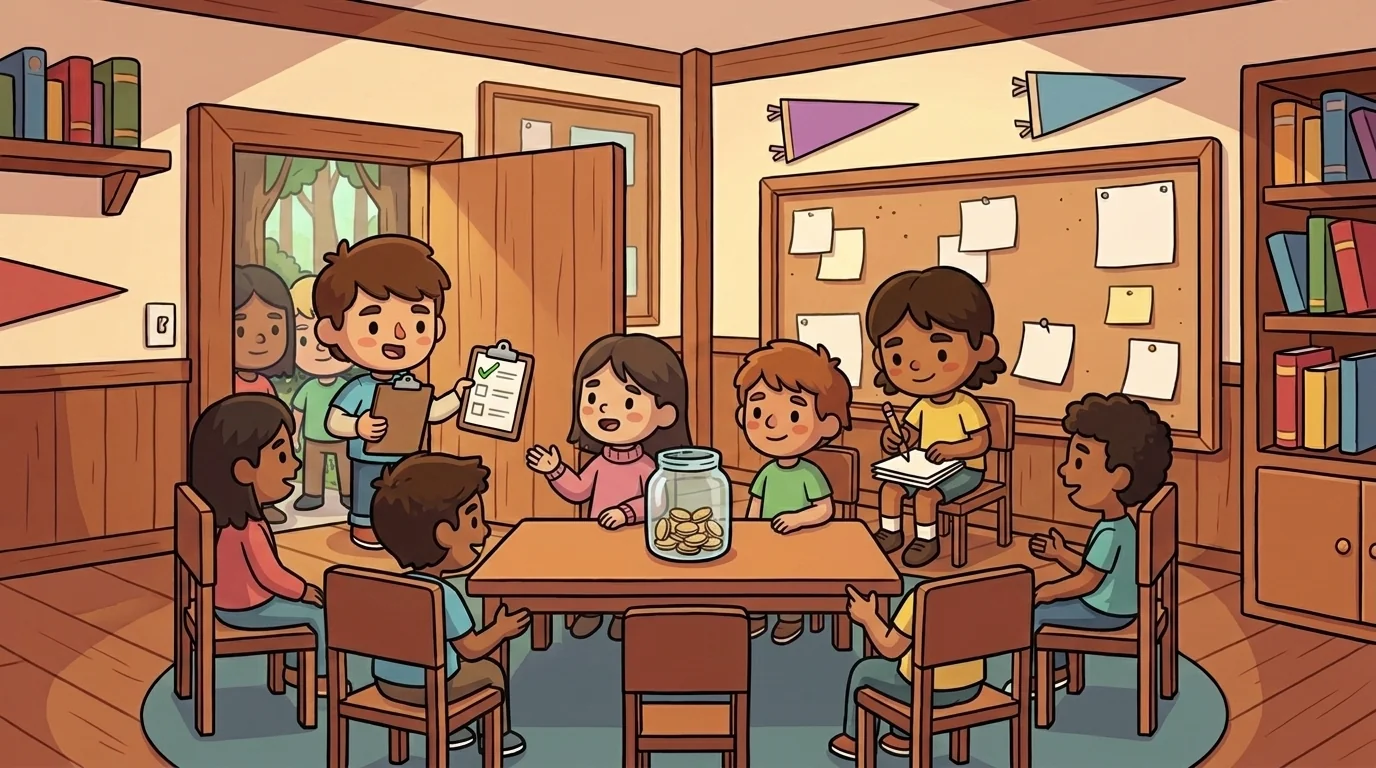
Muster went first, because before anything could be decided, the yes had to be real.
Muster's whole nature was nothing proceeds until everyone's gathered and the yes is real. So Muster stood at the door and would not start until enough of the club had actually come — not a quiet few slipping a choice past the rest, but truly enough, truly gathered. "We're not deciding for forty people with six in the room," Muster said, and waited, patient, until the seats filled.
And then Muster asked for the yes — and listened for whether it was a real one. Not a mumbled yes because the loudest person said so. Not a yes from people who didn't understand the question. Muster made sure everyone knew what they were agreeing to, made sure the quiet ones got their say too, and only then counted the yes as true. "A yes you rushed out of someone," Muster said, "isn't a yes. It's just a person who gave up. I want the real one — the one people will still stand behind tomorrow."
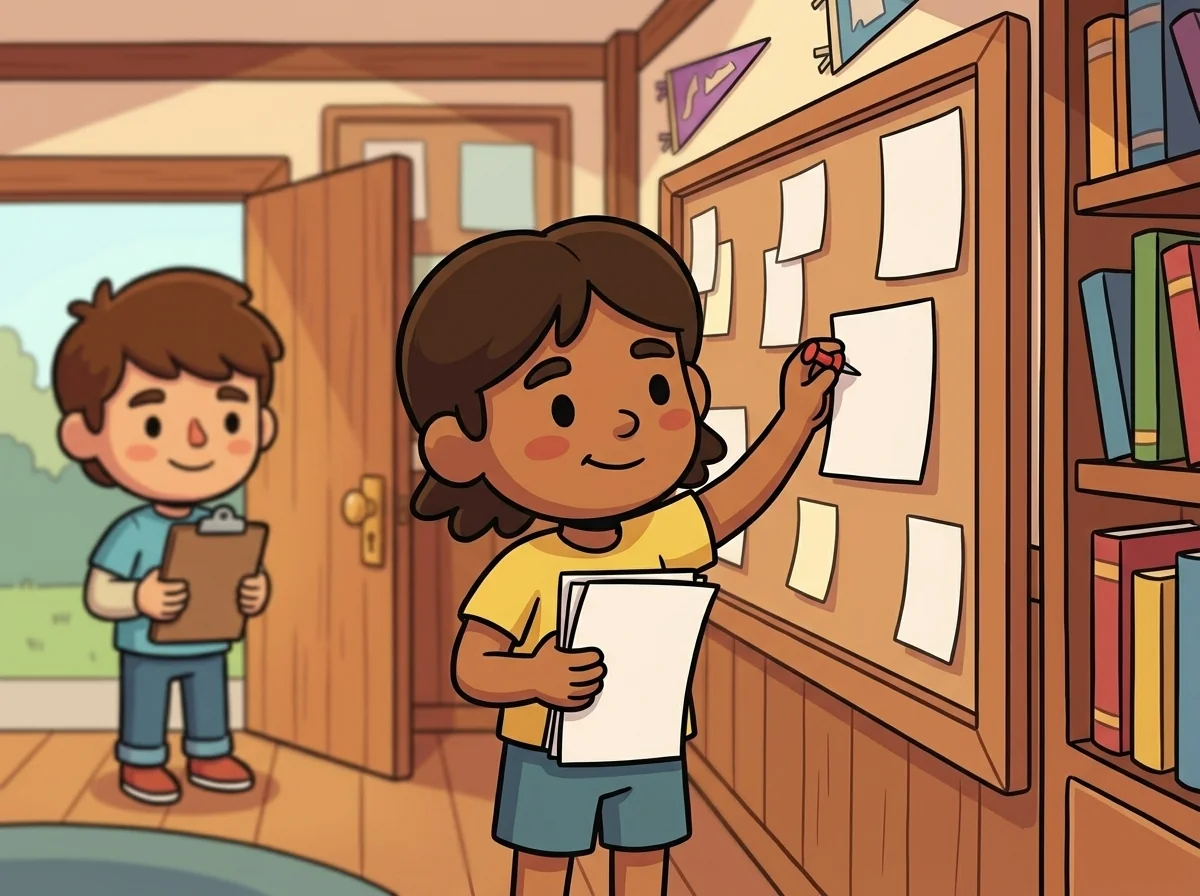
And once the yes was real, Herald did the other half — the half people forget is even part of it.
Herald took the decision and posted it in the open. Wrote it plainly on a notice, pinned it to the board where every single member could walk up and read it: here is what we decided, here is why, here is who was there. Because Herald's whole nature was this — a decision no one can see isn't finished.
"People think the deciding is the end," Herald said, pressing the pin in. "It isn't. A choice made in a back room, that nobody can see and nobody can check — that's not a finished decision. That's a secret. And secrets rot." Herald smoothed the notice flat. "But a decision you can see — one anyone can walk up to and read and ask about — that one's alive. It can be trusted. It can be checked. It belongs to everybody, because everybody can see it."
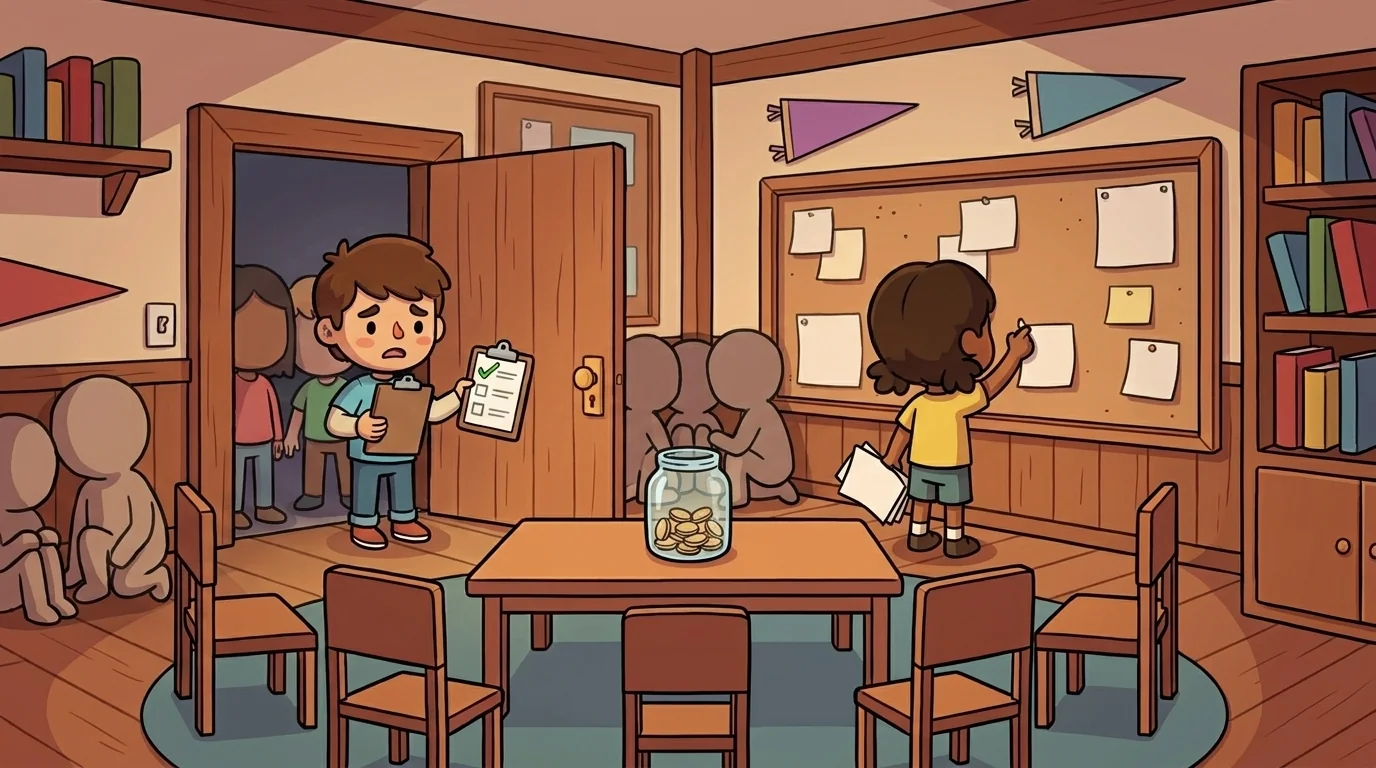
And to show why they both mattered, they only had to remember last spring — when the two of them had been away, and the club had tried to skip them.
A handful of members had made a big money choice fast, in a corner, with no real gathering and no notice posted. And it had felt efficient, for about a day. Then the rest of the club found out — found out they'd been decided about, without being asked, without being able to even see how it happened — and the whole thing had come apart in a single furious meeting. Not because the choice was wrong. Because it was made wrong: no real yes, no open notice.
"That's us, isn't it," Herald had said afterward, ruefully. "That's the exact hole we fill. You make sure they're really asked. I make sure they can really see."
"Two small things," Muster had agreed. "That turn out to be the whole thing."
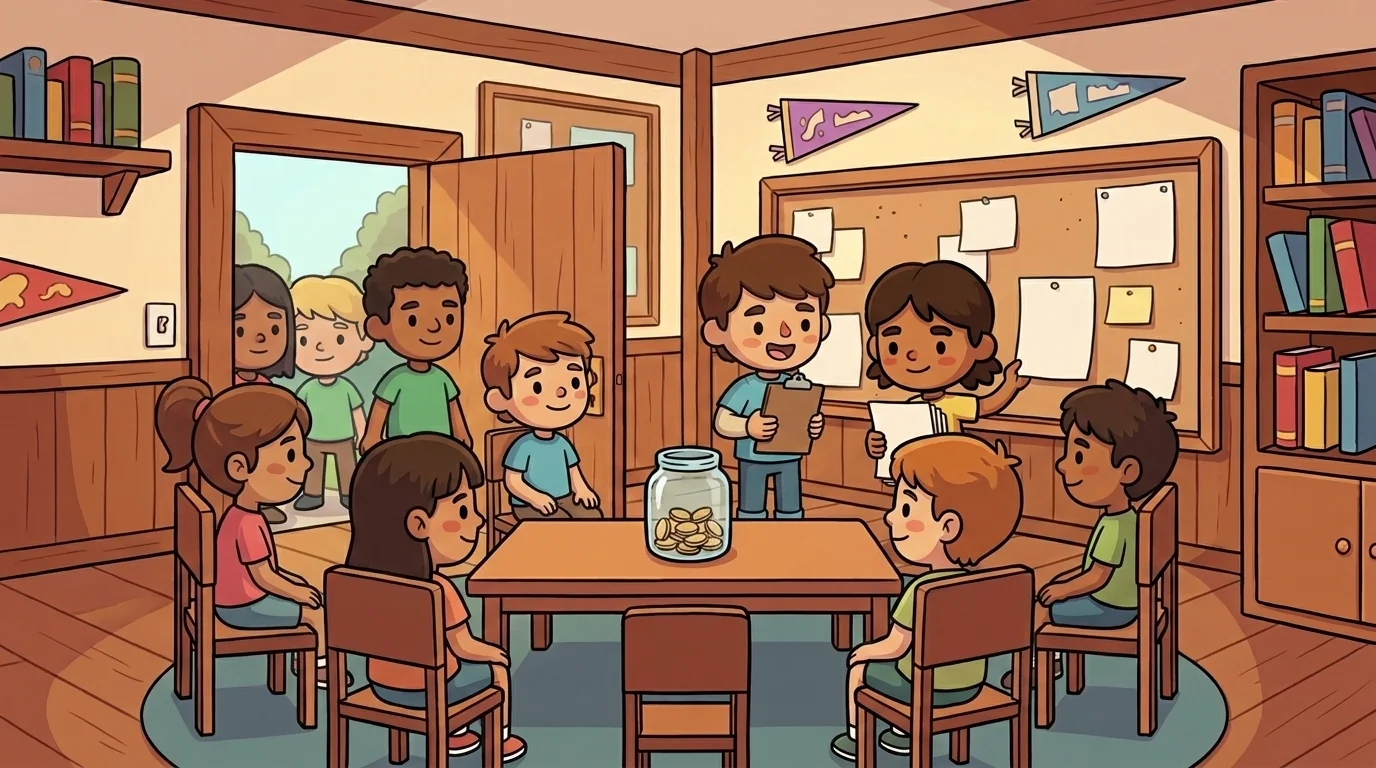
So tonight they did it whole. Muster gathered the club, made the yes real, made sure the quiet voices counted. Herald wrote it up and pinned it in the open for anyone to read. The money would go where the club had truly chosen — and every member could walk up to the board and see exactly that.
"Good yes," said Herald.
"Good notice," said Muster.
There is a particular, sturdy kind of trust that grows in a place where you are genuinely asked and can genuinely see — where nothing is decided about you without you, and nothing is decided in a corner you can't look into. It is a quiet feeling, easy to overlook, until you've felt its opposite. To be truly included, and to be able to see how the choice was made: that is what makes a group feel less like a crowd you're stuck in and more like something that is honestly, partly, yours.
The CivicForge ensemble
Muster and Herald is part of CivicForge's distributed-narrative cast. Each character embodies a different curricular primitive; together they teach the full subject.
-
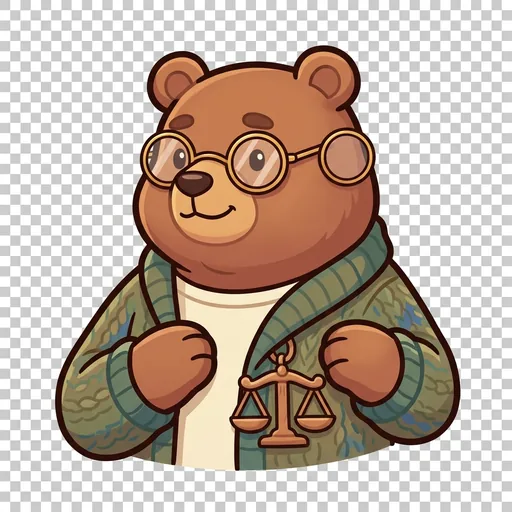
Verdis
Justice — the patient listener who weighs sides; bear with wooden scale + spectacles
-
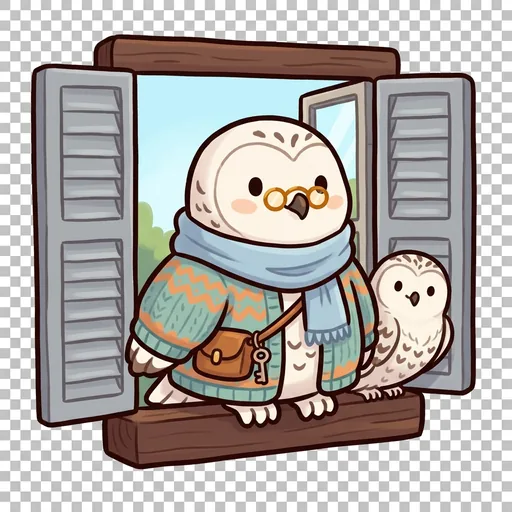
Aera
Liberty (open-window) — keeper of open windows; snowy owl on shuttered window frame
-
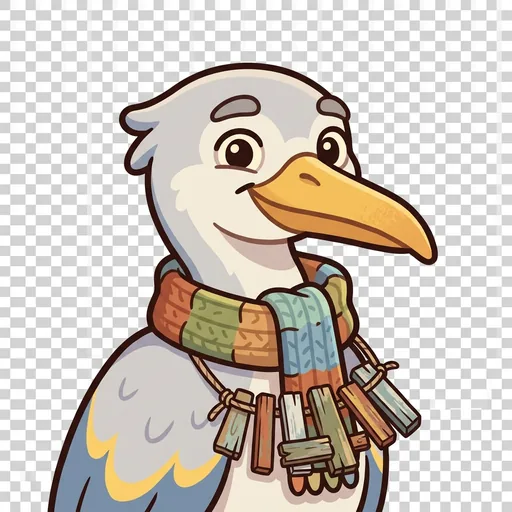
Span
Equity — the bridge-builder; heron with mismatched planks for mismatched riverbanks
-

Cordis
Civility — disagreement-without-disrespect host; striped badger with mismatched cups + bow tie
-

Kindle
Participation — the door-opener; prairie dog at a half-open door pointing outward
-

Tellus
Stewardship — the long-view caretaker; ancient tortoise planting trees they will never sit under
-

Level
Rule of law — the line reads level whoever holds it, even the one who set it; mountain goat with a stone level + plumb-bob
-
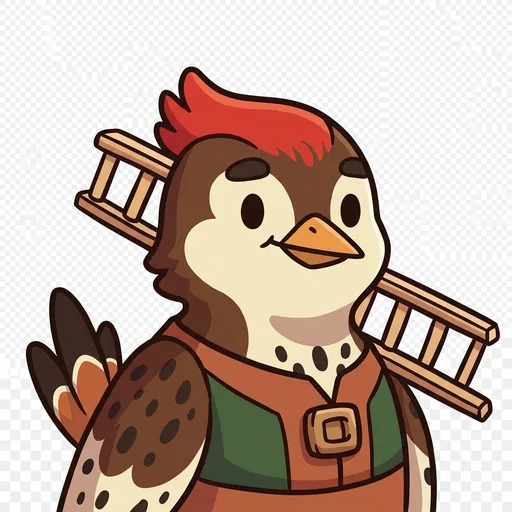
Rung
Due process — climb every step in order, never skip to the verdict; woodpecker climbing a trunk rung by rung
-
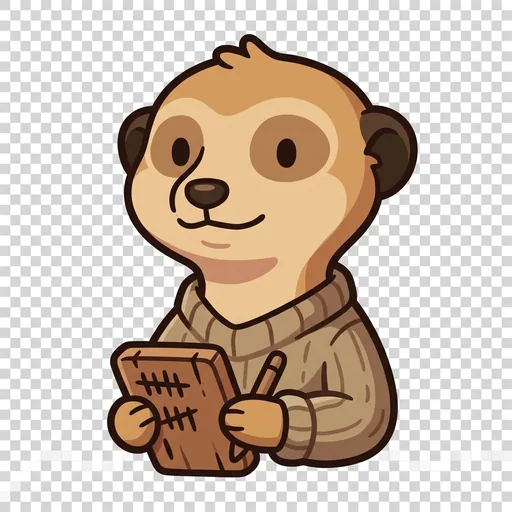
Muster
Consent of the governed — nothing proceeds until everyone's gathered and the yes is real; meerkat counting raised paws from the burrow-mound
-
Herald
Transparency — a decision no one can see isn't finished; crane keeping an open notice-board in the square