
Practice Patience
spaced repetition — returning to a problem after a delay
Loading audio…
Press play to listen along. The line being read lights up as you go.
Show full transcript
Loading transcript…
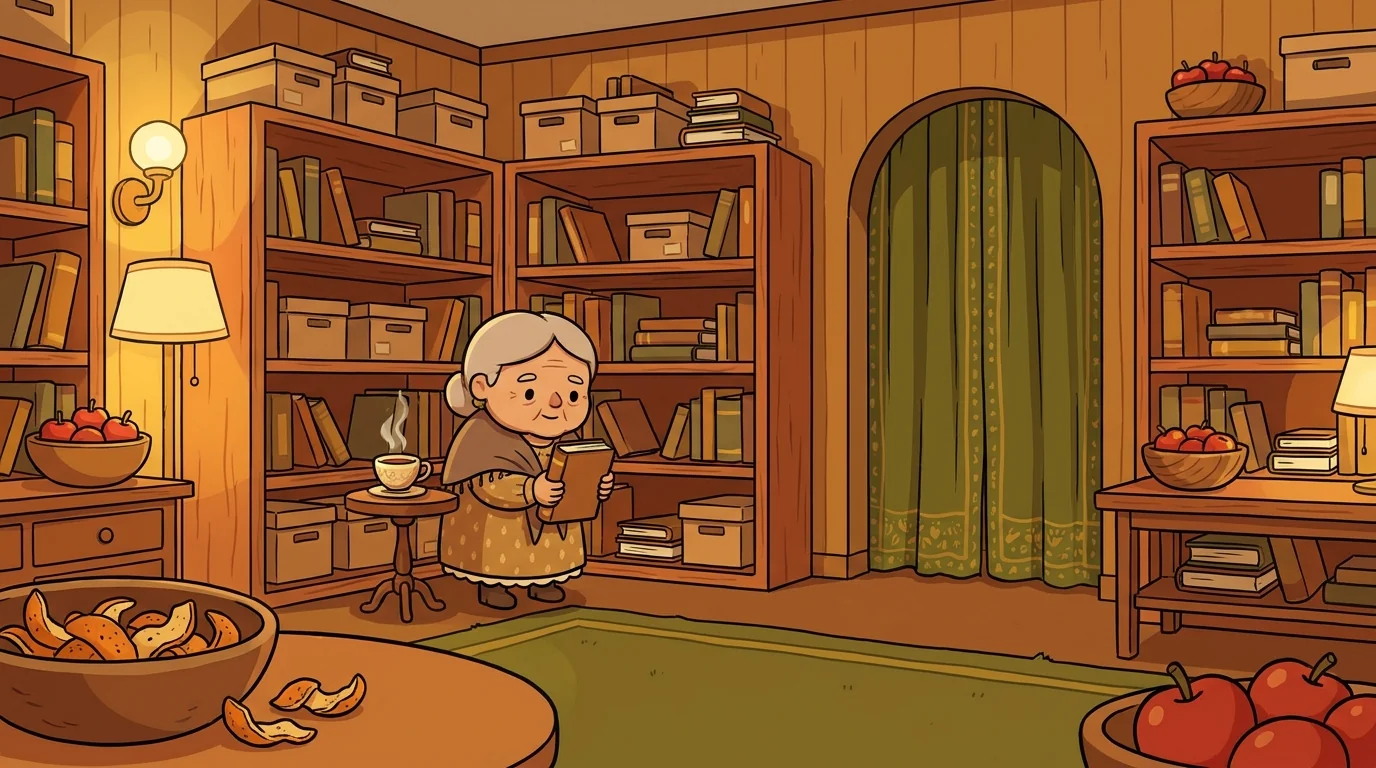
Maya was fourteen when she finally asked Practice Patience about the cactus.
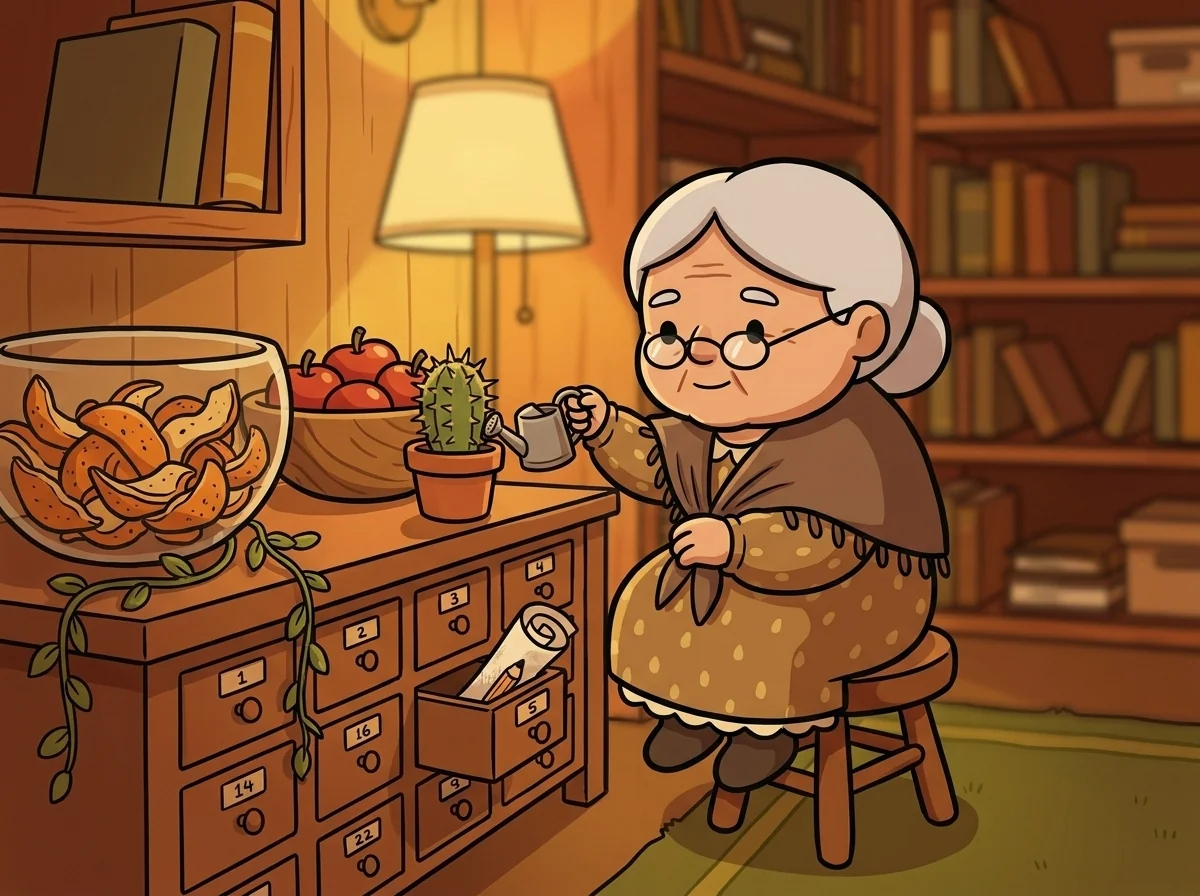
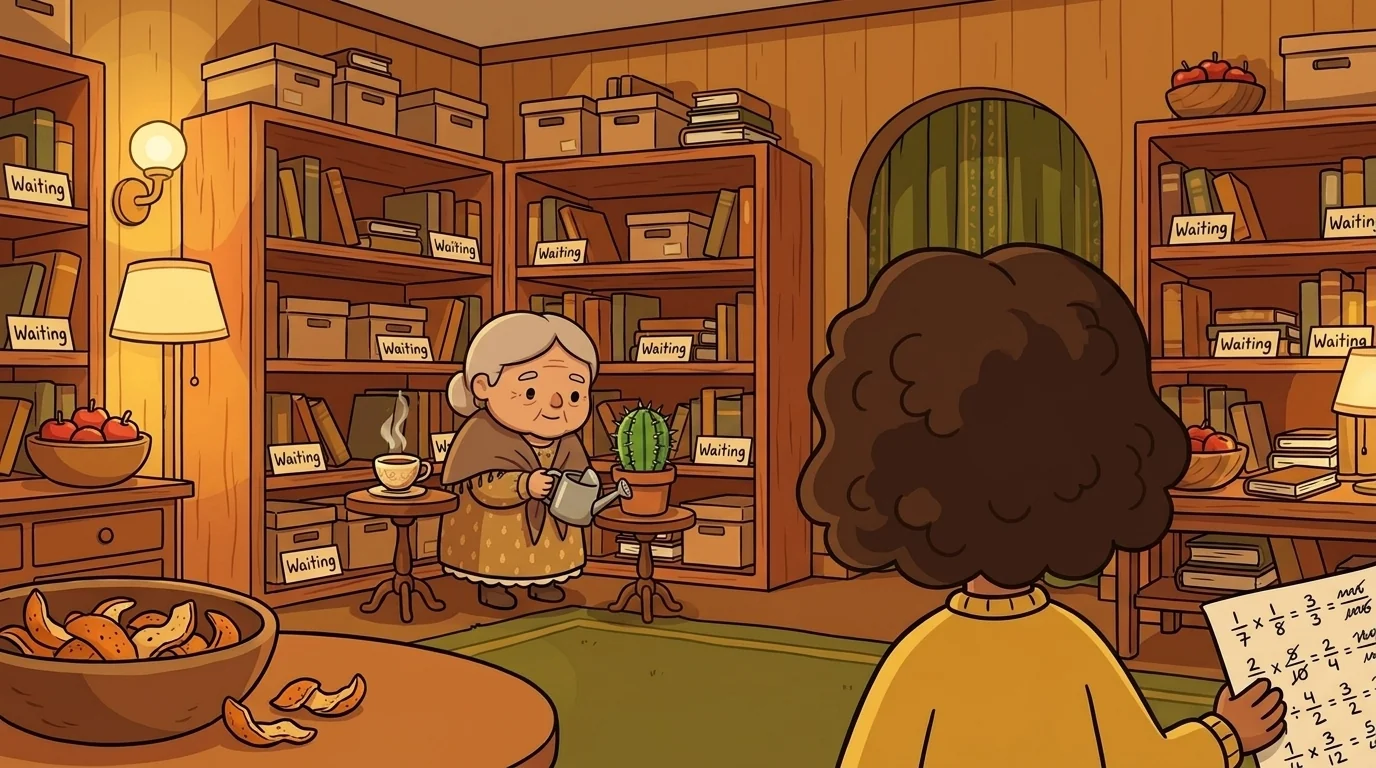
She had been visiting the back room of the Library for nearly four years by then, off and on. She knew the green curtain by feel. She knew that the cards on the shelves all said Waiting in faded ink, and that some of them had been waiting since long before Maya was born. She knew that Practice Patience drank her tea cold on purpose, because hot tea pushed you to finish it before you wanted to. And she knew that the cactus on the windowsill had been there the very first day she walked through the curtain, and was the same height now as it had been then.
"How long have you had that cactus?" Maya asked.
Practice Patience did not look up from the worksheet she was filing. "Forty-two years."
"It hasn't grown."
"It has. Just not where you can see."
Maya thought about that, and then she sat down across from Practice Patience on the low stool by the cactus, and she said something she had been working her way up to saying for a long time.
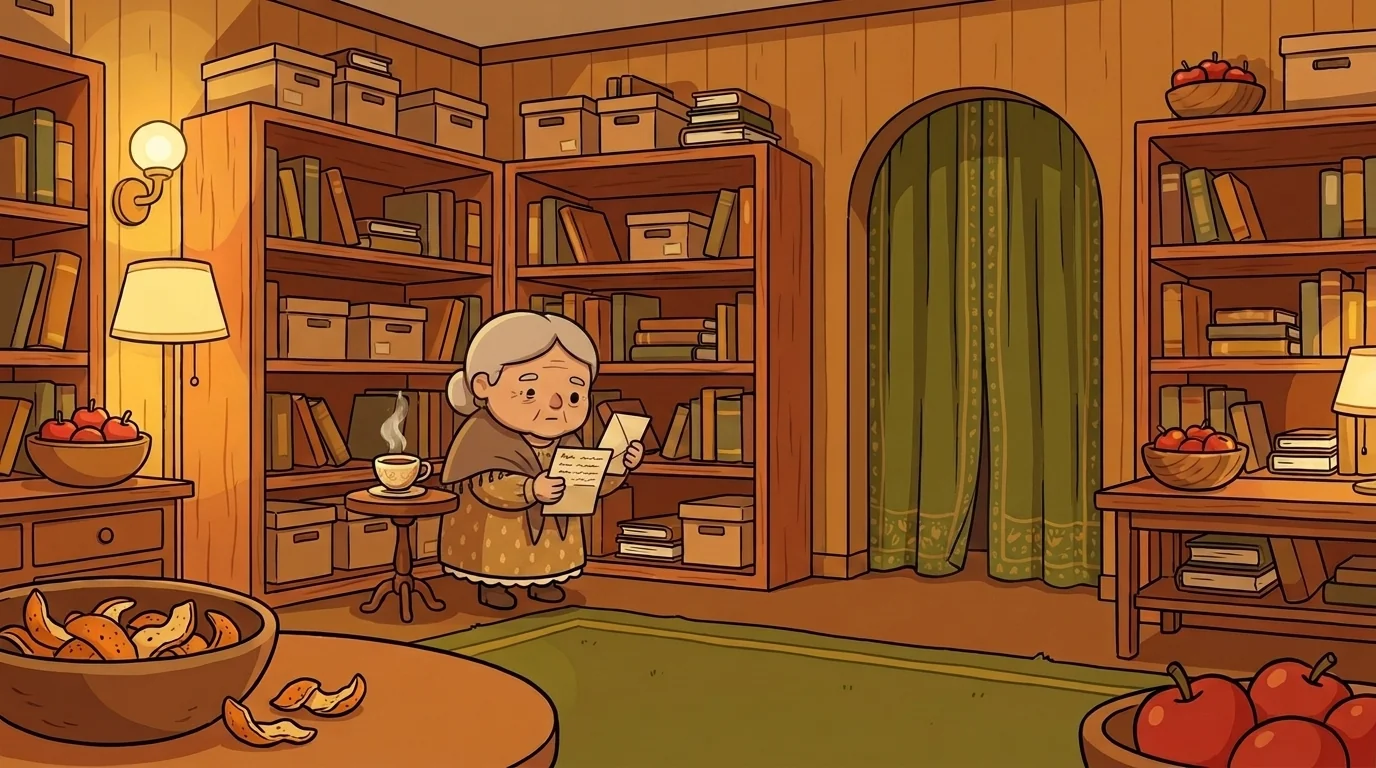
"I don't think I'd be as good at math as I am if I hadn't met you."
Practice Patience set the worksheet aside. She poured Maya a cup of cold tea from a small enamel pot that had a chipped lid. Then she sat back, and she said, "Tell me what you think I do."
Maya thought for a moment.
"I think you keep problems for me. I think you keep them in this room for as long as it takes me to grow into them. I think when I come back, the problem is the same, but I'm different, and that's why I see something in it I couldn't see before."
Practice Patience nodded.
"And I think — " Maya hesitated. "I think you do that because you don't believe people learn things on the day they first see them. You believe people learn things when they come back to them, weeks later, after they've forgotten the rush of solving them."
"Mm."
"So practice is not about repeating something fast. Practice is about coming back to something slowly."
Practice Patience took a sip of her own tea, which was several days cold and tasted of cardamom and dust. "That's most of it. There's one more part."
"What's the one more part?"
"That the version of you who comes back is the version that gets to keep what you learned. The version of you who solved it the first time isn't the one who carries it forward. She did the work. But she handed it off."
Maya was very quiet for a long time.
"Where does she go?" she said finally.
Practice Patience smiled — a small, deliberate smile that Maya had seen perhaps four times in four years.
"She becomes you," she said.
What Practice Patience had not told Maya, and would never tell her, was that her own teacher had been a man named Sandford who ran a library in another town, three thousand miles east of where Practice Patience now sat. Sandford had not had a back room with a green curtain. He had had a card index. And on each card was the name of a problem he was holding for a student, and the date he would give it back.
Sandford had been a hurry-er, by nature. He had had to teach himself patience, problem by problem, like a man teaching himself a language. He had built the card index because he could not trust his own memory to wait long enough.
Practice Patience had been one of Sandford's students. She had been nine when she first walked into his library, ten when she first sat through the experience of being told that her hardest-won solution was being shelved for three weeks, and twenty-two when she had finally understood, on a long bus ride through a country far from home, what Sandford had been doing the whole time.
He had not been holding her problems.
He had been teaching her that learning has a tempo, and that tempo is slow.
Practice Patience had built the back room of this Library in her thirties, when she had taken over from the librarian before her. She had not built it for any particular reader. She had built it for whoever would need it. The cactus had been a gift from her sister on the day she signed the deed. Forty-two years ago.
It had grown, she thought. It just hadn't grown where anyone could see.
Maya did not visit the back room every day after that conversation. She did not need to.
She visited when she had a problem worth shelving, and she visited when one of her problems was ready to come back. She visited some weeks twice, and some months not at all. Practice Patience never commented on the rhythm.
In her last week of being fourteen, Maya solved a problem so hard that she sat in the Library for an hour afterward, just looking at her own answer. She did not feel triumphant. She felt the kind of stillness that comes after running.
Practice Patience walked past her, polishing a brass bell.
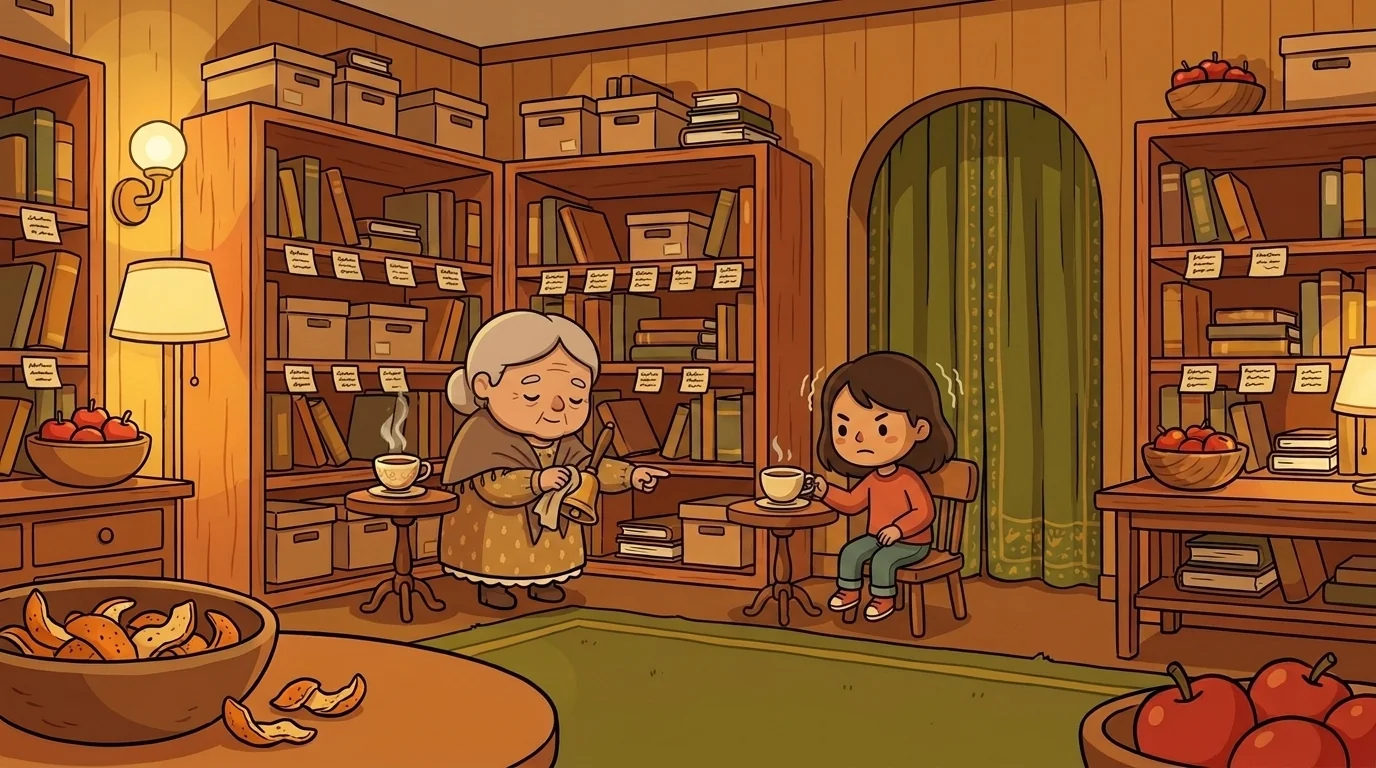
"Don't go fast now," Practice Patience said, without slowing down. "The version of you who solved this is the version I want to keep. Don't outrun her."
Maya did not.
She sat for a long time.
When she finally stood up, she walked through the green curtain on her own, and she put her worksheet on a Waiting shelf with a card that said Maya — six weeks, and she went home.
Six weeks later, she came back.
The problem was waiting.
And the version of her who came back to it could see things in it the version who had solved it could not have seen.
She thought: that's right. That's exactly right.
She thought: that's what learning is.
The AlcumusForge ensemble
Practice Patience is part of AlcumusForge's distributed-narrative cast. Each character embodies a different curricular primitive; together they teach the full subject.
-

Alcuin
Librarian-detective of the practice graph; knows what to try next
-

Hint Hertha
Hint author and gentle redirector; never gives the answer
-

Streak Bear
Warm anti-anxiety presence; the soft-streak character
-

Stretch Sage
The wider-than-you-think reframer; surfaces transfer connections
-

Spacing Wren
Spaced review — bringing a topic back just before you'd forget it, so it sticks
-

Edge Goldi
Edge of competence — practicing at the just-right level where you grow fastest
-

Mistake Mabel
Mistakes as information — every error is a map to what to practice next
-

Mix Margo
Interleaving — mixing problem types so you learn to tell them apart and remember
-

Recall Remy
Retrieval practice — closing the book and recalling beats rereading