
Hint Hertha
hint scaffolding — hints that are themselves smaller problems
Loading audio…
Press play to listen along. The line being read lights up as you go.
Show full transcript
Loading transcript…
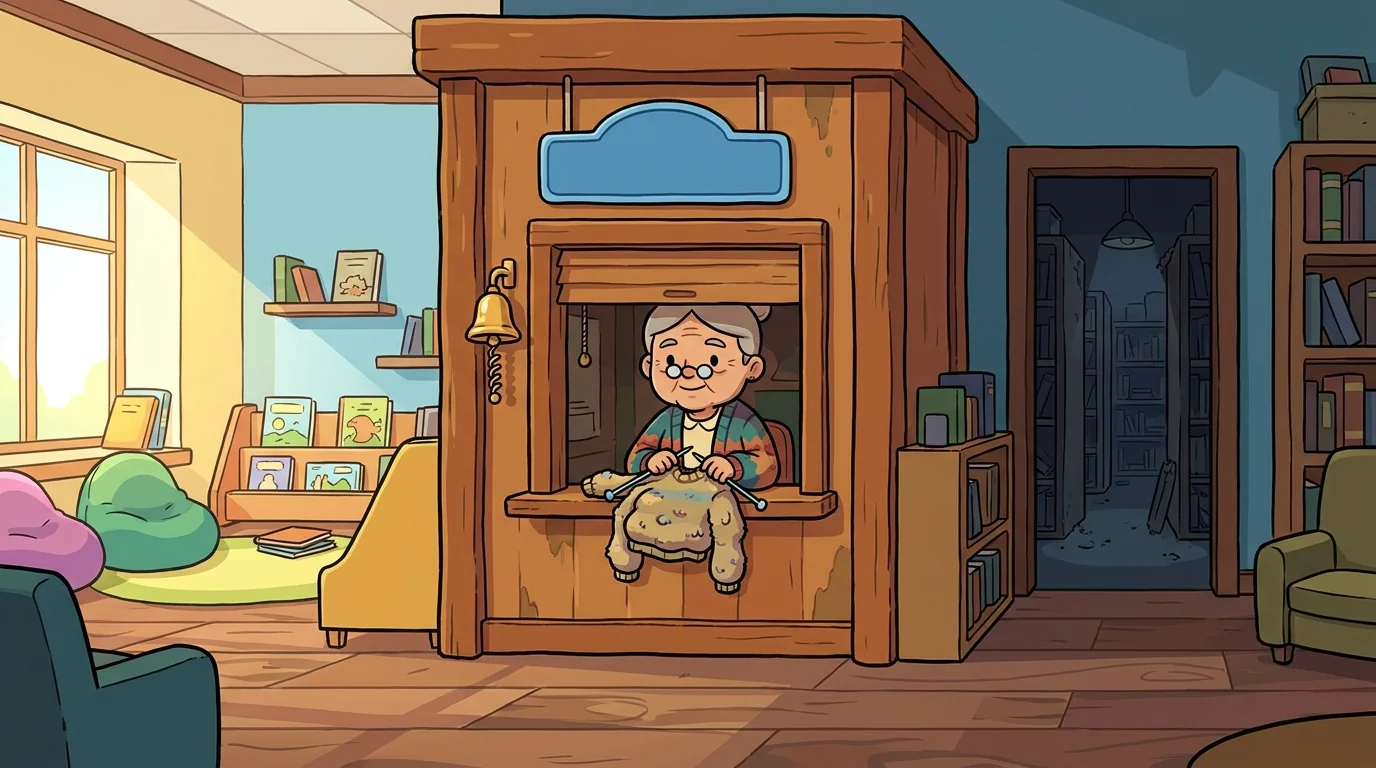
Hint Hertha had built her booth herself.
She had built it in three weekends, twenty-eight years before Maya was born, out of three different kinds of wood that did not match. The roof was cedar. The walls were oak. The shutter was brass, salvaged from a coffee-house she had loved that closed when she was twenty-three. The bell had come from a hardware store and had been replaced twice. The sign that said Stuck? in cheerful blue paint had been painted by a friend of hers who was now dead, and Hertha had decided long ago not to repaint it.
Maya, who was fifteen by then and visiting the Library between school and dinner most days, sat down on the small wooden stool outside the booth one afternoon and asked Hint Hertha why she had built it.
Hertha set down her knitting. She considered.
"I built it," she said, "because when I was your age, I asked too many of the wrong people for too many of the wrong kinds of help."
"What kind of help?"
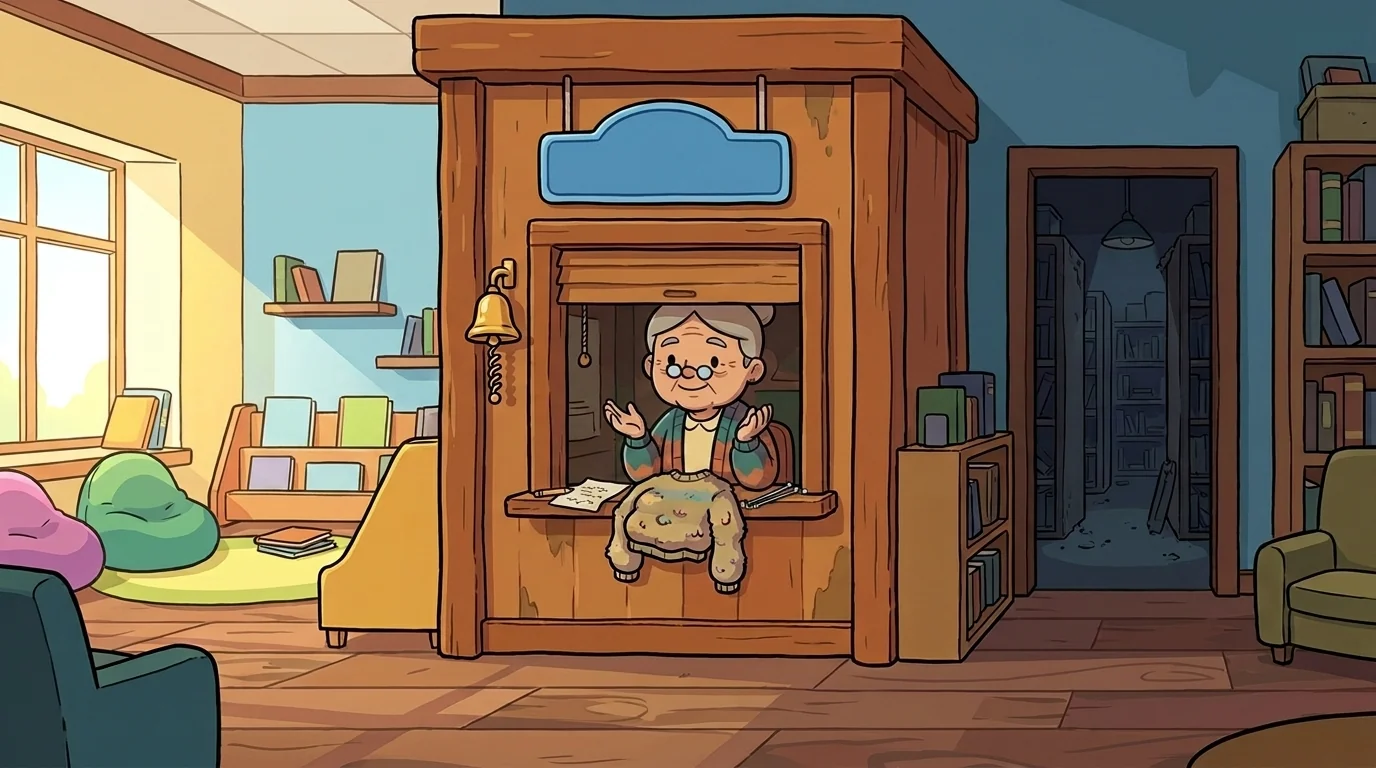
"The kind that hands you an answer. The kind that explains the rule. The kind where someone solves the thing in front of you and you nod and pretend you understand and then walk away unable to do the next one." Hertha picked her knitting back up. The needles clicked quietly. "I didn't know how much I disliked that kind of help until I was older and had had enough of it. By then I was angry. I built the booth to be the kind of help I had wanted instead."
"And the kind you wanted was — "
"The kind that hands you a smaller question."
Maya considered the booth. She had rung the bell — she counted, briefly — perhaps two hundred times by now. Each time, Hertha had slid the brass shutter open and asked her something she did not expect. Each time, Maya had walked away with a question she hadn't had before, and that question had usually been small enough that she could carry it back to the table without dropping it.
"How do you know which smaller question to ask?" Maya said.
Hertha did not look up from her knitting. "I don't always. Sometimes I get it wrong. Sometimes the question I give you is too small or too large or in the wrong direction. When that happens you come back and ring the bell again and I try a different one."
"That's allowed?"
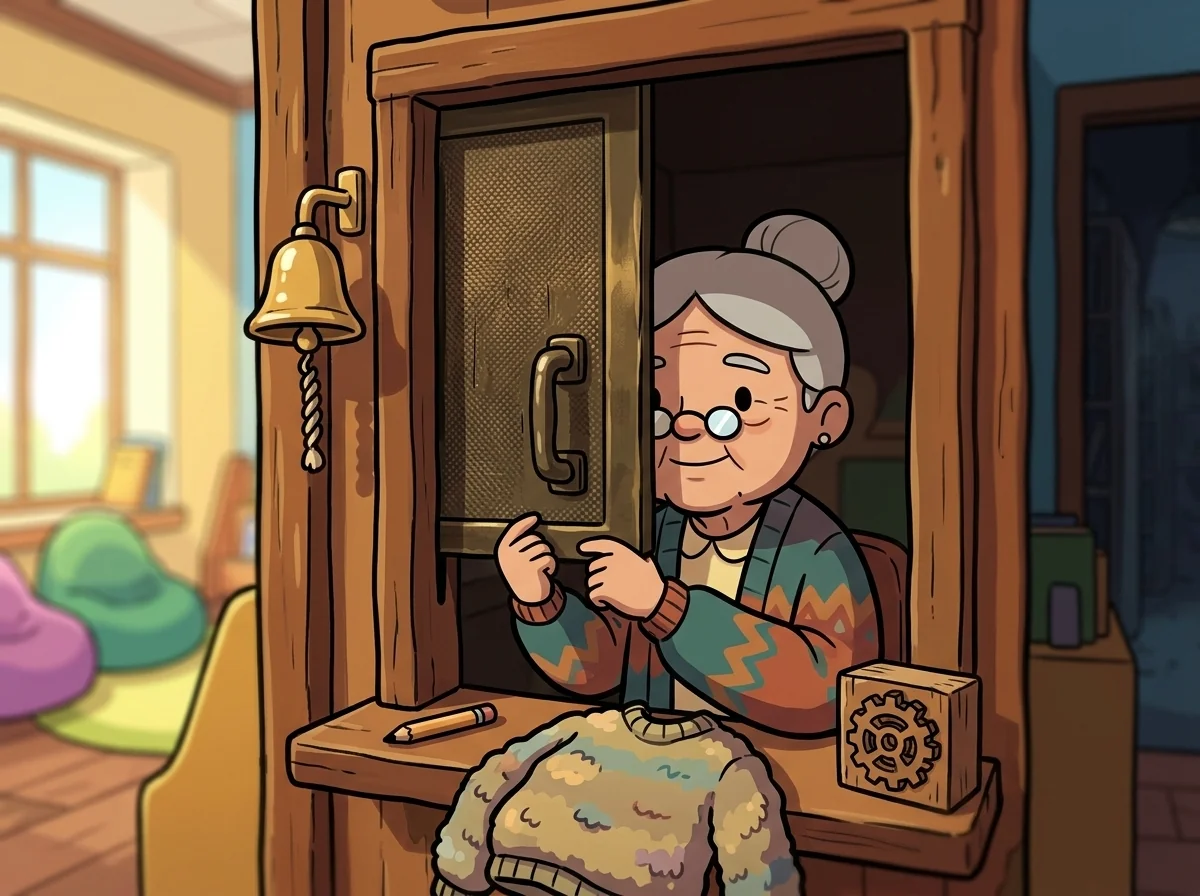
"That's the whole point."
Hertha had not been born playful.
She had been born serious. She had been a serious child and a serious teenager, and somewhere in her early twenties she had realized that her seriousness was a kind of armor, and that the armor was making it harder to teach. Serious questions sounded like accusations. Serious questions sounded like the questions teachers had asked her when she was nine and had embarrassed her into pretending she understood. So she had taught herself, deliberately, to ask the same questions playfully — and the playfulness had turned out to be the difference between a question that made readers feel stupid and a question that made readers feel curious.
It was the most important thing she had ever learned about her own work.
"Don't ever ask a smaller question with a flat voice," she had told Maya once, after Maya had spent a frustrating week trying to help her younger brother with multiplication. "The voice is the whole sentence. The question is just the words. If your voice says I think you're an idiot for not seeing this, then the smartest question in the world won't land. If your voice says I think this is genuinely interesting and I bet you can find it, then almost any question will work."
Maya had practiced.
She had practiced on her brother. She had practiced on her younger cousin, who was eight. She had practiced on herself, alone in her room, on a problem she'd been stuck on for three days. The voice mattered. Hertha had been right. The voice was the whole sentence.
There was one conversation Maya kept coming back to.
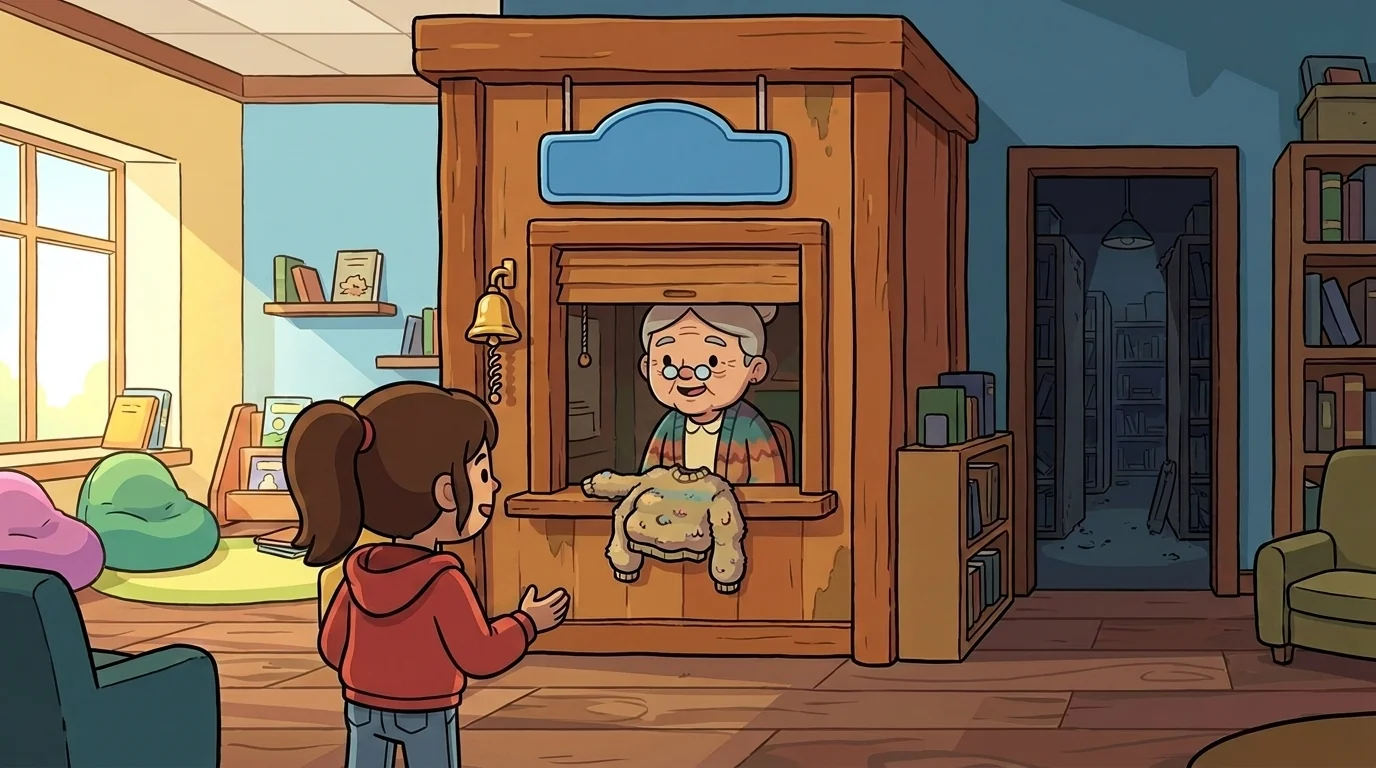
It had happened on a particularly hot afternoon in midsummer, when Maya was fourteen and the Library's old air conditioning had been wheezing through a fifth straight day of heat. Maya had rung the bell on a problem about exponential growth that she had been stuck on for over an hour. She was sweaty. She was discouraged. She was, briefly, ready to give up the whole afternoon.
Hertha had slid the shutter open. She had looked at Maya's face — the heat, the discouragement, the discouragement-trying-to-hide — and she had closed the shutter again without saying a word.
A minute later, a small folded piece of paper had been pushed out through the gap under the shutter.
Maya had unfolded it.
It said: Today's smaller question is — are you okay? Not the math. Just you.
Maya had sat down hard on the wooden floor and cried for about three minutes.
Then she had stood up, written yes, thank you on the back of the paper, and pushed it back under the shutter. She had walked home. She had come back the next morning. She had rung the bell. She had said, "Let's try again." Hertha had given her a small question — about the difference between adding the same number over and over and multiplying by the same number over and over — and the rest of the problem had unspooled in less than ten minutes.
Maya had thought about this a lot since.
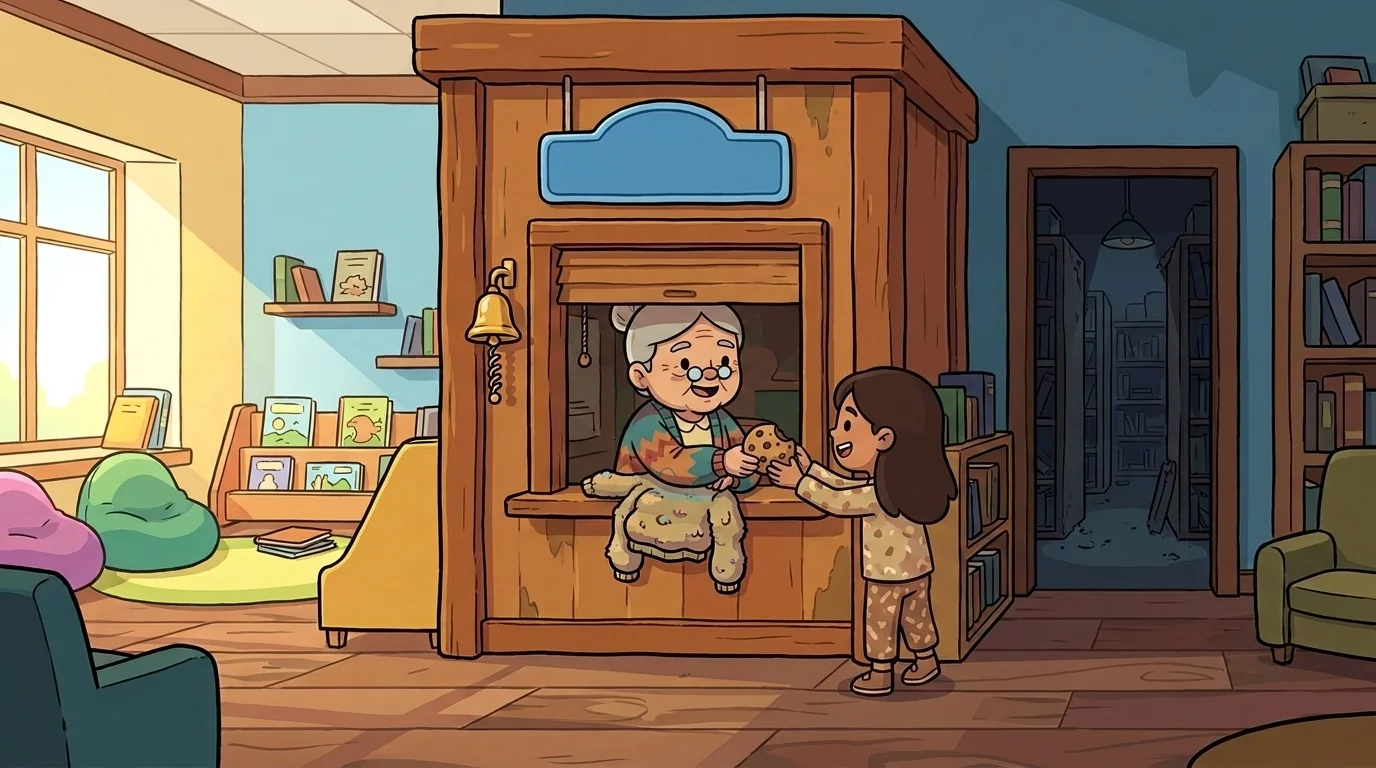
What Hertha had given her on the hot afternoon, she eventually decided, was not a hint about exponential growth. It was a hint about the architecture of asking. The first thing a hint-giver needs to know is whether the reader is asking from a place where a hint will help. Sometimes the smaller question isn't about the problem. Sometimes the smaller question is about the person.
Hertha had not told her this directly. Hertha would not ever tell her this directly. That was Hertha's gift — to leave you the lesson and not the rule.
In Maya's last conversation with Hertha — not the last conversation of all, because they had many more, but the last conversation that marked something — Maya said: "I want to do what you do. When I'm older."
Hertha had been polishing the bell. She did not stop polishing.
"You'll do it differently," she said. "That's allowed. You'll get tired of asking questions sometimes and you'll want to just give the answer. That's allowed too. You'll mostly fail to find the right small question on the first try. That's allowed. The only thing you need to keep is the voice. If you keep the voice — the one that says I think this is genuinely interesting and I bet you can find it — the rest will sort itself out."
Maya nodded.
Hertha finished polishing the bell. She rang it once, very softly, to test the sound.
It rang.
The AlcumusForge ensemble
Hint Hertha is part of AlcumusForge's distributed-narrative cast. Each character embodies a different curricular primitive; together they teach the full subject.
-

Alcuin
Librarian-detective of the practice graph; knows what to try next
-

Practice Patience
Slow-tortoise back-room keeper; long-game adviser
-

Streak Bear
Warm anti-anxiety presence; the soft-streak character
-
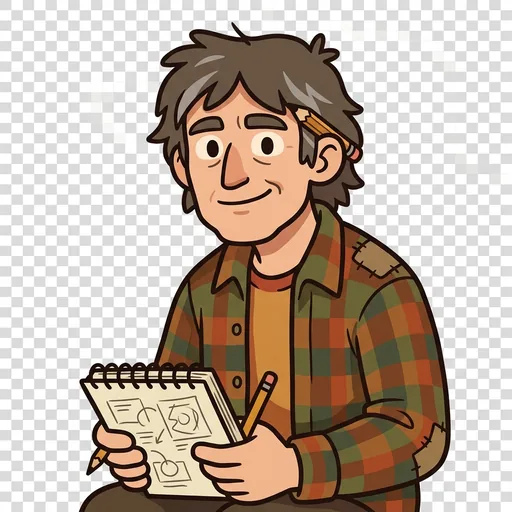
Stretch Sage
The wider-than-you-think reframer; surfaces transfer connections
-

Spacing Wren
Spaced review — bringing a topic back just before you'd forget it, so it sticks
-

Edge Goldi
Edge of competence — practicing at the just-right level where you grow fastest
-

Mistake Mabel
Mistakes as information — every error is a map to what to practice next
-

Mix Margo
Interleaving — mixing problem types so you learn to tell them apart and remember
-

Recall Remy
Retrieval practice — closing the book and recalling beats rereading