
Alcuin
topic-graph traversal — picking the next problem at the edge of competence
Loading audio…
Press play to listen along. The line being read lights up as you go.
Show full transcript
Loading transcript…
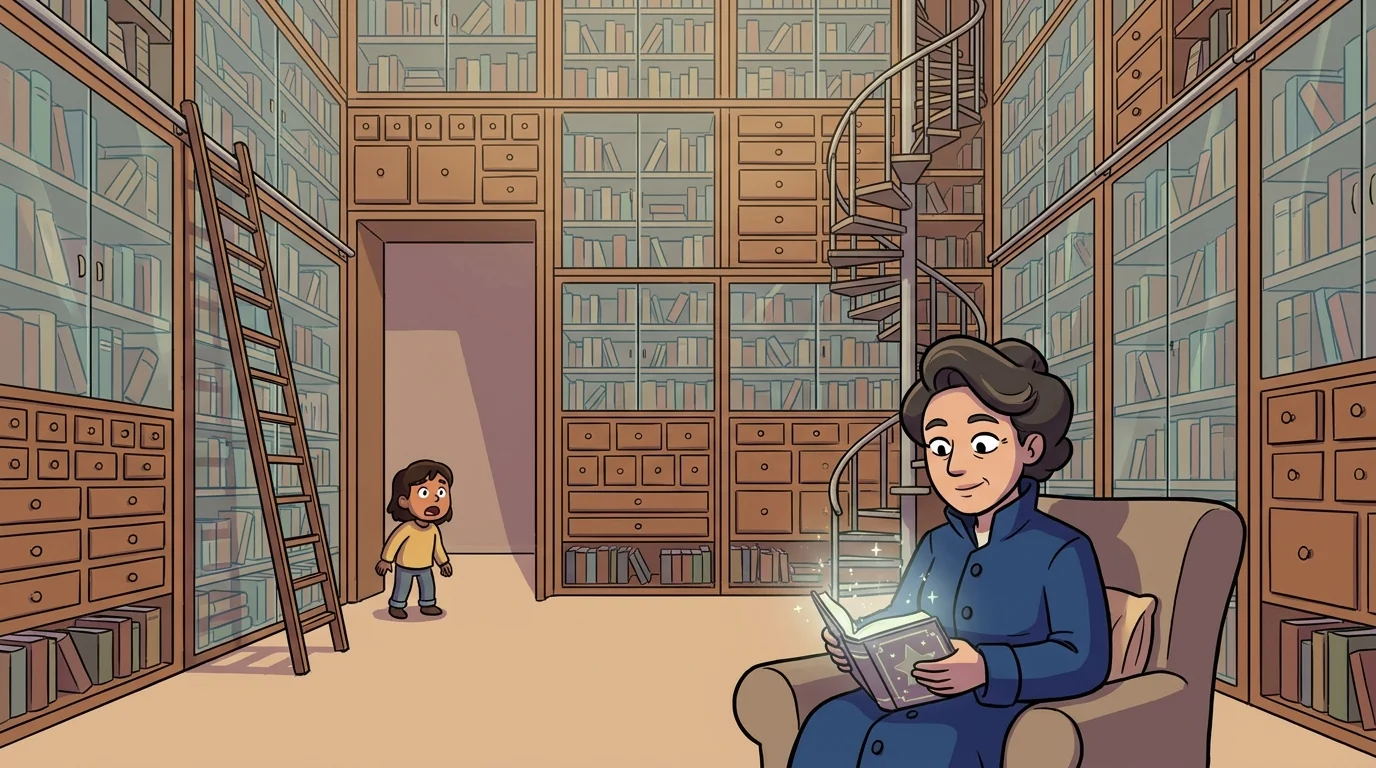
Maya had been visiting the Library for almost two years before she understood what Alcuin was actually doing.
She had assumed, at first, that the Library held every book in the world and Alcuin had read every one of them. That was the easy explanation, and easy explanations are what twelve-year-olds use when something feels miraculous. But Maya was thirteen now, and the miraculous parts had started to look less like magic and more like a kind of work she had never seen anyone do before.
What Alcuin actually had, Maya realized, was a map.
Not a paper map — she had checked. Not a computer database — Alcuin would have laughed at the suggestion. The map was inside her head, and it was not a map of books. It was a map of problems, and the lines on the map were the connections between them. Some problems were upstream of others. The pizza-and-four-friends problem that had stumped Maya in fifth grade turned out to be downstream of a problem about sharing strawberries that Maya had done without thinking in third grade. And both of them were upstream of a problem Maya was about to face about probability that she didn't even know existed yet.
The map was the reason Alcuin could hand Maya the right book every time.
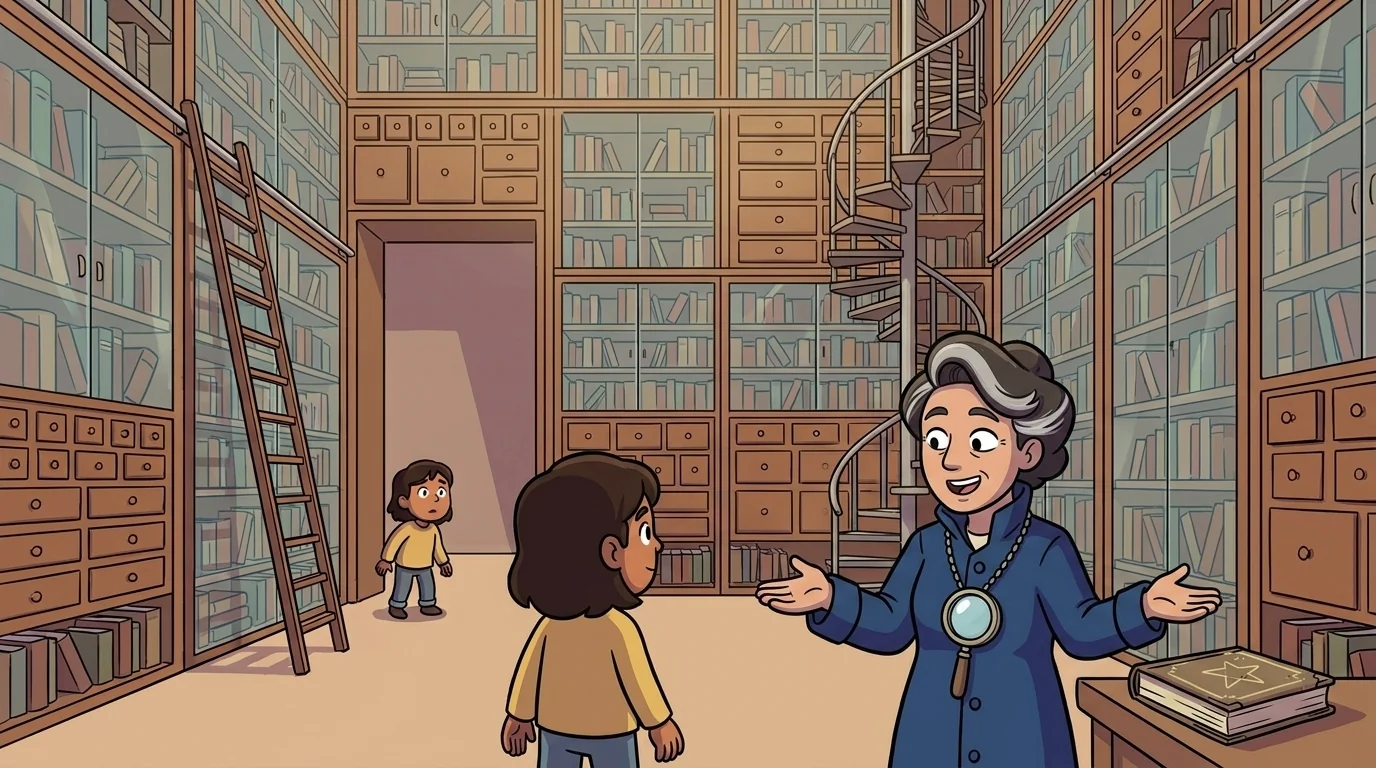
Maya knew this for certain because she had finally asked her, on a rainy afternoon when the Library was so quiet she could hear the radiator clicking. "How do you do it? How do you always pick the right one?"
Alcuin had been arranging a small drawer of pamphlets that no one ever asked for. She did not stop arranging them. She said, "The book I picked for you today depends on three things. What you just solved. What you almost solved. And one thing that you don't know is connected to either of them."
"And you can remember all of that?"
"I can remember pieces. The rest I keep written down. But the written-down parts are useless without the connecting parts, and the connecting parts only live in my head." She closed the drawer. "And here's the secret: I haven't finished drawing the map. I'll never finish drawing the map. Every time a reader comes in with a problem I've never thought of, the map grows."
What Maya didn't know — what Alcuin had never told anyone, in fact — was that the map had not been Alcuin's idea.
Alcuin had been thirteen herself, once, working in a different library three thousand miles away. The librarian there had been a man named Mr. Sandford who wore brown vests and spoke softly and would lend a book to anyone who asked. He had taken Alcuin under his wing the summer she started spending all her afternoons there to escape the chaos at home. She remembered him sitting her down once and saying, "There's a thing I want to teach you. It's hard to explain. I'll show you instead."
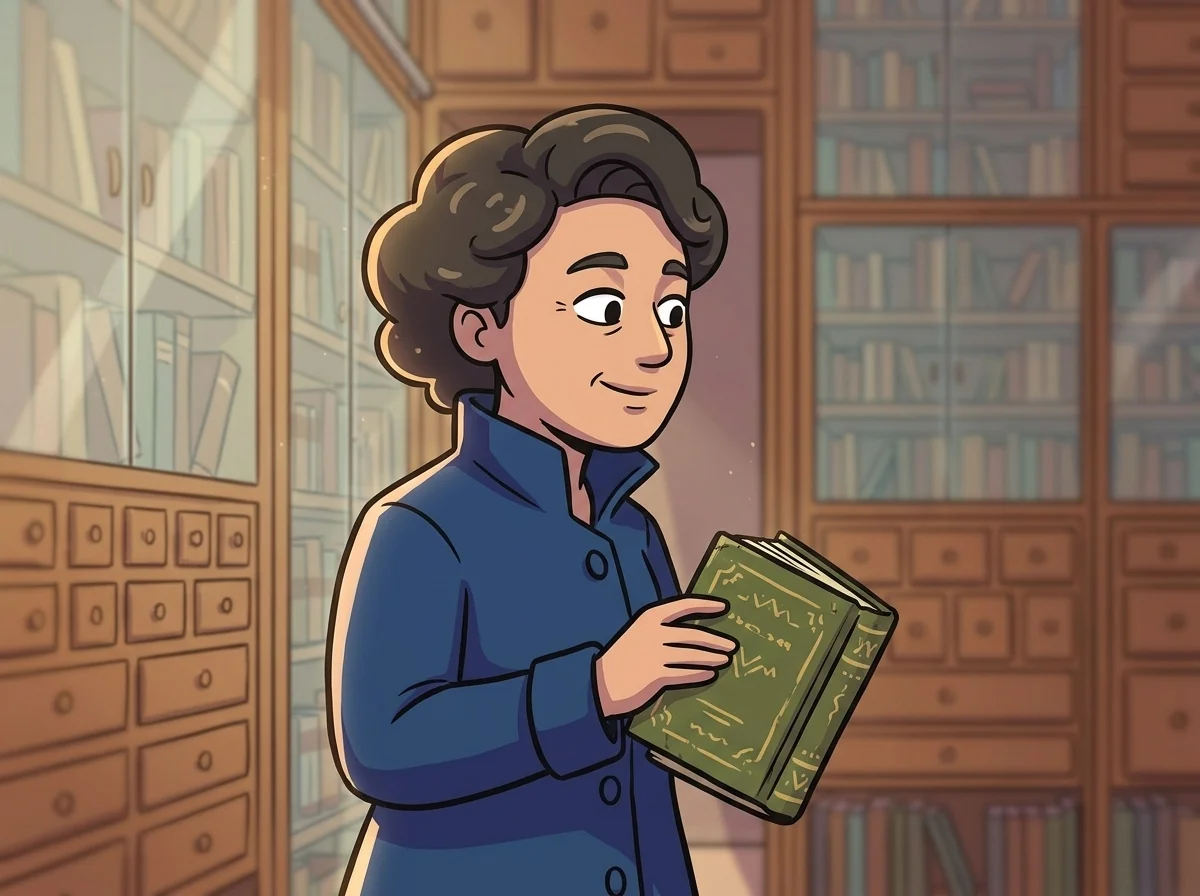
He had drawn three problems on a sheet of paper. Then he had drawn arrows between them. Then more arrows. Then more problems. By the end of the afternoon the page had been a tangle of arrows and numbers and small notes in his fast, looping handwriting.
"This is one corner of the map," he had said. "I've been keeping this map since I was a boy. The librarian who taught me showed me the same trick. He learned it from his teacher. The map has always existed. It just changes shape because the problems keep changing."
Alcuin had stared at the page, and something in her had gone very still, and she had said: "I want one."
Mr. Sandford had handed her the page.
For thirty years now, Alcuin had been growing her own version of that page in her head. She had added problems Mr. Sandford had never seen. She had drawn connections he would have argued with. She had erased connections — most of which he had drawn — that turned out to be wrong. And she had passed the trick on, in fragments, to a small number of readers who showed signs of wanting one of their own.
Maya was one of those readers, although Alcuin had not told her yet.
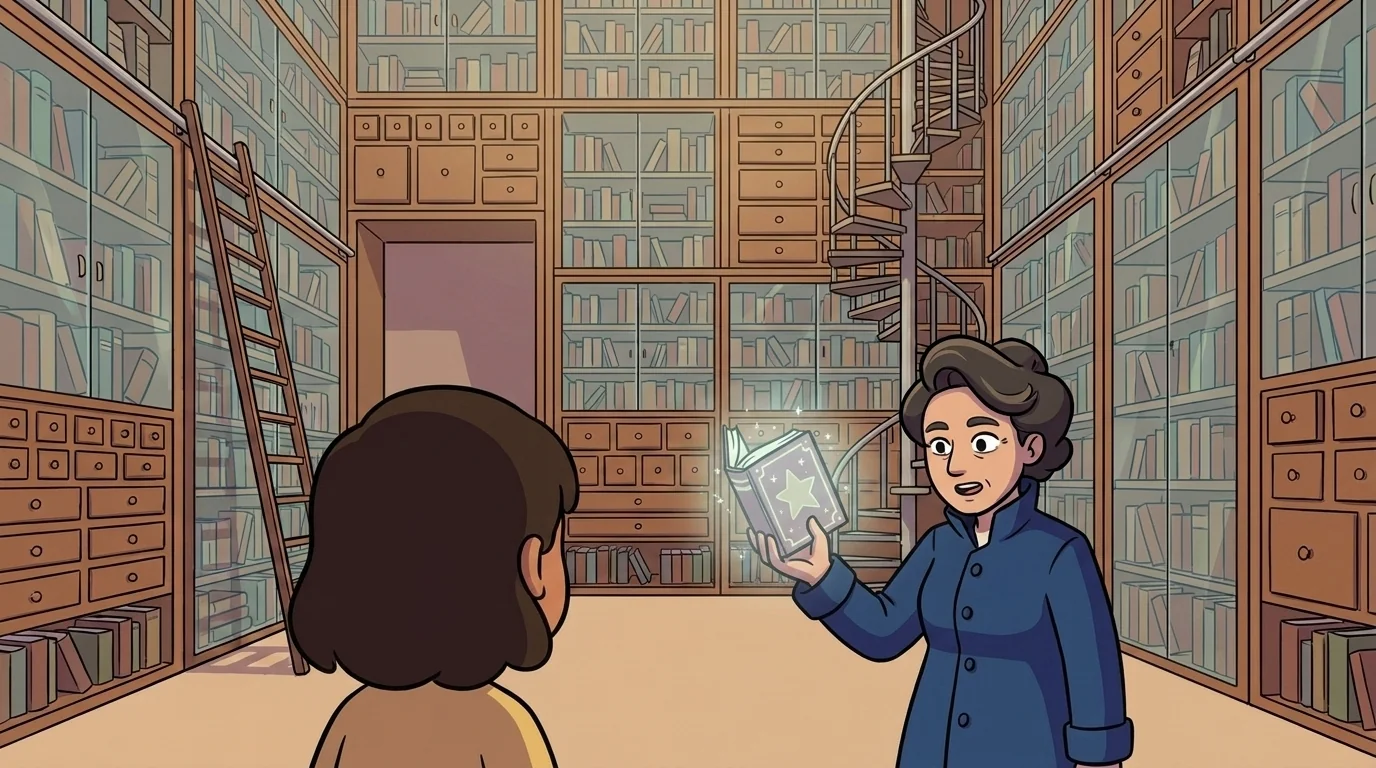
The afternoon Maya finally asked the right question was a Thursday in early spring. She had been working on a problem about dividing fractions for nearly an hour and had gone past frustration into a kind of focused quiet. Alcuin recognized this quiet. It was the same quiet she had been in, thirty years ago, when Mr. Sandford had handed her the page.
Maya looked up. "Alcuin. Can you teach me how to make the map?"
Alcuin set down the pamphlets. She looked at Maya for a long moment. Then she pulled out a chair across from her, sat down, and slid a blank sheet of paper between them.
"It's hard to explain," she said. "I'll show you instead."
She drew three problems. Then she drew arrows.
By the end of the afternoon the page was a tangle of arrows and numbers and small notes in Alcuin's fast, deliberate handwriting. Maya took the page home with her. She did not show it to anyone. She put it in the back of her math notebook and looked at it most nights before she fell asleep.
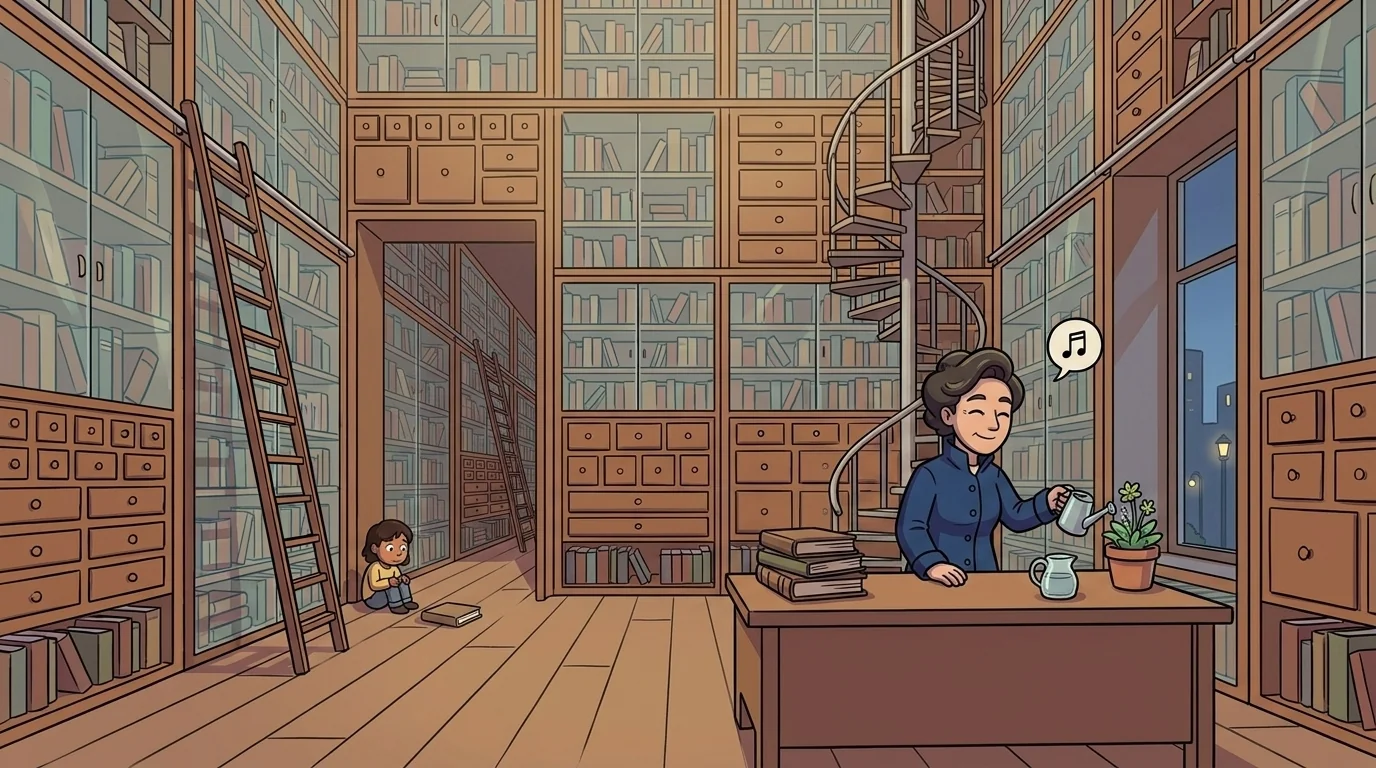
The next afternoon, Alcuin watched Maya walk into the Library carrying a notebook that had three new arrows in it. Arrows Alcuin would not have drawn.
Alcuin closed her eyes for a moment. She thought of Mr. Sandford.
She thought: the map has always existed. It just changes shape because the problems keep changing.
She opened her eyes and reached behind her for a small green book with a crooked spine, the one that says When the answer isn't a clean number, the one Maya had read on her very first visit two years ago. She slid it across the desk.
"I want you to read it again," she said. "Different week. Different brain. Same words. See what changes."
Maya opened the book.
She read for a long time.
The AlcumusForge ensemble
Alcuin is part of AlcumusForge's distributed-narrative cast. Each character embodies a different curricular primitive; together they teach the full subject.
-
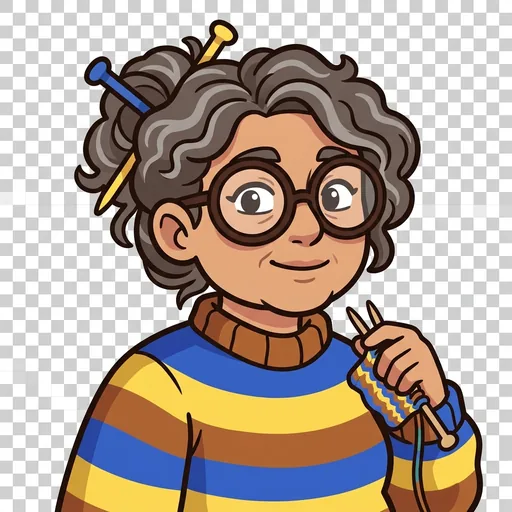
Hint Hertha
Hint author and gentle redirector; never gives the answer
-

Practice Patience
Slow-tortoise back-room keeper; long-game adviser
-

Streak Bear
Warm anti-anxiety presence; the soft-streak character
-
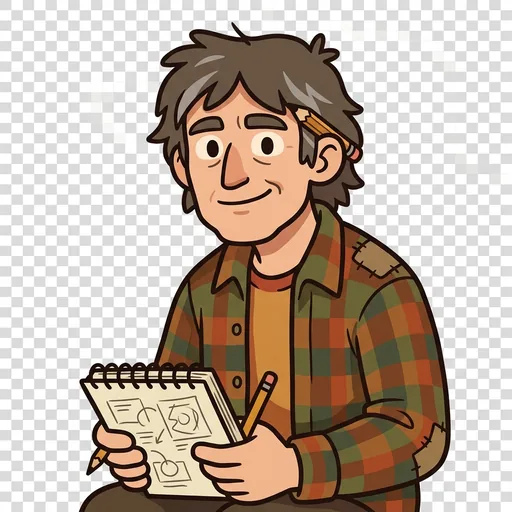
Stretch Sage
The wider-than-you-think reframer; surfaces transfer connections
-

Spacing Wren
Spaced review — bringing a topic back just before you'd forget it, so it sticks
-

Edge Goldi
Edge of competence — practicing at the just-right level where you grow fastest
-

Mistake Mabel
Mistakes as information — every error is a map to what to practice next
-

Mix Margo
Interleaving — mixing problem types so you learn to tell them apart and remember
-

Recall Remy
Retrieval practice — closing the book and recalling beats rereading